



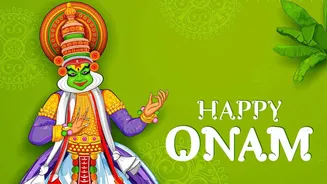
Onam Story And Significance: Onam is Kerala’s most prominent annual festival, celebrated as a harvest and cultural festival during the Malayalam month of Chingam. The celebrations traditionally extend
across 10 days, beginning with Atham and culminating in Thiruvonam.
The festival is closely associated with the beloved mythical King Mahabali, whose annual return to his people forms the central legend behind Onam. Homes are decorated with colourful Pookalams, families prepare the elaborate Onasadya feast, and communities participate in boat races, dances, games and other cultural activities.
Read More: Onam 2026 Date: When Is Thiruvonam? Timings, History And Significance
Onam is celebrated across Kerala and by Malayalis around the world, bringing together traditions of harvest, hospitality, family, prosperity and community.
Onam 2026 Date
Thiruvonam, the main day of Onam, will be celebrated on Wednesday, August 26, 2026. The 10-day festivities begin with Atham on August 16 and culminate with Thiruvonam on August 26.
The festival calendar traditionally includes Atham, Chithira, Chodhi, Vishakam, Anizham, Thriketa, Moolam, Pooradam, Uthradam and Thiruvonam. Each day has its own customs and cultural significance.
Read More: Onam Sadya 2026: Traditional Kerala Recipes To Try For The Festive Feast
While Thiruvonam is the most important day, celebrations and preparations begin several days earlier, with homes, streets and public spaces taking on a festive appearance.
What Is Onam?
Onam is a harvest festival deeply connected with Kerala’s agricultural traditions and cultural identity. It is celebrated during Chingam, the first month of the Malayalam calendar.
The festival combines the legend of Mahabali with the celebration of prosperity and the harvest season. The arrival of Chingam after the difficult Karkidakam period traditionally represents a season of hope and abundance.
Read More: Onam 2026 Calendar: 10 Days From Atham To Thiruvonam And How They’re Celebrated
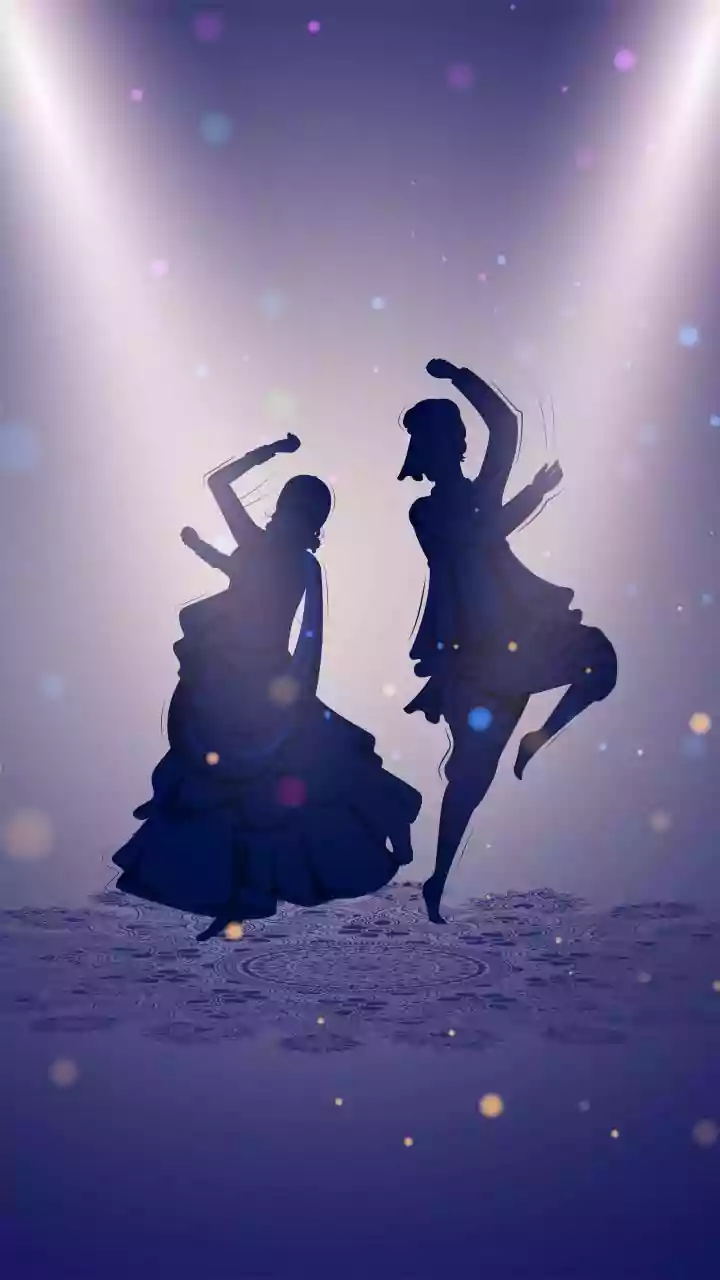
Onam celebrations feature Pookalam, Onasadya, Vallam Kali, Pulikali, traditional dances, games and other cultural activities.
The festival is also widely celebrated across communities, making it an important expression of Kerala’s cultural traditions and social togetherness.
Onam 2026: Story Of King Mahabali
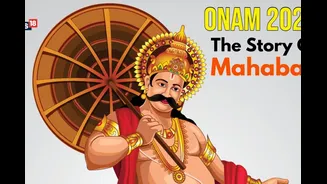
The most famous legend associated with Onam revolves around King Mahabali, also known as Maveli.
According to Hindu mythology and Kerala’s traditional accounts, Mahabali was a powerful Asura king known for his generosity and concern for his subjects. His kingdom is remembered in popular tradition as a prosperous place where people lived happily.
Mahabali’s growing power and reputation became a concern for the devas. According to the legend, they approached Lord Vishnu for help.
Vishnu appeared before Mahabali in the form of Vamana, a dwarf Brahmin.
At the time, Mahabali was performing a ritual and was known for giving generously to those who approached him. Vamana asked the king for only as much land as could be covered in three steps.
Mahabali agreed to the request.
Vamana then assumed a gigantic form. With his first step, he covered the earth, and with his second, he covered the heavens. With nowhere left for the third step, Mahabali offered his own head.
Vishnu placed his foot on Mahabali and sent him to the netherworld, traditionally described as Patala. However, impressed by Mahabali’s devotion and humility, Vishnu granted him permission to return and visit his people once every year.
Onam is traditionally associated with this annual homecoming of Mahabali.
Why Does Mahabali Return During Onam?
According to the popular Onam legend, Mahabali was deeply attached to his people. After being sent to the netherworld, he was granted permission to visit them once a year.
The days of Onam are therefore traditionally understood as a time when Maveli returns to Kerala to see how his people are doing.
This belief explains several Onam customs, including decorating homes with Pookalam and preparing an elaborate feast. These traditions are symbolically connected with welcoming the legendary king.
The popular Malayalam folk song “Maveli Nadu Vaneedum Kalam” also celebrates the imagined golden age of Mahabali’s rule and is closely associated with the festival.
Mahabali And Vamana: What Is The Significance?
The Mahabali-Vamana story is significant because it combines ideas of generosity, humility, devotion and sacrifice.
Mahabali’s willingness to honour his promise, even after realising Vamana’s divine identity, is central to the traditional telling of the story.
The legend also connects Onam with Vishnu’s Vamana avatar. The Thrikkakara tradition in Kerala is particularly associated with Vamana and the Mahabali legend.
It is important to distinguish mythology from documented history: Mahabali’s reign and his annual return are part of Hindu religious tradition and Kerala’s cultural folklore, rather than independently verified historical events.
History Of Onam
Onam has a long cultural and literary history in Kerala and neighbouring parts of South India.
The festival is associated with ancient traditions connected to Vishnu worship, seasonal celebrations and agricultural life. Kerala Tourism notes references to Onam in early Tamil literature, including Maduraikkanchi, and points to other historical and literary traditions associated with the festival.
The Thrikkakara Vamanamoorthy Temple is particularly important in the traditional history of Onam. The temple is closely connected with the Vamana-Mahabali legend, and Thiruvonam has a special place in its religious traditions.
Over time, Onam developed into a broad cultural celebration encompassing religious traditions, harvest customs, food, music, dance, games and community gatherings.
Today, it is celebrated not only in Kerala but also by Malayali communities across India and around the world.
Is Onam A Harvest Festival?
Yes. Onam is widely described as a harvest festival of Kerala.
The festival takes place during Chingam, when the agricultural cycle and the arrival of a new season are traditionally associated with prosperity and abundance.
The harvest connection is reflected in the food, decorations and community celebrations associated with Onam. Kerala Tourism describes Onam as both a celebration of Mahabali’s legend and an agricultural festival symbolising joy and prosperity.
What Is The Significance Of Thiruvonam?
Thiruvonam is the tenth and most important day of the traditional 10-day Onam celebration.
It is the day most strongly associated with Mahabali’s homecoming. Families traditionally clean and decorate their homes, prepare festive meals and gather together.
The day is marked by Pookalam, Onasadya and various cultural celebrations. Kerala Tourism describes Thiruvonam as the culmination of the 10-day festival.
What Is Pookalam?
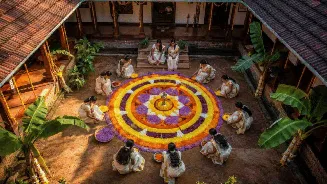
Pookalam is a colourful floral arrangement traditionally made on the floor outside homes and other spaces during Onam.
The flower carpet generally grows more elaborate as the days of Onam progress. Different flowers are arranged in decorative patterns, creating vibrant designs.
Traditionally, Pookalam is associated with welcoming King Mahabali during his annual visit. Today, Pookalam competitions are also popular in schools, offices, residential communities and public spaces.
What Is Onasadya?
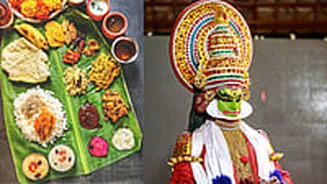
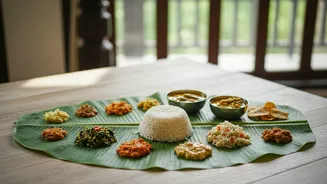
Onasadya is the traditional vegetarian feast associated with Onam.
It is generally served on a banana leaf and features a variety of traditional Kerala dishes. The meal can include rice, vegetable preparations, pickles, curries, avial, thoran, olan, sambar, rasam and payasam, although the exact menu varies by household and region.
Onasadya is more than a festive meal. It represents hospitality, abundance and the tradition of families and communities coming together during Onam.
Vallam Kali And Onam
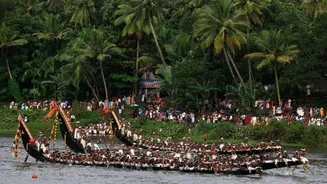
Vallam Kali, or traditional boat racing, is one of the most recognisable cultural events associated with the Onam season.
Long snake boats, known as chundan vallams, are rowed by teams in highly coordinated races. The events attract large crowds and form an important part of Kerala’s festive culture.
The Pamba River and other waterways become centres of activity during the Onam season, with boat races drawing participants and spectators from across the state.
Pulikali And Other Onam Traditions
Onam is celebrated through a wide range of traditional art forms and community activities.
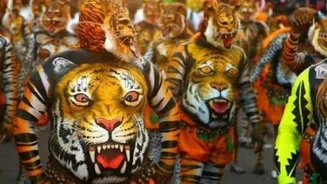
Pulikali, the colourful “tiger dance”, is one of the most recognisable performances associated with the festival. Performers paint their bodies in tiger-like patterns and participate in lively processions.
Other traditional activities associated with Onam include Kaikottikali, Thumbi Thullal, Kummattikali, Onathallu and various local games and performances.
The 10 Days Of Onam
The traditional 10-day celebration begins with Atham and culminates with Thiruvonam.
Atham
Atham marks the beginning of the traditional Onam celebrations. Pookalam preparations begin, with the floral design traditionally starting small and becoming more elaborate.
Chithira
The Pookalam is expanded with additional layers and flowers as preparations continue.
Chodhi
The festive preparations gain momentum, with families beginning shopping and preparing for the celebrations.
Vishakam
Vishakam traditionally marks an important stage of preparation for the Onam feast.
Anizham
Anizham is associated with the excitement of Vallam Kali, particularly boat-race traditions.
Thriketa
Families continue preparations, decorate their homes and participate in traditional observances.
Moolam
Traditional celebrations and smaller community feasts become more prominent in many places.
Pooradam
Pooradam is associated with the preparation of clay figures traditionally known as Onathappan or representations connected with Mahabali and Vamana.
Uthradam
Uthradam is widely regarded as an important preparation day, with families getting ready for Thiruvonam.
Thiruvonam
Thiruvonam is the main day of Onam, marked by prayers, Pookalam, family gatherings, Onasadya and cultural celebrations.
Onam 2026: Important Dates
For 2026, the traditional 10-day Onam calendar is:
Atham: August 16, Sunday
Chithira: August 17, Monday
Chodhi: August 18, Tuesday
Vishakam: August 19, Wednesday
Anizham: August 20, Thursday
Thriketa: August 21, Friday
Moolam: August 22, Saturday
Pooradam: August 23, Sunday
Uthradam: August 25, Tuesday
Thiruvonam: August 26, Wednesday
Why Is Onam Important To Kerala?
Onam is significant because it brings together several aspects of Kerala’s cultural identity.
It represents:
- Harvest and prosperity
- Family and community
- Traditional food and hospitality
- Kerala’s art and culture
- The Mahabali legend
- Seasonal celebrations
- Social togetherness
Kerala Tourism describes Onam as a celebration that transcends community divisions and brings people together through shared cultural traditions.
Onam’s Message Of Equality And Togetherness
The popular image of Mahabali’s reign is that of a prosperous kingdom where people lived with happiness and equality.
That idea has become an important cultural theme of Onam. The festival is celebrated by people from different communities, and its traditions, from Pookalam and Onasadya to boat races and cultural performances, create a shared festive identity.
For Malayalis around the world, Onam is therefore not only a religious or harvest celebration but also a time to reconnect with family, heritage and Kerala’s cultural traditions.