


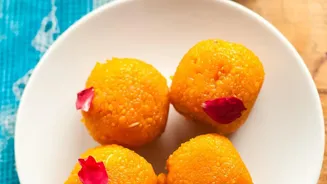

Janmashtami celebrations are incomplete without a special bhog for Laddu Gopal. While makhan-mishri, kheer and panchamrit are popular offerings, dhaniya panjiri holds a special place in the festive spread
prepared across many North Indian homes.
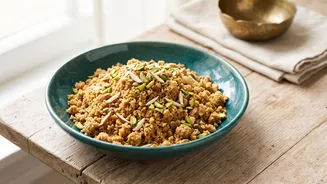
Unlike regular panjiri, which commonly uses wheat flour, this vrat-friendly version is made with roasted coriander seeds. Ghee, makhana, coconut, nuts, sugar and cardamom turn the everyday spice into an aromatic, mildly sweet prasad.
Ingredients
- 3/4 cup whole coriander seeds
- 3 tablespoons plus 1 teaspoon ghee
- 3–4 tablespoons chopped almonds
- 3–4 tablespoons chopped cashews
- 2 tablespoons melon seeds
- 2 tablespoons chironji
- 1/2 cup roughly broken makhana
- 1/2 cup grated dried coconut
- 1/2 cup powdered sugar or bhoora
- 1/2 teaspoon green cardamom powder
How To Make Dhaniya Panjiri
Step 1: Roast The Coriander Seeds
Clean the coriander seeds and check that they are free of moisture. Place them in a heavy-bottomed pan and roast over low heat for two to three minutes, stirring continuously.
Once the seeds become aromatic, transfer them to a plate and allow them to cool completely.
Step 2: Roast The Nuts And Seeds
Heat two tablespoons of ghee in the same pan. Add the almonds, cashews, melon seeds and chironji. Roast over low heat until the nuts turn lightly golden. Transfer them to a large bowl and leave them to cool.
Step 3: Crisp Up The Makhana
Add one tablespoon of ghee to the pan, followed by the broken makhana. Roast over medium-low heat for 2 to 3 minutes, or until crisp. Transfer it to the bowl containing the roasted nuts.
Step 4: Roast The Coconut
Add the grated dried coconut to the same pan and roast it for two to three minutes. Keep the heat low and stir frequently, as coconut can brown quickly. Add it to the bowl and allow it to cool.
Step 5: Grind And Roast The Coriander
Grind the cooled coriander seeds into a fine or slightly coarse powder, depending on the texture you prefer.
Heat the remaining teaspoon of ghee in the pan. Add the ground coriander and roast for another one to two minutes. Transfer it to the bowl with the remaining ingredients.
Step 6: Add Sugar And Cardamom
Let all the roasted ingredients cool completely before adding the powdered sugar. Mixing sugar into a hot mixture can make the panjiri sticky or lumpy.
Add the cardamom powder and combine everything thoroughly. The traditional dhaniya panjiri is now ready to be offered as bhog.
Tips To Get The Recipe Right
- Use whole coriander seeds for a fresher aroma and better control over the texture.
- Roast every ingredient over low or medium-low heat to prevent burning.
- Allow the coriander and dry fruits to cool before grinding them.
- Keep the coriander slightly coarse if you prefer a more traditional, grainy texture.
- Add the powdered sugar only after the mixture has cooled completely.
- Use clean, dry utensils while preparing food intended for bhog.
- Raisins may be added for extra sweetness, while the quantity of nuts can be adjusted to taste.
- Whole coriander seeds should be carefully cleaned, lightly roasted and cooled before grinding.
How To Offer And Store Dhaniya Panjiri
Place the prepared panjiri in a clean bowl and offer it to Lord Krishna during the Janmashtami puja. Some families garnish the bhog with a tulsi leaf before distributing it as prasad.
Once the puja is complete, dhaniya panjiri can be served on its own or paired with panchamrit and sliced banana. Store any remaining panjiri in a clean, airtight container only after it has cooled completely.