






The United Arab Emirates has taken one of its strongest steps yet against Iran, suspending all trade, commercial exchanges and financial transactions with Tehran “until further notice”. The decision comes
after Abu Dhabi accused Iran of launching two ballistic missiles towards the UAE, an escalation that raises a much bigger question: Is the UAE now being pulled directly into the Iran war?
Read More: UAE Suspends All Trade, Financial Dealings With Iran After Accusing It Of Missile Threat
For now, a full-scale UAE-Iran war is not inevitable. But the latest move shows that the relationship has entered a far more dangerous phase, with military incidents, attacks on shipping and economic retaliation increasingly feeding into one another.
Iran’s Missile Strike At UAE
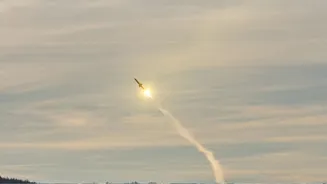
The immediate trigger was an incident on Tuesday when UAE air-defence systems detected two ballistic missiles launched from Iran towards UAE territory. The episode prompted an emergency alert on residents’ phones and sent people into shelters.
According to the UAE Defence Ministry, one missile fell into the sea outside the country’s territorial waters, while the second landed within UAE waters. No injuries or significant damage were reported.
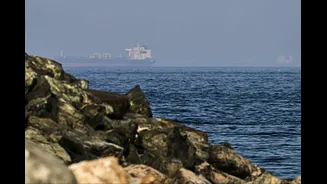
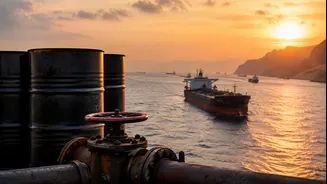
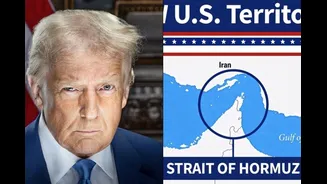
But Abu Dhabi later said its assessment indicated that the missiles were aimed at maritime traffic, making the incident particularly significant because the UAE is already deeply concerned about attacks on commercial and energy shipping around the Strait of Hormuz.
Iran has denied launching the missiles at the UAE and has rejected Abu Dhabi’s accusations, with Iranian officials suggesting the incident was being misrepresented.
The competing claims mean that questions remain over the precise circumstances of the missile incident. But politically, the damage has already been done.
Why UAE Froze Trade With Iran?
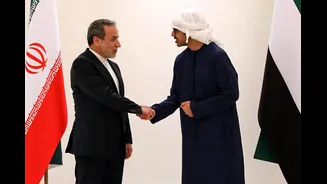
The UAE Foreign Ministry announced that all trade, commercial exchanges and financial transactions with Iran have been halted until further notice, citing regional developments that threaten regional and international peace and security.
The UAE and Iran have historically maintained significant commercial links despite their political differences. Dubai, in particular, has long served as an important trading and financial hub for Iranian businesses. A complete freeze therefore hits a relationship that has survived years of sanctions, geopolitical rivalry and regional tensions.
The timing is equally important. Abu Dhabi had been trying to maintain channels with Tehran even as the wider US-Iran conflict destabilised the Gulf. This balancing act is now under severe pressure.
From Missiles To Ships: How The Escalation Built Up
In recent weeks, the UAE has repeatedly accused Iran of attacking vessels connected to the Abu Dhabi National Oil Company (ADNOC) in the Strait of Hormuz. On August 13, Abu Dhabi accused Iran of attacking two ADNOC-linked vessels. Days later, it said another ADNOC vessel came under attack. No injuries were reported in those incidents, but the UAE described them as serious threats to freedom of navigation and global energy security.
The Strait of Hormuz is crucial because it is one of the world’s most important energy chokepoints. Any sustained disruption can affect oil supplies, shipping costs, insurance premiums and ultimately fuel prices around the world.
Reuters reported this week that traffic through the strait has fallen dramatically amid the escalating confrontation, with Iran using control over the waterway as leverage while the US maintains pressure on Tehran.
That puts the UAE in an especially vulnerable position. Its economy, ports and energy infrastructure are deeply connected to maritime trade.
The US-Iran War
The nearly six-month-old war between Iran and the United States began after US and Israeli strikes on Iran in February. Iran subsequently retaliated against American and allied interests across the Gulf, including targets and infrastructure in the UAE. The conflict has repeatedly threatened to spill beyond Iran’s borders.
Diplomatic efforts have also run into trouble. A June understanding between Washington and Tehran aimed at reducing hostilities and resolving the dispute over the Strait of Hormuz has effectively broken down. Iran has warned that it could adopt a more offensive military posture if diplomacy fails, while US President Donald Trump has rejected the idea of extending the existing ceasefire arrangement.
The UAE’s latest decision, therefore, looks less like an isolated bilateral dispute and more like another front opening in the wider regional confrontation.
Is A UAE-Iran War Next?
The risk of direct confrontation has clearly increased. Abu Dhabi has historically preferred de-escalation and economic pragmatism. Even when relations with Tehran have been strained, the UAE has had strong incentives to avoid an open conflict with its powerful neighbour across the Gulf.
The latest trade freeze therefore appears designed, at least initially, as a major economic and diplomatic warning rather than a declaration of war.
But there is a dangerous cycle developing.
If Iran continues targeting UAE-linked vessels or territory, pressure will grow on Abu Dhabi to respond more forcefully. If the UAE takes military action, Tehran could retaliate. And because American military assets and interests are present in the UAE, any UAE-Iran confrontation could quickly become part of the broader US-Iran war.
That is the real danger.
The next few days will be critical. Much will depend on whether the missile incident is followed by further attacks on UAE territory or shipping.
If there are no further strikes, the trade freeze could remain an economic pressure tactic while diplomatic channels quietly reopen. But if Iranian attacks continue, particularly against ADNOC vessels, ports, energy infrastructure or populated areas, Abu Dhabi could be pushed towards a much more direct military posture.
The stakes extend well beyond the UAE and Iran. Oil flows through Hormuz have already fallen sharply, reports indicating that shipments through the waterway have dropped from roughly 18 million barrels a day before the war to around 2 million barrels a day. Oil prices have consequently moved towards a much higher “new normal”, adding pressure to the global economy.
There is no evidence of an imminent full-scale war between the UAE and Iran yet. But Abu Dhabi’s decision to sever economic ties, following alleged missile attacks and repeated incidents involving its energy vessels, marks a significant shift.
The UAE has moved from trying to insulate itself from the Iran war to openly confronting one of its most immediate consequences. If the missiles and maritime attacks continue, the line between being caught in the war and becoming an active participant could become increasingly difficult to maintain.