






The pre-monsoon heatwave choking India has officially escalated from a seasonal discomfort into an unprecedented macroeconomic crisis. As the India Meteorological Department (IMD) sounds severe red alerts
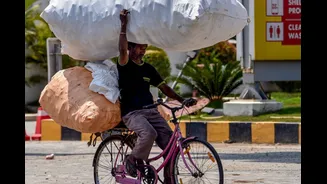
across northwest and central India—with maximum temperatures routinely breaching 46°C in states like Rajasthan, Haryana, and Uttar Pradesh—the ultimate limits of human endurance are being tested on the ground. For the nation’s vast outdoor workforce, the central question is no longer how to stay cool, but whether working outdoors is becoming a physical impossibility.
With over 2.3 million students enduring exam disruptions and the economy on high alert, the ground reality for millions of daily wage workers, construction labourers, agricultural hands, and quick-commerce gig workers is stark. Economic compulsion routinely overrides precautionary health advisories. However, as baseline temperatures rise due to human-induced global warming and a developing El Niño pattern, a quiet productivity crash is actively unfolding across the Indian subcontinent.
The Wet-Bulb Threshold: Why Simple Thermometers Lie
To understand why this heatwave is uniquely dangerous, meteorologists look beyond standard temperature readings, focusing instead on the “wet-bulb temperature”. This metric combines ambient heat with relative humidity to determine how effectively the human body can cool itself through the evaporation of sweat. In dry conditions, sweating works efficiently; however, as humid air mass builds over the Indo-Gangetic plains, the air becomes saturated with moisture.
For decades, international scientific consensus held that a wet-bulb temperature of 35°C was the absolute limit of human survival. Recent localised clinical research, however, indicates that healthy young adults begin to suffer severe physiological strain at a wet-bulb temperature of just 31°C. When this threshold is crossed, the body loses the capacity to regulate its internal temperature. For an outdoor labourer performing heavy physical tasks, this leads to rapid heat exhaustion, cellular damage, and a heightened risk of exertional heatstroke.
The 5.8 Per Cent Tax: The True Cost of Heat on Labour Productivity
The direct impact of this thermal stress is a crushing economic slowdown. According to data compiled by the United Nations Economic and Social Commission for Asia and the Pacific (UNESCAP), India is projected to lose approximately 5.8 per cent of its total daily working hours to extreme heat by 2030. This loss is heavily concentrated in the informal, blue-collar sectors that serve as the backbone of India’s urban development.
In major construction corridors and agricultural belts, work output during the peak hours of 11am to 4pm has effectively ground to a halt. While some state governments have issued advisories pushing for a rescheduling of working hours to cooler early-morning or late-evening shifts, enforcing these shifts across decentralised, informal workspaces has proven incredibly difficult. The result is a dual tragedy: daily wage workers face a devastating reduction in their take-home earnings, while vital infrastructure projects face massive, costly timeline overruns.
The Climate Adaptation Void: Moving Beyond Reactive Advisories
As the 2026 pre-monsoon heatwave intensifies, it exposes massive structural gaps in India’s domestic climate resilience strategies. Current municipal heat action plans remain largely reactive, relying on basic emergency measures like distributing oral rehydration salts (ORS) or setting up makeshift temporary shaded areas.
True systemic adaptation requires a total overhaul of urban design and labour laws. Experts are calling for the mandatory integration of localised thermal payload data to map urban heat islands, alongside legally enforceable, paid “heat breaks” for outdoor workers when wet-bulb readings hit hazardous levels. Furthermore, the rapid expansion of public cooling infrastructures—including designated, air-conditioned rest centres in high-density labour colonies—is urgently required. Until these structural protections are institutionalised, the brutal summer sun will continue to extract a devastating toll on the very hands building modern India.