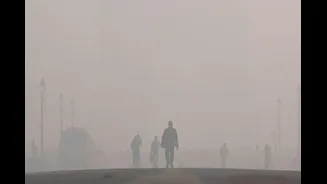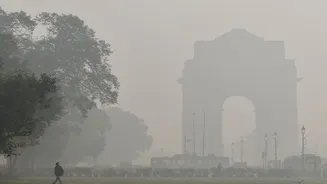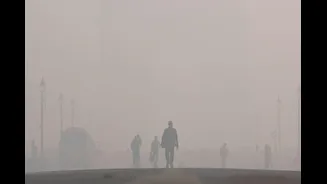




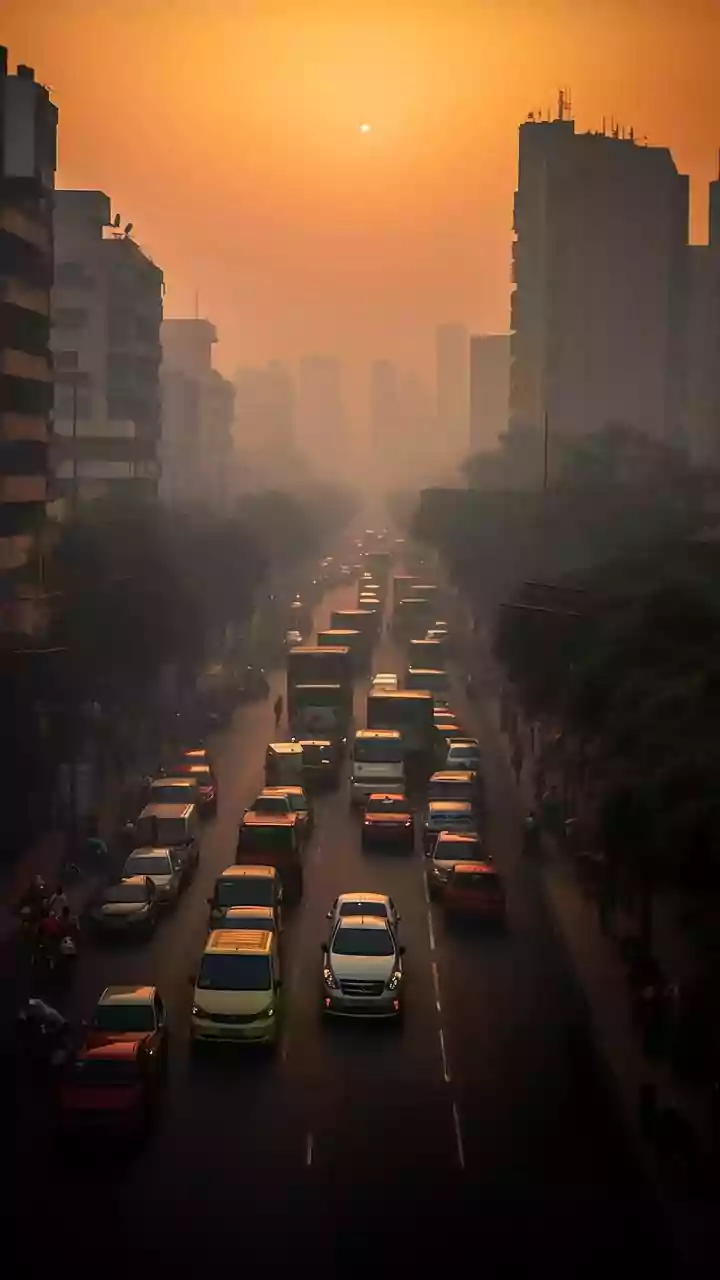
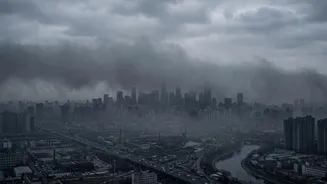
Delhi Air Pollution: Delhi recorded its worst air quality on Thursday since Diwali night, when some monitoring stations witnessed “severe” air quality index (AQI) levels.
The city’s overall AQI stood at
350 at 5 PM on Thursday, but air quality was “severe” (400+) at 10 out of 59 monitoring stations, including Burari, Chandni Chowk, ITO, JNU, NSIT Dwarka, Punjabi Bagh, NSUT Jaffarpur and IIT Delhi.
The average 24-hour AQI was 376 on November 8, 344 on November 9, 299 on November 10 and 313 on November 11, as per the Central Pollution Control Board (CPCB).
On Diwali night, the AQI jumped above 500 in several places, according to data from private applications that display the US AQI scale. While firecrackers were allowed for two hours, from 8 PM to 10 PM, on the orders of the Supreme Court, data from the Indian Institute of Tropical Meteorology (IITM) showed that firecrackers accounted for more than 80% of Delhi’s PM2.5 pollution load during the early morning hours (1:00 AM to 9:00 AM) on November 9, 2026.
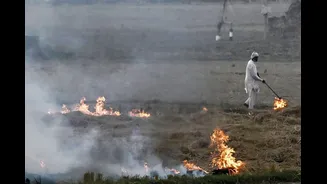
The ruling BJP government in Delhi blamed Punjab for the spike in air pollution in the capital after the state recorded over 1,100 stubble-burning incidents on Diwali.
However, the city witnessed an improvement in air quality after Diwali, mainly due to winds.
The latest spike in AQI levels in Delhi comes even as farm fire incidents in Punjab have dropped.
According to the ICAR-Indian Agricultural Research Institute, Punjab recorded 1,152 stubble-burning events on November 8, 198 on November 9, 345 on November 10 and 515 on November 11.
So far, Punjab has recorded 2,324 farm fire events, while Haryana has recorded only 214 since September 15, 2026.
Also Read | Delhi Air Pollution Puzzle: How Did AQI Improve A Day After Diwali? Experts Explain
Early Winter Air Pollution Worsens This Year
Early winter air pollution (from October to mid-November) in Delhi has worsened in 2026 despite GRAP curbs and other government initiatives, according to an analysis by the Centre for Science and Environment (CSE).
While Diwali pollution is an annual tipping point, Anumita Roychowdhury, Executive Director, Research and Advocacy, CSE, said elevated particulate levels before the festival this year show that baseline pollution is higher than in previous years.
“Year-round emission control across key sources remains inadequate. Had air quality been cleaner leading into winter, and episodic spikes from farm fires and firecrackers kept in check, seasonal weather shifts would not have triggered such severe pollution,” she said.
Also Read | Not Just Choking Lungs, Delhi Air Pollution Is Affecting Your Mental Health Too
Delhi Air Pollution Sources
An analysis of the Indian Institute of Tropical Meteorology’s (IITM) Decision Support System (DSS) data for November 1-8, 2026, shows that pollution transported from neighbouring NCR districts accounted for 54.43 per cent of Delhi’s PM2.5, followed by local sources at 33.06 per cent and stubble burning at 14.29 per cent.
Among Delhi’s local pollution sources, vehicular transport was the dominant polluter at 52 per cent, well ahead of residential activities (13 per cent) and Delhi’s peripheral industries (11 per cent). Construction contributed 7 per cent, energy use and waste burning generated 5 per cent each, while road dust and other sectors accounted for 4 per cent each.