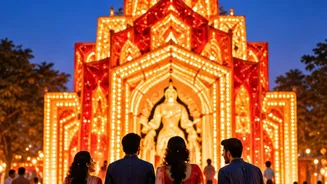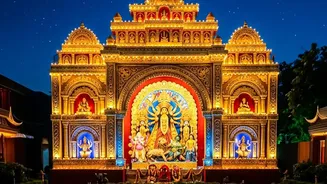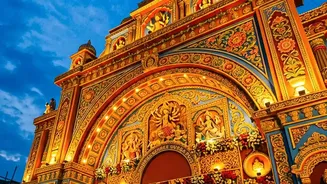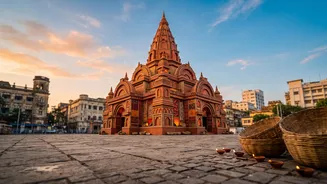



Every year, as the dhak starts rolling and the air fills with the scent of shiuli and incense, Bengal does not celebrate just one Durga Puja. It celebrates several different kinds of it—each carrying its
own history, its own rules, and its own quiet claim to authenticity.
Walk through Kolkata or the smaller towns of the state during these days and you begin to notice the distinctions. Some pujas feel intimate and ancestral. Others feel collective and democratic. A few feel like full-scale public art projects.
From the courtyards of aristocratic families to community-funded pandals, the journey of Bonedi Bari, Barowari and Sarbojanin Durga Puja is also a story of how worship gradually moved beyond family walls and became a shared public celebration.
Three Traditions, One Celebration Of Maa Durga
The differences between Bonedi Bari, Barowari and Sarbojanin Durga Puja are not simply about where the idol is installed or who organises the festivities. They reflect Bengal’s changing social and cultural history, from family-centred worship to collective celebrations that welcome entire neighbourhoods.
Bonedi Bari Durga Puja: When Worship Becomes A Family Legacy
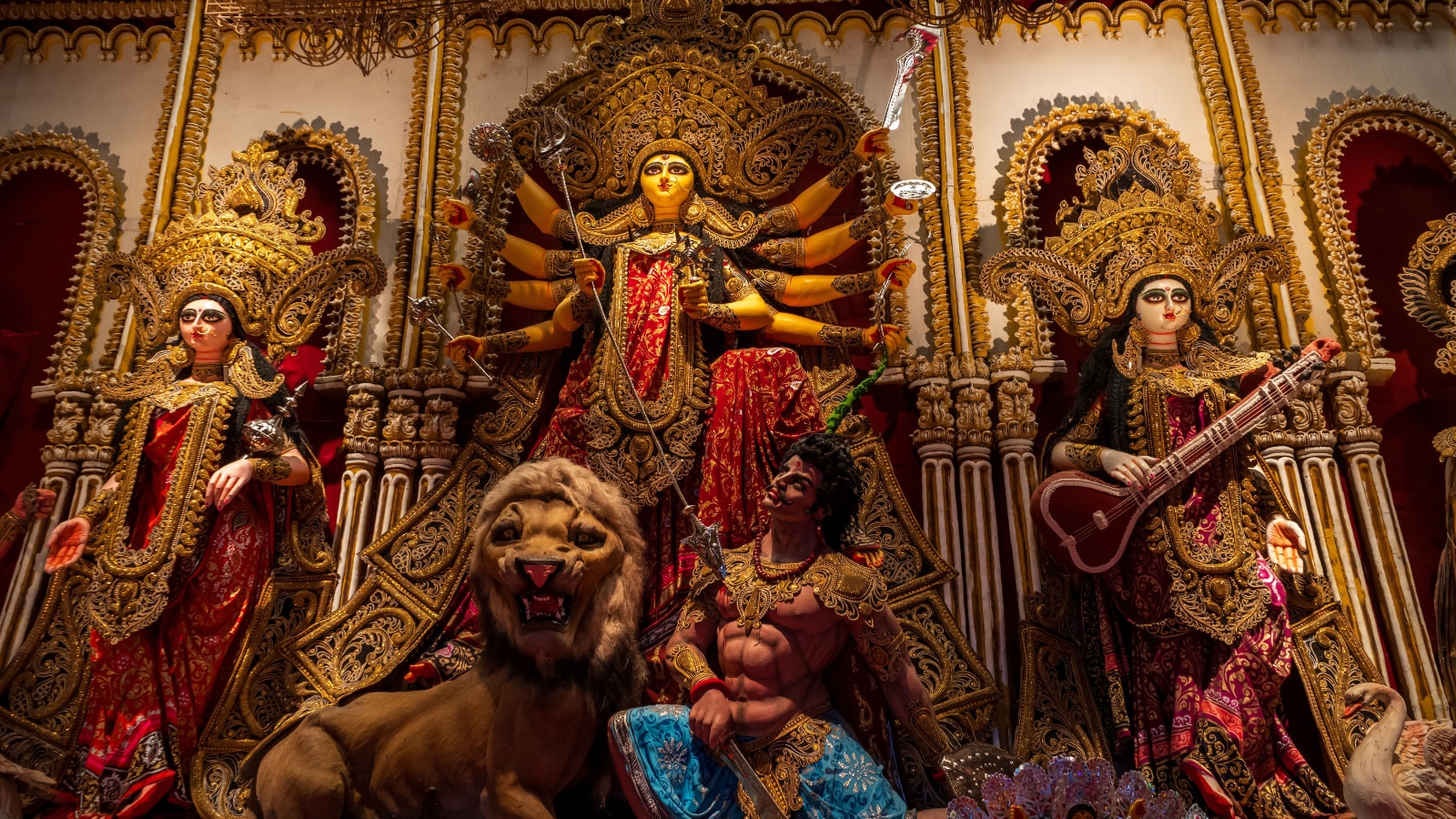
Think of it as entering an old Bengali mansion where the courtyard comes alive with the sound of dhak, relatives gather from different cities, and familiar rituals are performed just as previous generations did them. This is the spirit of Bonedi Bari Durga Puja, traditionally organised by aristocratic zamindar and merchant families.
The Sabarna Roy Choudhury family’s Durga Puja in Barisha dates back to 1610, while the iconic Sovabazar Rajbari Puja began in 1757. These celebrations preserve ancestral customs, traditional forms of worship and family histories, making each puja a living connection between the past and the present.
Barowari Durga Puja: What Happens When Worship Becomes A Community Affair?
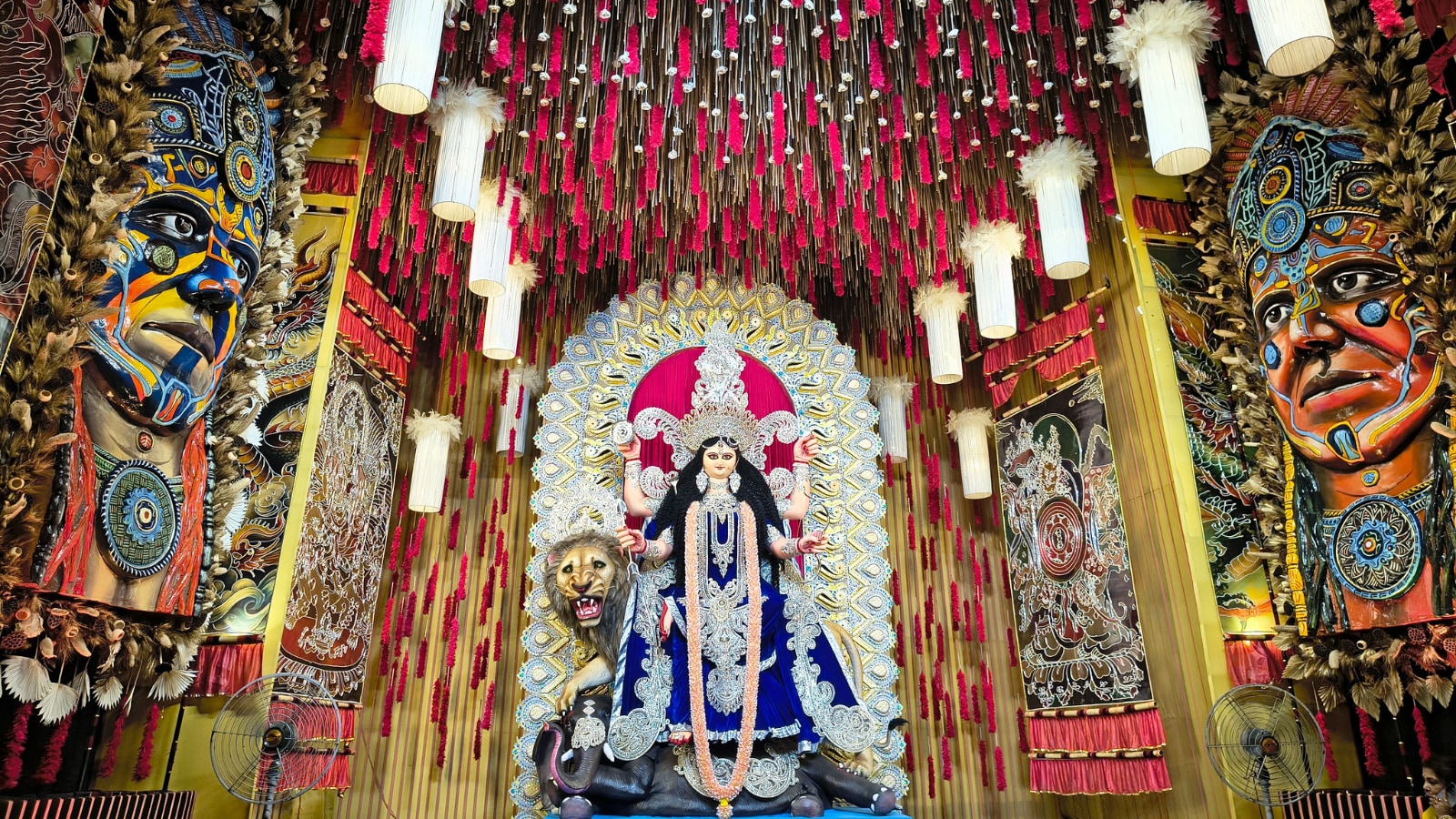
Not everyone had access to the grand household celebrations of the past. According to a popular account, in Guptipara, Hooghly, a group of twelve friends decided to organise their own puja after being excluded from a private household celebration.
The tradition became known as Barowari, commonly associated with baro yaar, meaning twelve friends. The group reportedly pooled resources and sought contributions to organise a celebration of their own.
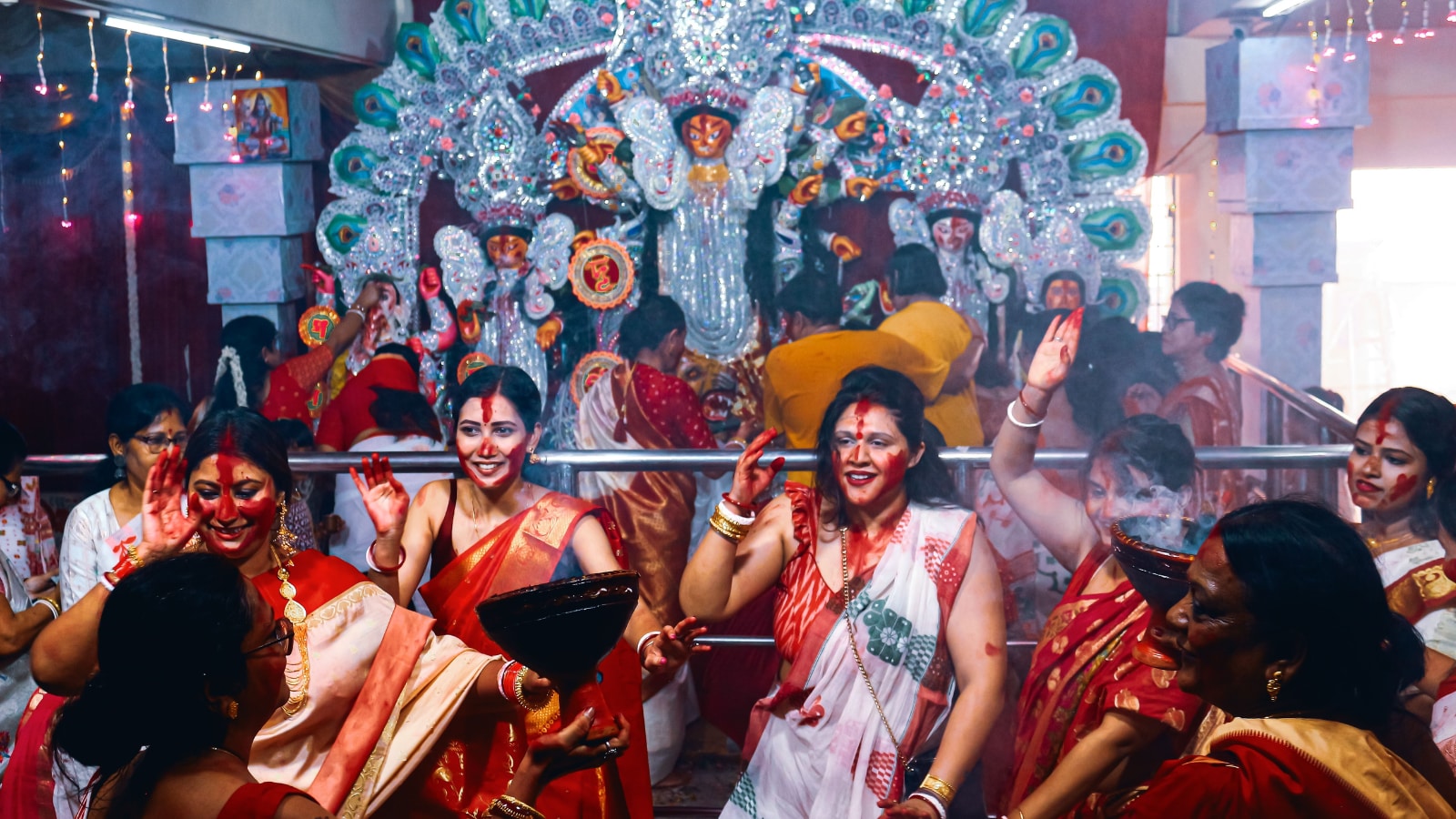
Although accounts differ on the exact year and circumstances, the tradition marked an important shift towards collective worship beyond the homes of wealthy families.
Sarbojanin Durga Puja: How Did The Festival Become For Everyone?
The word sarbojanin means ‘for everyone’, and that idea lies at the heart of this form of Durga Puja. Rather than being organised around one household or a small group, Sarbojanin pujas are organised for the wider community, with public participation and collective contributions.
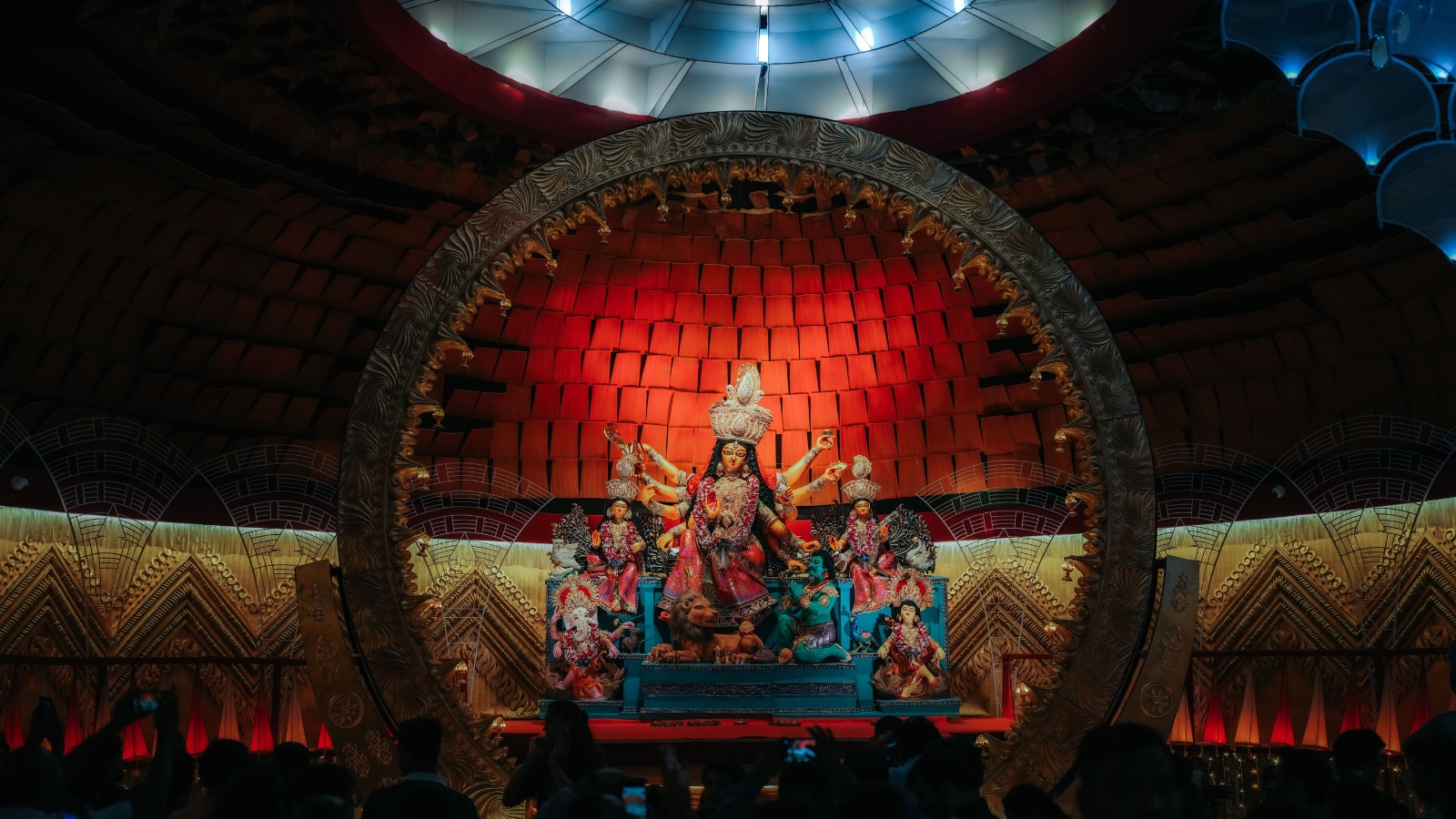
Bagbazar became an important landmark in Kolkata’s community puja movement in the early twentieth century. Community celebrations also became spaces for social gatherings and, during the freedom struggle, nationalist activity.
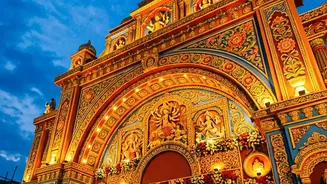
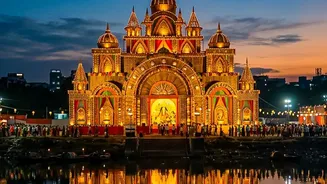
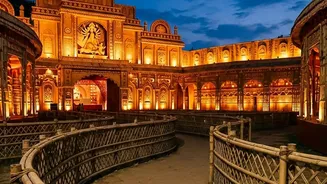
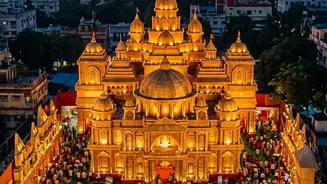
Today, Sarbojanin Durga Puja is often associated with elaborate pandals, artistic installations and inventive themes that draw visitors from across the city. Yet beneath the spectacle remains the central act of devotion: gathering to worship Maa Durga.