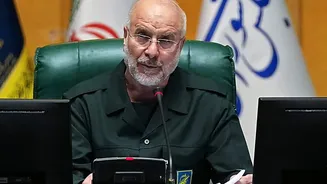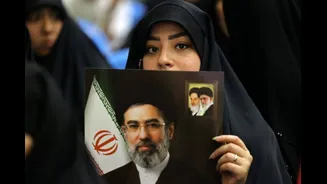







Iran’s Supreme Leader Mojtaba Khamenei is likely back in action and appears to be taking a more active role in the country’s affairs as tensions in West Asia continue to rise with fresh strikes on US bases
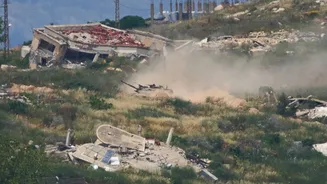
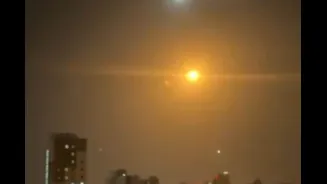
in Kuwait, Bahrain and the United Arab Emirates on Tuesday night, adding to growing pressure on an already fragile ceasefire.
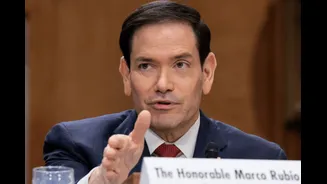
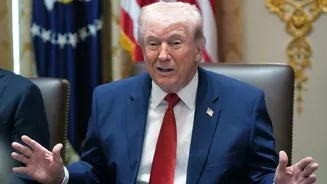
US Secretary of State Marco Rubio said there were signs that Khamenei, who was injured during the joint US-Israel attack on Iran on February 28, was increasingly participating in decision-making. The attack also claimed the life of his father, Ali Khamenei.
What Rubio said?
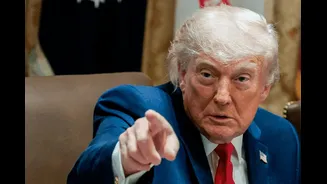
Speaking before the Senate Foreign Relations Committee, Rubio said there were indications that Iran’s supreme leader was becoming more involved in state affairs.
“I think there are indications out there that he is increasingly engaging at some level,” Rubio told senators.
Rubio added that Khamenei’s public visibility remained limited, but suggested that communications were continuing through written messages and intermediaries. His remarks came as negotiations between Washington and Tehran remain stalled despite continuing diplomatic efforts.
Mojtaba Khamenei’s earlier message
Rubio’s comments came days after a written message from Mojtaba Khamenei was broadcast on Iranian state television on May 28.
In the message, Khamenei accused the United States and Israel of attempting to weaken the Islamic Republic through military, economic and political pressure. “The enemy’s blind plan, after the imposed war, the economic pressure, and the political and propaganda siege, is to create divisions and disintegration in order to compensate for military defeats and bring the nation to its knees,” he said.
Khamenei also urged Iranians to remain united and work to safeguard the country’s cohesion during a period of heightened external pressure. Last month, a CBS report said that Mojtaba Khamenei is in hiding and is using a courier network to communicate. His location is also not available to top Iranian officials.
Ceasefire under pressure
The comments also came against the backdrop of a ceasefire brokered by Pakistan on April 8 that is now facing mounting strain. Fresh military action and continuing disagreements between Iran and the United States have complicated efforts to revive talks.
Despite the tensions, Rubio said he remained hopeful that an agreement could still be reached. “There is the prospect before us, which could happen today, it could happen tomorrow, it could happen next week,” he said while discussing the possibility of renewed diplomatic progress.
Strait of Hormuz a major issue
Rubio said one of the key conditions for progress in talks would be the reopening of the Strait of Hormuz, a critical route for global oil and gas shipments.
According to Rubio, Iran must clearly announce that shipping through the strait can proceed freely and that vessels will not face attacks or additional charges. “They have to announce very clearly that Hormuz Strait is open now,” Rubio said.
He also said Iran must stop firing at ships passing through the waterway. Rubio added that once those conditions are met, the United States would assist in removing mines that Iran had placed in the strait.
“We will help remove the mines that they put in there, and they will not fire on ships,” he said.
Iran nuclear programme at centre of negotiations
Apart from maritime issues, Rubio stressed that Iran would need to accept strict limits on its uranium enrichment activities. He said Tehran must either significantly scale back or entirely cancel enrichment efforts as part of any future agreement.
“They have to agree on negotiating severe and long-term limitations and/or cancellation of enrichment activity,” Rubio said.
Rubio linked any sanctions relief directly to Iran’s nuclear programme. “Iran is being sanctioned because they’ve highly enriched uranium, Iran is being sanctioned because of their nuclear activities. If they agree to give up those things, there will be sanctions relief,” he said.