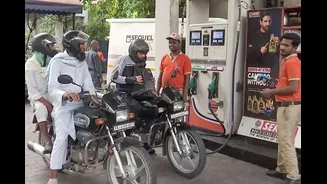







On the second day of the Monsoon Session, the Punjab Legislative Assembly unanimously passed a resolution urging the Union Government to roll back its nationwide rollout of E20 petrol—a fuel blend containing
20 per cent ethanol and 80 per cent fossil fuel.
Moved by the ruling administration and supported across party lines, the resolution highlighted growing public apprehension regarding engine damage, accelerated wear and tear, and reduced fuel efficiency in older, non-compliant vehicles across the state.
Key Concerns: Vehicle Damage and Economic Burden
Lawmakers expressed severe concern over the mechanical impact of high-ethanol blends on conventional engines, particularly older two-wheelers, four-wheelers, and agricultural machinery widely used throughout Punjab.
- Corrosive Nature of Ethanol: Ethanol absorbs moisture rapidly, which can cause severe corrosion in fuel tanks, fuel lines, rubber hoses, and carburettors of vehicles manufactured before E20-compliant engines were standardised.
- Loss of Mileage: Higher ethanol concentration lowers the calorific value of petrol, leading to a noticeable drop in fuel economy for everyday commuters and farmers.
- Cost of Modifications: Retrofitting older engines or replacing damaged fuel components imposes a heavy financial burden on vehicle owners, especially lower-income households and rural motorists.
Impact on the Agricultural and Rural Economy
State leaders underscored that Punjab’s rural workforce relies heavily on older petrol-powered pump sets, light transport vehicles, and tractors. Forcing E20 fuel onto existing machinery without adequate rollout of alternative, non-blended fuel choices at petrol pumps threatens to increase operational overheads for the agrarian sector.
The Assembly emphasised that while promoting biofuels is essential for green energy transitions, forcing a single blended fuel standard across all filling stations leaves consumers without suitable alternatives for legacy engines.
Demands Put Forward to the Union Government
The Assembly’s resolution outlines clear demands to protect vehicle owners while transitioning towards sustainable energy:
- Provide unblended or lower-blend petrol (such as E10) as a permanent alternative option alongside E20 at filling stations.
- Launch comprehensive technical evaluations to assess long-term engine wear caused by high ethanol content.
- Offer financial subsidies or compensation schemes for motorists requiring fuel system modifications or engine repairs due to fuel incompatibility.
The resolution has been formally forwarded to the central government for review, marking a significant policy friction between state and central authorities over the national biofuel roadmap.
The Union Ministry of Petroleum and Natural Gas has consistently defended the E20 policy as a critical milestone towards energy independence, significantly lowering India’s crude import bill while slashing carbon emissions. Central authorities maintain that extensive testing by automobile manufacturers confirms E20 causes no structural harm to legacy engines, reassuring motorists that minor component upgrades in post-2023 vehicles fully optimise performance without compromising vehicle lifespan.