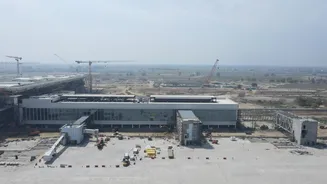









Passengers travelling through Indira Gandhi International Airport may soon experience significantly smoother and faster transfers between terminals, as Delhi airport prepares to introduce a new airside
transit system connecting Terminal 1 (T1), Terminal 2 (T2) and Terminal 3 (T3). The upcoming changes are aimed at reducing travel time between terminals and improving passenger convenience, especially for those catching connecting flights.
At present, commuters often face long bus rides through heavy Delhi traffic or lengthy walks while shifting between terminals.
According to reports, the new facilities, including dedicated airside transfers and an underground walkway, are expected to become operational by the end of this year, subject to necessary security approvals.
Airside Transfers To Reduce Delays And Repeated Security Checks
According to a report in Business Today, Delhi airport authorities are planning to introduce airside connectivity between T1 and T3, as well as between T1 and T2, using dedicated buses operating within the airport’s internal restricted zone. Officials are reportedly exploring a hub-and-spoke model for the transfer system, which will allow passengers to move between terminals without exiting the airport premises.
The proposal has already been submitted to the Bureau of Civil Aviation Security (BCAS) for approval and could reportedly be implemented by the middle of the year if clearances are granted on time. The airside area refers to the restricted operational section of an airport located beyond the public terminal zone. It includes critical airport infrastructure such as taxiways, aprons, runways and aircraft parking bays.
Currently, passengers shifting between terminals rely mainly on shuttle services and DTC buses that travel through city traffic, often leading to delays and longer transit times. Travelling from T1 to T3 can take nearly 30 minutes during peak traffic hours.
Passengers moving between T2 and T3 also either use shuttle buses or walk for around 10 to 15 minutes, after which they are often required to undergo security screening again. The proposed airside transfer system is expected to reduce transit hassles, shorten transfer durations and make connections more seamless for domestic and international travellers alike.
Underground Walkway To Connect T2 And T3 Metro Station
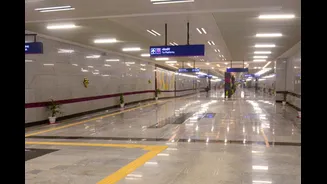
In another major infrastructure upgrade, Delhi airport is also constructing an underground pedestrian walkway linking T2 directly with the T3 Airport Metro station.
At present, passengers arriving at the metro station have to walk nearly 750 metres to reach T2, a journey that usually takes between 15 and 20 minutes, especially difficult for travellers carrying luggage. Once the underground passage becomes operational, the walking distance will shrink dramatically to nearly 80 metres, reducing travel time to under five minutes.
Airport authorities believe the new corridor will provide major relief to passengers navigating between the metro station and terminal buildings, particularly during extreme weather conditions or rush hours.
Major Relief Expected For Domestic Flyers
Terminal 2 currently handles domestic operations for airlines including IndiGo, Air India Express and Akasa Air, while T3 manages both domestic and international flight operations.
With passenger traffic at Delhi airport continuing to rise, the new transfer infrastructure is expected to improve overall airport efficiency and make terminal interchange faster and more comfortable. Officials said the broader goal is to create a smoother transit experience for passengers while reducing crowding, unnecessary movement and delays across terminals.
Security Approvals Key Before Launch
While airport authorities are aiming to complete the projects by the end of the year, implementation timelines will largely depend on approvals from security agencies. Once cleared, the airside transfer system and underground walkway are expected to transform how passengers move across Delhi airport, especially for those with tight connecting schedules or multiple terminal changes.