The three-hour visit to India by United Arab Emirates President Sheikh Mohamed bin Zayed Al Nahyan for a meeting with Prime Minister Narendra Modi signals a profound shift in Middle Eastern diplomacy amid
the West Asia churn.
Al Nahyan arrived in New Delhi on Monday for a high-stakes, three-hour engagement with Modi, which is being seen as far from a routine diplomatic exchange.
Experts are viewing this brief visit as an “alarm bell” amid intensifying volatility in west Asia with the UAE increasingly treating India not merely as a partner, but as a “strategic firewall” capable of providing stability as it navigates complex tensions involving Iran, the United States, and regional rivals, as per sources.
While such engagements between top leaders are scheduled months in advance, such short, intense visits are traditionally reserved for crisis management. The timing of the visit is particularly significant as US President Donald Trump seeks to onboard global leaders to a National Committee for the Administration of Gaza, a central component of the second phase of his peace plan. Hence, for the UAE, the necessity of a reliable and autonomous partner like India has never been more pressing.
Here are five reasons why:
INDIA’S ‘GOODWILL’ WITH US, IRAN
The UAE’s primary motivation for this visit is India’s rare ability to maintain deep, functional relationships with both the US and Iran.
As tensions in West Asia reach a boiling point, Abu Dhabi views New Delhi’s diplomatic “goodwill” with both Washington and Tehran as an essential asset for regional de-escalation. Unlike other regional players, India is perceived as an autonomous and predictable actor in long-term planning, making it an ideal mediator.
This “proxy engagement” capability offers the UAE a strategic advantage that traditional partners like Pakistan or Turkey cannot provide.
STRATEGIC SHIFT FROM SAUDI-PAKISTAN AXIS
The regional landscape has been altered by a recent mutual defence understanding between Saudi Arabia and Pakistan, which treats an attack on one as an aggression against both.
Policymakers in the UAE increasingly view Pakistan as being strategically aligned with Saudi Arabia, prompting a search for a more independent security partner. Al Nahyan seeks Indian security cooperation because India provides a professional military framework without the complications of “army ideology”.
This pivot is underscored by Indian concerns regarding his scheduled December 2025 visit to Pakistan, a matter the Indian side reportedly raised with some disappointment.
SOMALILAND AND YEMEN CRISIS
Beyond broad regional stability, the UAE is seeking Indian cooperation on specific geopolitical friction points.
Israel’s recognition of Somaliland has escalated regional sensitivities, and Al Nahyan is keen to align with India on this front. The visit takes place against the backdrop of simmering tensions between Saudi Arabia and the UAE in Yemen.
Despite the UAE’s rejection of allegations that it is undermining Saudi security, reports of Saudi airstrikes against UAE-backed groups in southern Yemen highlight a growing rift that necessitates a stable external partner like India.
DEFENCE AND CIVIL NUCLEAR PACTS
The engagement between Modi and Al Nahyan was not limited to crisis talks, but served to formalise significant long-term collaborations.
The two leaders signed a ‘letter of intent’ (LoI) to work towards a comprehensive strategic defence partnership. More ambitious was the focus on civil nuclear energy, with discussions revolving around partnership in large reactors and small modular reactors (SMR), alongside nuclear power plant operations.
This marks a transition from a trade-based relationship to one rooted in high-technology and security infrastructure.
UAE, INDIA ROLE IN US-LED GAZA PEACE PLAN
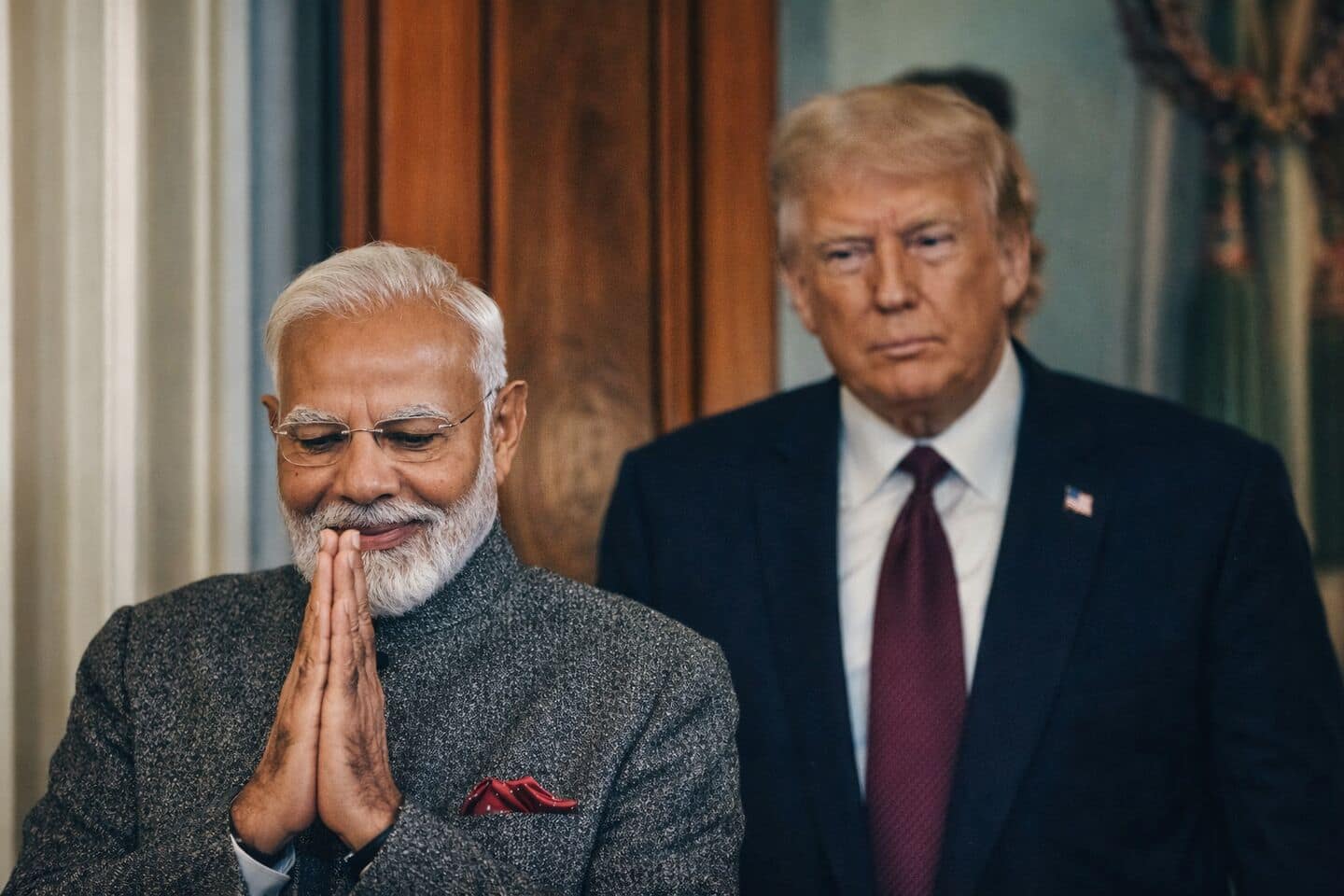
The visit coincides with a pivotal moment in Middle Eastern diplomacy, as both Modi and Al Nahyan have been invited to play central roles in the US-led Board of Peace for Gaza.
This board, chaired by Trump, includes high-profile figures such as US Secretary of State Marco Rubio and former British PM Tony Blair. The UAE has expressed “pride” in taking part in this board, which will oversee Gaza’s stabilisation, reconstruction, and investment attraction.
India’s inclusion in this peace board underscores its expanding influence in Middle Eastern diplomacy and reinforces why Abu Dhabi views New Delhi as an indispensable pillar of its regional strategy.
This three-hour visit builds on a period of intense high-level exchanges in recent months.
Abu Dhabi’s Crown Prince and the UAE’s defence minister have both visited India. External affairs minister S Jaishankar and army chief General Upendra Dwivedi have conducted high-level missions to the UAE. During Gen Dwivedi’s visit in early January, he was accorded a Guard of Honour by the UAE Land Forces reflecting a burgeoning military-to-military ties.
India-UAE relations, established in the early 1970s, have evolved into a multi-faceted partnership underpinned by the Comprehensive Economic Partnership Agreement (CEPA) and a robust energy relationship.
(With agency inputs)