
The United States military has been instructed to prepare for a possible resumption of major combat operations against Iran, even as President Donald Trump has yet to make a final decision on whether to launch
fresh strikes, according to a report published by Axios.
The Pentagon directed US Central Command several days ago to complete preparations for potential military operations, according to the officials.
The order did not set a timeline for any attack, but US and Israeli officials said the possibility of renewed combat remains under consideration.
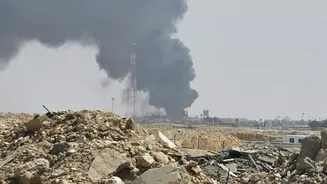
If Washington decides to resume the war, the campaign could involve extensive strikes on Iranian energy infrastructure, power plants and nuclear facilities, the officials said, as per Axios.
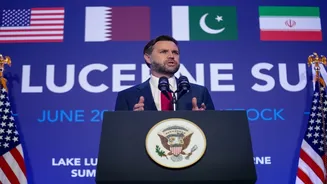
Also Read: Has Trump Softened On Iran? JD Vance’s Shift On Uranium Enrichment Sparks Fresh Questions
Attack Before November Elections?
The fresh attacks can be carried out before the US midterm elections and probably a week before the Israeli elections, reported Axios, citing US and Israeli sources.
The timing of any escalation could also carry political implications. As per Axios, a renewed US offensive within the next three to four weeks could push up oil prices and potentially affect the November midterm elections.
“The Department’s job is to develop and present military options to the President,” a Pentagon official told Axios.
The possibility of strikes before the elections is being weighed, although Israeli officials said they do not consider it the most likely scenario.
Some Israeli officials said discussions about a renewed US offensive have intensified, although they played down the likelihood of such an operation before the elections.
“The discussion about possible resumption of major combat operations in Iran has increased. The chances of it happening before the elections is not high but we don’t rule it out. After the midterms, the chances of it happening increase significantly,” a second Israeli official said.
Also Read: ‘Iran Has Lost Complete Control Of Strait Of Hormuz’: Rubio Says Tehran’s Economy In ‘Total Freefall’
‘Trump Holds All Cards’
A White House official, meanwhile, said Trump retains the ability to act at any time.
“The U.S. is in a very strong position with control of the Strait of Hormuz and the Iranian economy collapsing. Iran has been decimated, and things will go one of two ways: the easy way or the hard way,” the official said.
“President Trump holds all the cards and will do whatever is best for the United States,” he added.
The developments come as diplomatic efforts between Washington and Tehran remain stalled.
Qatari mediators are still awaiting an Iranian response to a US counterproposal that includes demands for concessions on Tehran’s nuclear programme.
Trump, Netanyahu Discuss Iran
Trump’s national security team met for several hours at Camp David on Friday to discuss the war and broader foreign policy issues. An Israeli official said Iran was among the subjects discussed, including the possibility of restarting major combat operations.
Secretary of State Marco Rubio said after the meeting that the discussions were focused on “long-term” foreign policy planning.
Trump also spoke with Israeli Prime Minister Benjamin Netanyahu on Wednesday, marking their second conversation in a matter of days after a prolonged period in which the two leaders had limited contact.
A US official said the conversation included discussion of “remembrance and respect for the victims of the October 7 massacre.”
The call came after Netanyahu convened his national security team for a meeting on Iran, according to an Israeli official. Netanyahu had also spoken with Rubio on Monday.
If military operations resume, US and Israeli forces are expected to coordinate closely, with Israel’s military likely to participate in the campaign.
Iran To Launch Offensive?
The officials also warned that Iran’s leadership, which they described as increasingly desperate and paranoid, could potentially launch an attack of its own rather than wait for another US-Israeli offensive.
They said Iran has already been caught off guard by two attacks and would be determined to avoid a third surprise strike.
Any renewed war could also have repercussions for Israel’s political landscape.
The heightened security environment could benefit Netanyahu by limiting the ability of political rivals to target him during the final phase of the campaign, while a renewed conflict or prolonged state of emergency could reshape the electoral debate.