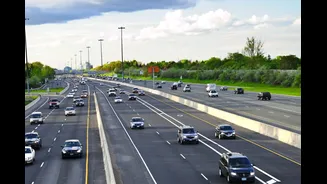








Motorists using Bengaluru’s major national highways may soon notice a new addition along the roads: QR code-based information boards installed by the National Highways Authority of India. The move, according
to NHAI, is aimed at improving emergency response, transparency, and overall convenience for highway users travelling in and around the city.
The initiative has been rolled out on key corridors, including National Highway 48 on the Bengaluru–Nelamangala stretch and National Highway 75 along the Bengaluru–Kolar–Mulbagal route. These highways see heavy daily traffic, ranging from office commuters and freight vehicles to long-distance travellers heading out of the city.
What the QR Code Boards Are Meant to Do
NHAI says the QR code boards are designed to give highway users instant access to important information by simply scanning them on a smartphone. Once scanned, the codes are supposed to provide details about nearby toll plazas, ongoing or completed highway expansion projects, and roadside facilities available along the route.
More importantly, the boards are positioned as a safety tool. The QR codes are meant to link users to emergency contacts such as highway patrol teams, engineers responsible for that stretch, nearby police stations, hospitals, and the National Highway helpline. In theory, this could help motorists act quickly during accidents, breakdowns, or medical emergencies, especially on long or isolated stretches.
Where the Boards Have Been Installed
As of now, the QR code boards have been confirmed on the Bengaluru–Nelamangala stretch of NH 48 and the Bengaluru–Kolar–Mulbagal stretch of NH 75. These corridors were chosen because of their high traffic volume and strategic importance as entry and exit points to the city.
NHAI has indicated that the initiative may be expanded to other national highway corridors if it proves useful for motorists and emergency responders.
NHAI’s Pitch: Technology for Safer Travel
Announcing the move on social media platform X, NHAI said the boards are being installed to increase transparency for national highway users and improve the ease of travel. The authority framed the project as part of a broader push to use technology to make highway journeys safer, smoother, and more informed.
Officials say easy access to verified contact details and infrastructure information could reduce confusion during emergencies and help travellers make quicker decisions on the road.
Public Pushback and Questions on Transparency
Despite the official pitch, the QR code boards have already attracted criticism from road users and netizens. Several users on social media have questioned whether the initiative actually delivers the transparency and utility it promises.
According to complaints, scanning some of the QR codes does not provide meaningful or actionable information for motorists. Instead of detailed project updates or live highway support data, users report seeing limited information such as the names of local MLAs, contractors involved in the project, and broad cost figures.
This has led to frustration among citizens, many of whom argue that such details do little to help a stranded motorist or someone facing an emergency on a busy highway.
Safety and Traffic Concerns
Another major concern raised by the public is safety. Critics argue that stopping vehicles on the shoulder of a highway to scan a QR code is impractical and could even create traffic hazards. On high-speed corridors, pulling over to read a board or scan a code may increase the risk of accidents rather than reduce it.
Some users have suggested that if QR-based systems are to work, the information should be accessible through navigation apps or pre-loaded platforms rather than roadside scanning.
Allegations of Wasted Public Money
The criticism has also taken a political turn. Netizens have questioned whether the QR boards fulfil earlier promises of transparency made by Union Road Transport and Highways Minister Nitin Gadkari. Several posts accuse NHAI of spending crores of rupees on boards that do not deliver real value to road users.
The argument being made is simple: if the QR codes do not provide live updates, emergency response coordination, or genuinely useful data, the project risks becoming another cosmetic infrastructure addition rather than a meaningful reform.
What Motorists Should Expect Next
For now, motorists travelling on Bengaluru’s national highways can expect to see more of these QR code boards along major routes. Whether they evolve into a truly useful emergency and information tool will depend on how NHAI upgrades the backend systems linked to the codes.
If improved with real-time data, verified contacts, and seamless mobile access, the initiative could still serve its intended purpose. Until then, Bengaluru’s highway users remain cautiously curious, scanning not just QR codes, but the gap between promise and performance.