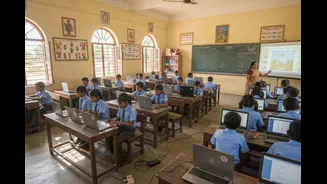








A majority of Indian students are concerned that artificial intelligence (AI) tools may help them complete academic tasks faster but leave them with a weaker understanding of the material, according to the HP
Futures 2026 report, Skills in the Age of Intelligent Machines.
The report found that 82% of Indian students surveyed were concerned about the trade-off between speed and deeper learning in an AI-enabled learning environment. The findings highlight a key challenge for education systems as students increasingly engage with AI tools for academic tasks.
The HP Futures 2026 study surveyed more than 6,000 students worldwide, including 758 students in India. It also brought together 58 leaders from education, policymaking and the future-of-work sectors to examine how education systems can prepare young people for changing workplace requirements.
Despite the growing use of AI, students continue to rely on conventional study methods when their priority is retaining information. The report found that printed materials and handwritten notes remain important for learning and recall.
According to the survey findings, 42% of Indian respondents preferred printed materials or handwritten notes over AI-generated summaries when seeking to retain information. Only 17% preferred AI-generated summaries for this purpose.
The findings suggest that students see a distinction between using technology to access information quickly and choosing study methods they consider useful for retaining what they learn.
Despite concerns about deeper learning, Indian students remain optimistic about the role of AI in their future careers.
The report found that 78% of Indian respondents believed AI would create more career opportunities than it would displace. Meanwhile, 87% said they felt confident about using AI tools effectively and responsibly in their future careers.
The findings indicate that students are optimistic about the opportunities associated with AI while also expressing concerns about its potential impact on learning.
The report also examined which skills students believe will be important in the future workplace. AI and digital literacy ranked highest among Indian respondents, with 52% identifying them as important future job skills. Creativity was cited by 48%, followed by critical thinking at 41% and communication and collaboration at 36%.
The survey also found that 92% of Indian respondents believed their education was preparing them for the workplace.
The report calls on policymakers to develop clear plans to help students build durable skills that remain valuable as technology evolves. It also recommends keeping literacy, numeracy and learning that helps shape students’ identities at the core of education, while using creative, hands-on approaches to develop foundational knowledge and enduring skills together.
The report emphasises that these capabilities should be integrated into education rather than treated as secondary or extracurricular additions.