
Budget 2026 Expectations: With the Union Budget just days away, policymakers appear keen to frame Budget 2026 as both people-friendly and future-facing, with artificial intelligence (AI) emerging as a central
pillar of the government’s economic and social vision.
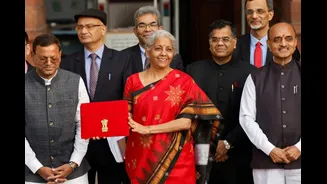
Finance Minister Nirmala Sitharaman, who will present the Budget on February 1, is expected to give a push to AI, positioning it not as a job-displacing threat, but as a productivity-enhancing tool that can directly improve lives across sectors.
According to sources, the Budget provisions around AI are likely to focus strongly on healthcare. The government might back AI-led diagnostic tools that can help detect diseases early, including the use of machine learning models to analyse X-rays and other medical imaging. The idea is that technology can bridge gaps in doctor availability, particularly in rural and underserved regions, while lowering the cost of diagnosis.
AI Push
Agriculture is another major area where AI is expected to get policy attention. The Budget may highlight AI-driven farming advisory platforms that guide farmers on sowing patterns, fertiliser use, pest control, and irrigation. Predictive models that estimate crop yields in advance could help farmers make better decisions and allow governments to manage food supply and inflation more effectively. Modernisation of agriculture through data and AI is being projected as a way to sustainably lift farm productivity and incomes.
At a more everyday level, AI is also being framed as “people-friendly” technology. Sources suggest the Budget speech could point to AI-powered apps, such as chat-based interfaces—that help citizens compute, understand, and decode complex data, whether related to government schemes, taxes, or financial planning. In this framing, AI becomes an enabler of inclusion rather than a tool reserved for big corporations.
AI’s role in communications infrastructure may also find a mention. With India rolling out 5G at scale, AI systems that sift through massive volumes of data across 5G networks and the internet can improve efficiency, optimise traffic, and enhance service quality. Similarly, AI-led optimisation is being seen as a way to boost energy yields by improving grid management and forecasting demand.
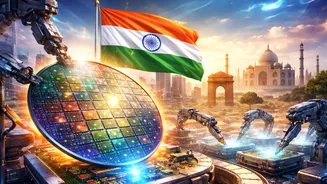
Globally, rapid AI adoption has fuelled a surge in demand for semiconductors and related services. The government, which is trying to build its own semiconductor ecosystem, is expected to underline this opportunity. Sources indicate that higher budgetary allocation for semiconductor manufacturing and allied services could be justified on the back of AI-led global demand, with India positioning itself as a key player over the medium term.
Two Tax Relaxations Likely: Home Loan Interest, Medical Insurance Premium
Alongside this technology-heavy narrative, two distinctly people-first proposals are being discussed for possible inclusion in Budget 2026 under the new tax regime. One, the government is mulling the introduction of a deduction of up to Rs 2 lakh on home loan interest, an incentive that currently exists only in the old tax regime. Two, a proposal is under consideration to allow a deduction of up to Rs 50,000 for medical insurance premiums, a move that could provide relief amid rising healthcare costs.
Import Duty Cuts Likely
Sources also point to the possibility of a sharp reduction in import duties on select items as the government looks to counter global trade disruptions and volatility. Such a move could help soften input costs for domestic industry and cushion consumers from imported inflation at a time of heightened global uncertainty.