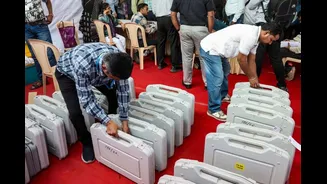

Maharashtra on Thursday kick-started the high-stakes battle for the Brihanmumbai Municipal Corporation (BMC) and 28 other civic bodies across the state. The polls, pending since 2017, are also a prestige
tussle to control BMC, the richest body in Asia.
Originally scheduled for 2022, the elections were kept on hold, with the delay attributed to a complex mix of legal, political and administrative issues.
According to Moneycontrol, municipal elections in Mumbai were last held in 2017. This means the corporators’ five-year term was supposed to end in March 2022, and fresh polls were scheduled soon after. However, the elections did not take place on time, and the BMC was run by an administrator appointed by the state government instead of elected representatives.
One of the biggest hurdles to the polls was a legal battle over how seats should be reserved, especially for the Other Backward Classes (OBC). Financial Express reported that in 2022, the Supreme Court said that OBC reservations in local body elections could only be granted after a “rigorous empirical inquiry” proving backwardness and under-representation. Because that data was not ready, courts warned against holding elections until this issue was resolved. This meant the state had to pause election notifications, and lengthy litigation kept the process in legal limbo for years.
Another major factor was disagreement over the number and boundaries of wards in Mumbai. In 2021, the then-government increased the number of BMC wards from 227 to 236 and redrew boundaries. However, after the political change in Maharashtra in 2022, the new government reversed that order and restored the previous structure. This tug-of-war led to conflicting notifications and more legal challenges. The delimitation battle added layers of complex administrative delays before any election schedule could be finalised.
Moneycontrol also reported that in 2022, the split in the powerful Shiv Sena also played a role in the delay. The reshuffling of political forces in Maharashtra’s government created further uncertainty in managing the BMC polls, as parties grappled with alliances, symbols and influence in civic politics. The prolonged negotiations and political realignments contributed to administrative inertia, delaying the poll process even more.
It was finally in August 2025 that the Supreme Court directed the Maharashtra State Election Commission to complete all delayed local body elections, including BMC polls, by January 2026, effectively ending years of postponement.
Mumbai’s BMC controls a huge annual budget, manages essential services like water, sanitation, roads and development projects, and influences state and national politics. For nearly four years, the city functioned without a democratically elected civic body, making this election a major political and administrative milestone.