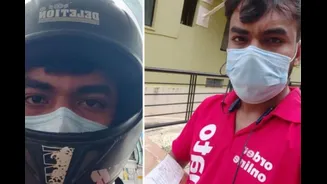








As controversy over delivery workers’ pay, safety and work conditions continues, Suraj Biswas, founder and CEO of Assessli, has shown his support for Zomato and its CEO, Deepinder Goyal. Biswas compared
his own time as a delivery partner in Bengaluru between 2020 and 2021 to highlight the opportunities such platforms can provide. He claimed that the work covered his college fees and supported his small team while staying financially self reliant.
During this period, he earned around Rs 40,000 a month, while his colleagues made Rs 80,000-Rs 90,000 monthly. Biswas added that many riders use multiple platforms at once. He also faced serious risks, including food snatching and life threatening situations, but praised the food delivery company for helping and coordinating with the police. These experiences inspired him to create technology driven solutions with real world impact through his start up.
Former Delivery Partner Supports Zomato
Taking to LinkedIn, Suraj Biswas wrote, “I stand with Zomato. I stand with Deepinder and I say this as someone who has lived this life. In 2020–21, before college really took off and before I started Assessli, I was a Zomato delivery partner in Bengaluru. Not a story for sympathy. A story of independence, dignity, and opportunity. I delivered: Pay my college fees, Support my early team, Stay financially independent. Today I run a Deeptech Startup Assessli as founder and employ 40+ techies operating from offices in Bengaluru and Kolkata.”
“I earned Rs 40K/month consistently. I personally knew riders earning Rs 80–90K/month. No degree checks. No background privilege. Just effort + tech + execution. I used medical insurance (Acko) provided by Zomato. I faced food snatching and life threatening moments and when things went wrong, Zomato coordinated with police and supported me. That’s when I truly understood the power of well-built tech + systems. This is also where my obsession with building impactful technology came from,” he added.
Sharing his opinion on the “current outrage on 10-minute delivery.” Suraj Biswas added that “from first hand experience: This was independent gig work, not forced labour. Most delivery partners are NOT full time, more than 50%+ riders work on 2–3 platforms simultaneously (I’ve seen it, lived it)…Loyalty in gig work is flexibility-driven, not contract-driven. Now ask yourself honestly: If Zomato made it a fixed salary, full time job with exclusivity, how many riders would actually stay? The uncomfortable truth is the system would collapse. And then? Another protest. Another demand. This is not enough.’ That’s not sustainability. That’s a cycle.”
The Assessli founder explained that the real way to reduce unemployment is not by banning things, getting angry or expecting too much. Instead, it is about creating more opportunities through technology and platforms like Zomato, which help people without education improve their lives financially.
The systems built by Goyal allowed students to earn money, helped migrant workers survive in cities and gave millions the chance to work in flexible ways. He disagreed with rules that restrict fast delivery, treating gig work like forced labour or glorifying protests without knowing the real struggles of workers.
He supported creating jobs through technology, flexible income options and solutions that can help many people at once. Suraj Biswas said that his own life and career were inspired by his experience in this work, and that’s why he stands with Zomato, Goyal and systems that create opportunities.