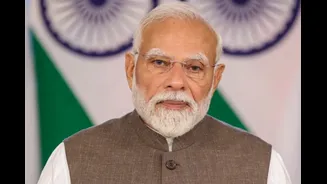








Prime Minister Narendra Modi on Saturday extended greetings to countrymen on the occasion of Eid-Ul-Fitr.
The Prime Minister prayed that the spirit of brotherhood and kindness furthers all around.
“Best
wishes on Eid-ul-Fitr. May this day further brotherhood and kindness all around. May everyone be happy and healthy. Eid Mubarak!” he said in a post on X.
Best wishes on Eid-ul-Fitr. May this day further brotherhood and kindness all around. May everyone be happy and healthy.
Eid Mubarak!
— Narendra Modi (@narendramodi) March 21, 2026
He also extended greetings on the occasion on Navroz, expressing hope for good health and the fulfilment of people’s aspirations.
“Greetings on the special occasion of Navroz. Praying for a year filled with prosperity and joy. May everyone be healthy and may all aspirations be realised. Navroz Mubarak!” he said in a post on X.
Greetings on the special occasion of Navroz.
Praying for a year filled with prosperity and joy. May everyone be healthy and may all aspirations be realised.
Navroz Mubarak!
— Narendra Modi (@narendramodi) March 21, 2026
The festival of Eid-ul-Fitr marks the end of Ramadan, the holy month of fasting, prayer, and reflection observed by Muslims across the world. The festival is celebrated with prayers, charity, family gatherings, and a sense of community.
India is celebrating Eid-Ul-Fitr on Saturday, March 21. This year, the moon was expected to be visible on the evening of March 19, making March 20 the likely date for Eid. However, since the crescent wasn’t sighted, Ramadan has completed 30 days, and Eid-ul-Fitr is being celebrated today, March 21.
However, Saudi Arabia and other Gulf nations, including the UAE, Turkey, Bahrain, Qatar, Kuwait, and Lebanon, celebrated the Eid on Friday.
The primary reason for the difference lies in the traditional method of moon sighting. In India, Eid is declared only after the crescent moon is physically sighted on the 29th day of Ramadan. If the moon is not visible, the fasting month completes 30 days, and Eid is celebrated the following day. Religious authorities, including local moon sighting committees, make the final announcement. In contrast, Saudi Arabia also follows moon sighting but often confirms the sighting earlier due to its geographical position and established observation system.