








The Centre has put to rest speculation over a further increase in ethanol blending in petrol, for now. Responding in Parliament, Minister of State for Petroleum and Natural Gas Suresh Gopi said the government
has not taken any decision to raise ethanol blending beyond the current 20 per cent level (E20). The clarification comes amid an ongoing debate over E20 petrol, with some consumers and industry voices expressing concerns over fuel efficiency, compatibility with older vehicles and engine performance.
The government has, however, made it clear that there are no plans to roll back E20 either. According to the ministry, India has not received verified evidence of widespread engine failures linked to E20, and any future move towards higher ethanol blends would only follow scientific studies, stakeholder consultations and technical assessments
With terms like E10, E20, E30 and E85 increasingly entering everyday conversations, many motorists are left wondering what these labels actually mean. Here’s a simple breakdown.
What Do The ‘E’ Numbers Mean In Fuel?
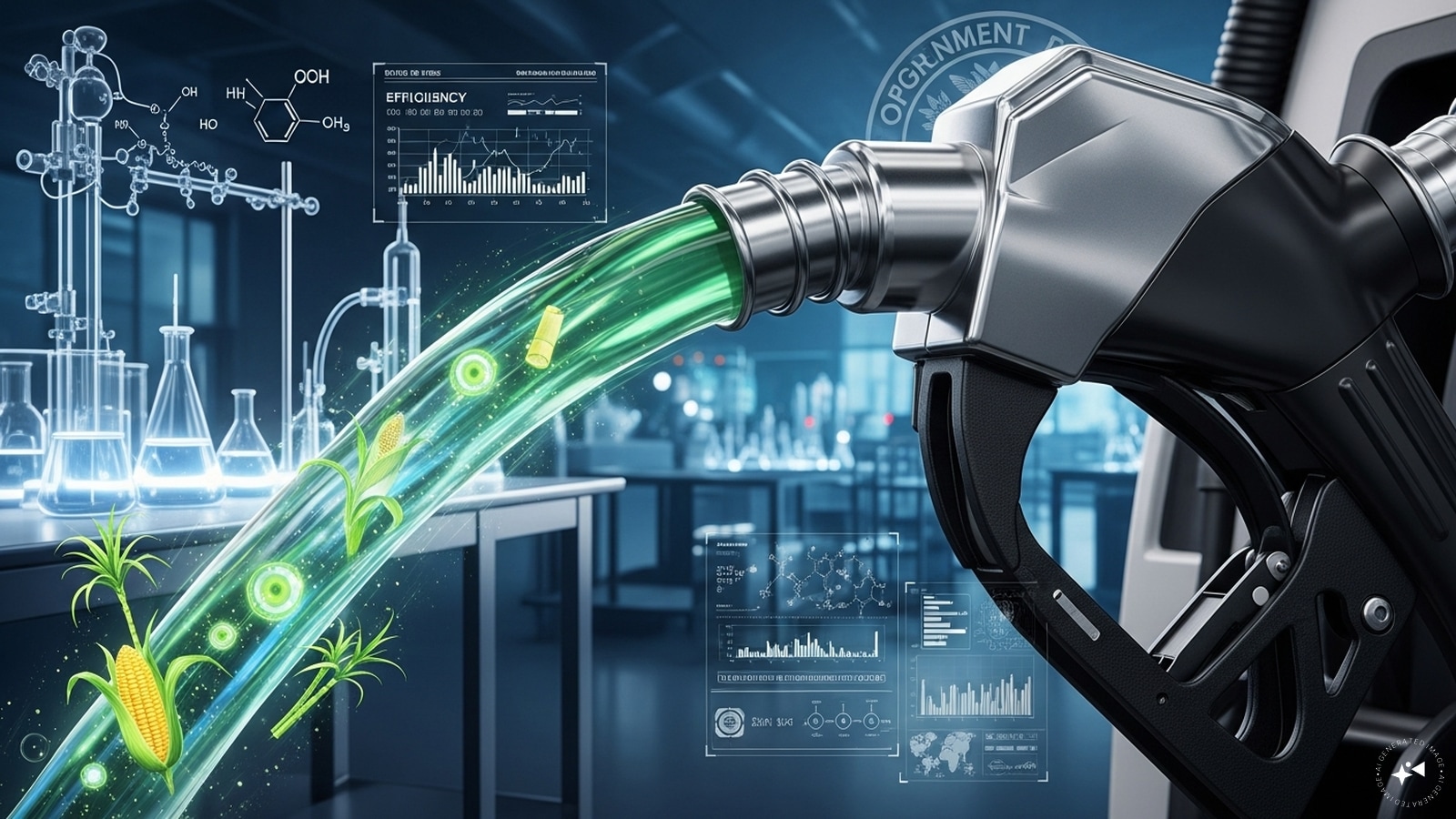
The letter ‘E’ stands for ethanol, an alcohol-based biofuel produced primarily from agricultural feedstocks such as sugarcane molasses, maize, damaged food grains and broken rice in India. The number following the ‘E’ indicates the percentage of ethanol blended with petrol, while the remaining percentage is conventional petrol.
For example:
E10 = 10 per cent ethanol + 90 per cent petrol
E20 = 20 per cent ethanol + 80 per cent petrol
E30 = 30 per cent ethanol + 70 per cent petrol
E85 = Up to 85 per cent ethanol + the balance petrol
As the ethanol percentage increases, the fuel becomes more renewable and can help reduce dependence on imported crude oil. However, higher blends also require engines and fuel systems specifically designed to handle the greater alcohol content.
E10: The First Step In Ethanol Blending
E10 has been the most common ethanol blend across several countries, including the United States and many European nations.
India also began its ethanol blending journey with lower blends such as E5 and E10 before gradually increasing the proportion. Vehicles manufactured over the past several years are generally compatible with E10 without requiring any modifications.
Compared to conventional petrol, E10 helps lower tailpipe emissions and reduces crude oil imports while requiring minimal changes to existing fuel infrastructure.
E20: India’s Current Standard
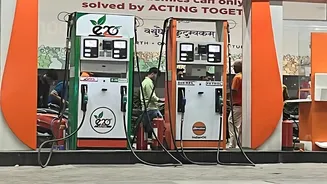
E20 contains 20 per cent ethanol and 80 per cent petrol and is now the standard petrol being supplied across the country.
India achieved its 20 per cent ethanol blending target five years ahead of the original 2030 schedule, marking a significant milestone in its biofuel programme. The government says the initiative is aimed at cutting oil imports, improving energy security, reducing carbon emissions and providing an additional market for farmers growing feedstocks such as maize and sugarcane.
The recent controversy around E20 has centred on two issues.
First, ethanol contains less energy per litre than petrol, which can lead to a slight reduction in fuel economy. The government says vehicles designed only for E10 may experience around 3-5 per cent lower mileage when running on E20.
Second, owners of older vehicles have raised concerns about engine compatibility. The Centre has maintained that there is no verified evidence of widespread engine failures attributable to E20 despite its use in more than 23 crore vehicles.
E30: The Next Possible Step, But Not Yet
E30 refers to petrol containing 30 per cent ethanol.
Unlike E20, E30 has not been approved in India, and the government has now formally clarified that no decision has been taken to move beyond E20. A higher ethanol blend would require fresh studies on vehicle compatibility, fuel economy, emissions, supply of ethanol and consumer impact before any policy decision is made. The latest statement indicates that E30 remains a future possibility rather than an immediate policy objective.
E85: Built For Specialised Flex-Fuel Vehicles
E85 contains up to 85 per cent ethanol, with the remainder being petrol.
Unlike E20, E85 cannot be used in conventional petrol vehicles. It requires flex-fuel vehicles (FFVs) equipped with modified fuel systems, corrosion-resistant components and engine management software capable of handling fuels with very high ethanol content.
Countries such as Brazil and the United States have used E85 and other high-ethanol blends for years because they have dedicated fleets of flex-fuel vehicles and well-developed ethanol supply chains.
What Is A Flex-Fuel Vehicle?
A flex-fuel vehicle (FFV) is designed to run on multiple ethanol-petrol blends using the same engine.
Instead of being restricted to one fuel, an FFV can automatically detect the ethanol content in the tank and adjust ignition timing, fuel injection and combustion accordingly.
Depending on the model, a flex-fuel vehicle may run on anything from pure petrol to E20, E30, E85 or even nearly pure ethanol. This flexibility is achieved through specialised sensors, software and fuel system components that can withstand ethanol’s chemical properties.
India has been encouraging automakers to develop flex-fuel vehicles as part of its broader biofuel strategy, although such vehicles are not yet widely available in the domestic market.
Why Is India Pushing Ethanol?
India imports a significant share of its crude oil requirement, making fuel imports a major drain on foreign exchange.
The ethanol blending programme aims to reduce dependence on imported crude oil, improve energy security, lower greenhouse gas emissions from transport, create additional income opportunities for farmers by using crops such as maize and agricultural by-products for ethanol production, and diversify India’s fuel basket.
To reduce dependence on water-intensive sugarcane alone, the government has also expanded ethanol production from maize, damaged food grains and broken rice, with maize now accounting for a growing share of India’s ethanol feedstock.
What Happens Next?
For now, the government’s position is unambiguous, E20 remains India’s highest approved ethanol blend, and there is no decision to introduce E30 or higher blends.
That means motorists can expect E20 to remain the country’s standard petrol while policymakers continue evaluating the technical, environmental and economic implications of moving to higher ethanol blends in the future.