






Car spotting is an addictive hobby that enthusiasts swear by. Long before he became one of the most recognisable faces in the car YouTube space, Doug DeMuro was fixated with the Porsche Carrera GT, so
much so that he made a career out of photographing exotic cars that he spotted as a teenager in the wild. While camouflaged cars reveal only so much, spotting test cars in the real world has become a niche genre of recreational activity among car enthusiasts in India.
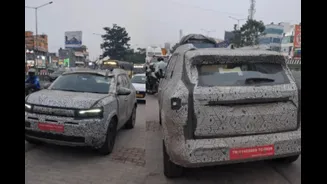
Take this photo, recently posted on Reddit, for instance.
The camouflaged test car was spotted by a user who promptly shared it with the fellow car community on r/CarsIndia Subreddit. The OP posted a simple query along with the photograph.
“What car is it?”
Only a few minutes had passed, and we got to know it’s Renault’s much-anticipated upcoming SUV, the all-new Duster. In fact, the answer was hidden in plain sight. The camouflage bore the Renault brand logo all over it.
So when it’s seemingly effortless to identify the brand and discern the specific model from the company, why do car manufacturers bother to camouflage their pre-production test cars and expose them to the world?
Hidden In Plain Sight
Sure, the car literate public and auto journalists can identify the unreleased motor vehicle from a distance without taking a second look, but the average janta may not know what they are looking at. The simple act of wrapping the test car can avoid the mass circulation online and offline, thus generating the needed hype before the automobile becomes a polished product, ready to be driven home by buyers.
It’s All In The Details
Camouflage plays a key role in concealing intricate design details, such as creases, cuts, curves, contours, and other cosmetic features, during wraps (no pun intended!). When prototype vehicles, particularly upcoming facelifts of popular models, take to the roads, heavy wrapping ensures that the car’s lines, shape, and styling updates remain difficult to discern.
Notably, “dazzle camo” helps keep competitors away who could potentially duplicate the design elements.
Tricks The Camera
The camouflage wrap isn’t just to hide the test car details from the naked eye but also to trick cameras, thanks to the unique pattern used on the vinyl wrap.
“Black and white, in particular, help break the design and also blurs out a lot of photos. Since these cars are mostly clicked while they’re on the move, the black and white patches trick the camera quite well,” GoMechanic noted in a writeup about camouflaged vehicles.
Spotted Sierra in Pune today
byu/WalrusHoliday6444 inCarsIndia
“It’s also often paired with fake details like headlight/taillight decals and covered/altered/reused bodywork, so not relying on optical illusion alone,” a Reddit user wrote.
Masked Interiors
While a pre-production car’s exteriors are kept hidden from the naked eye and sneaky paparazzi, it’s worth remembering that the car’s interiors are to be kept masked as well.
How do car manufacturers achieve this?
“Wraps are not restricted to the exteriors, many manufacturers also wrap up the inside of their cars. As an alternative, a mesh coating is used on the windows of test cars so that the interior is not clearly visible to the cameras and the naked eye as well,” GoMechanic added.
Why Not Test The Car At The Company?
Cars must be taken out on public roads for real-world testing to validate their performance in everyday conditions. Some enthusiasts have reportedly spotted camouflaged test mules being driven aggressively on the streets.
But why?
Manufacturers use these prototypes not only for routine product validation but also for rigorous component testing, thus pushing the vehicle to its limits to evaluate dynamics, braking, acceleration, handling, and other critical factors.