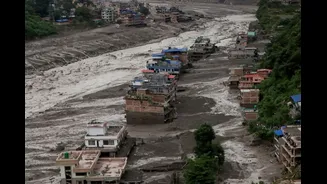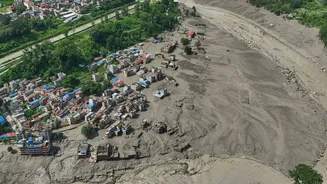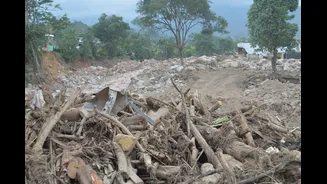







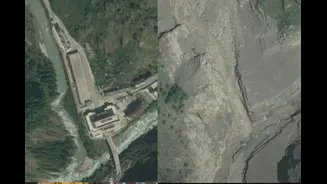
As many as 500 people, including 200 Indians, have been rescued from the Trishuli-1 power project site in flash flood-hit Nepal, according to a ground report by CNN-News18. While most of the rescued individuals
are power project workers, some are tourists.
The rescued Indians are being brought to Kathmandu Hospital.
Meanwhile, the death toll from the devastating flash flood that damaged several parts of Nepal along the Tibetan border this week has climbed to 469. Search and rescue operations are underway in the debris-strewn valleys and hillsides of Nepal, as more than 1,000 people remain missing.
The missing foreigners in Nepal are from more than two dozen countries, including 290 Indian nationals, 63 from the United States, 51 from Malaysia, 34 from Australia, 33 from Britain and 25 from Canada.
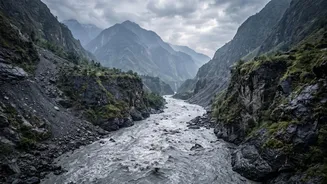
In Tibet, at least three people were killed and 558, including 268 foreigners, are missing. Both Nepal and China have issued a warning for fresh risks of flooding in the Himalayas as two lakes that have developed on either side of their border are on the verge of bursting in the affected region.
News18 Also Covered: ‘Liquid Concrete’ Flood: How A Glacier Broke Off And Plunged 1.2 Km To Devastate Nepal
15 Helicopters Deployed In Rescue Ops
According to the Nepali government, 15 helicopters have been deployed in the ongoing rescue and relief operations after the deadly flash flood that hit several villages along the Nepal-Tibet border, damaging settlements and causing casualties.
At least 2,523 people have been rescued so far, the National Disaster Risk Reduction and Management Authority (NDRRMA), Nepal, said.
While the disaster was initially linked to an earthquake, the US Geological Survey said the seismic signal was generated by a glacial collapse and debris flow.
The agency said seismic activity initially reported as an earthquake “was instead a glacial collapse and debris flow” that resulted in “subsequent catastrophic impacts downstream”.
India Sends Humanitarian Aid
On August 26, the Indian Air Force (IAF) dispatched its first aircraft to Nepal, carrying 10 tonnes of relief materials for the flood-hit residents, from Ghaziabad’s Hindon Airport.
The second aircraft departed on August 27, carrying more than 37.5 tonnes of materials and taking the total emergency supplies sent by India to 47.5 tonnes.
New Delhi, meanwhile, is coordinating with Kathmandu to extend assistance to the flood victims. At the same time, Indian diplomatic missions remain engaged in efforts to locate and rescue Indian nationals in the affected areas.