



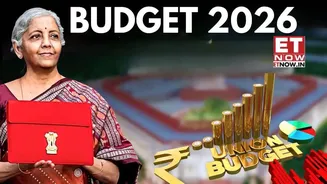


Budget 2026: As preparations gather pace for the Union Budget to be presented on February 1, expectations are rising among individual taxpayers over possible tweaks to income tax rules. With the new tax regime
continuing as the default framework for FY 2025–26, attention is firmly on whether the government will announce additional relief or signal changes to the future of the old regime.
New Tax Regime Remains Default for FY 2025–26
For now, tax liability for FY 2025–26 will be governed by existing slab structures. The new tax regime applies automatically for income tax return filings, with salaried taxpayers retaining the option to switch to the old regime while filing their return. A belated return, however, can only be filed under the new regime.
Under this framework, resident individuals earning up to Rs 12 lakh a year are effectively exempt from paying income tax, provided the income qualifies as “normal income”. Special-rate incomes such as short-term capital gains (STCG) and long-term capital gains (LTCG) are excluded from this benefit.
Slabs And Key Benefits Under The New Regime
New tax regime slabs
-
Rs 0 to Rs 4,00,000: Nil
-
Rs 4,00,001 to Rs 8,00,000: 5%
-
Rs 8,00,001 to Rs 12,00,000: 10%
-
Rs 12,00,001 to Rs 16,00,000: 15%
-
Rs 16,00,001 to Rs 20,00,000: 20%
-
Rs 20,00,001 to Rs 24,00,000: 25%
-
Above Rs 24,00,000: 30%
Key benefits under the new regime
-
Standard deduction of Rs 75,000 for salaried employees and pensioners
-
Section 87A rebate for resident taxpayers with net taxable income up to Rs 12 lakh
-
NPS deduction of up to 14% of basic salary for salaried employees under Section 80CCD(2).
Old Tax Regime Still Appeals To Deduction Seekers
The old tax regime continues to attract taxpayers who can fully utilise exemptions and deductions. These include Section 80C investments up to Rs 1.5 lakh, HRA, LTA, home loan interest under Section 24, health insurance premiums under Section 80D, education loan interest under Section 80E, and a standard deduction of Rs 50,000.
Slab rates under the old regime differ based on age, offering higher basic exemption limits for senior citizens and super senior citizens.
Slabs for individuals below 60 years
-
Rs 0 to Rs 2,50,000: Nil
-
Rs 2,50,001 to Rs 5,00,000: 5%
-
Rs 5,00,001 to Rs 10,00,000: 20%
-
Above Rs 10,00,000: 30%
Slabs for senior citizens (60 to below 80 years)
-
Rs 0 to Rs 3,00,000: Nil
-
Rs 3,00,001 to Rs 5,00,000: 5%
-
Rs 5,00,001 to Rs 10,00,000: 20%
-
Above Rs 10,00,000: 30%
Slabs for super senior citizens (80 years and above)
-
Rs 0 to Rs 5,00,000: Nil
-
Rs 5,00,001 to Rs 10,00,000: 20%
-
Above Rs 10,00,000: 30%
Budget Context And Policy Debate
Nirmala Sitharaman is set to present her ninth consecutive Union Budget, bringing her closer to the record of 10 budgets delivered by Morarji Desai across different tenures. In the 2025 Union Budget, significant relief was extended under the new tax regime, while the old regime saw no changes to slabs or deductions.
This has intensified debate on whether the old tax regime will be preserved, enhanced, or gradually phased out in favour of a simplified structure.
Tax Relief Vs Tax Rebate: What Taxpayers Should Know
As Budget 2026 approaches, understanding the difference between tax relief and tax rebate has become increasingly important. Tax relief reduces taxable income through deductions and exemptions, while a tax rebate is applied after tax is calculated, directly lowering the final tax payable.
Section 87A remains a key rebate available only to resident individuals, excluding NRIs, HUFs, companies, and partnership firms.
With just days to go before the Budget presentation, income taxpayers are bracing for policy signals that could reshape the country’s income tax landscape.