




US President Donald Trump’s decision to call off what he described as a “massive” attack on Iran followed a crucial weekend of Gulf diplomacy, renewed mediation over the Strait of Hormuz and growing concern
that another round of strikes could widen the conflict across the region.
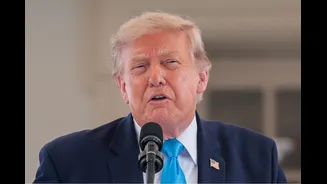
Trump announced early on Sunday in the Middle East that the US had held off on military action. Later that day, while speaking to reporters aboard Air Force One, he said fresh negotiations with Iran would begin on Monday afternoon.
“They knew the extent of the attack because they saw it forming,” Trump said. “We’re talking to them in the form of a negotiation. It begins tomorrow afternoon.”
The shift came barely a day after Trump had warned on Saturday that the US was “locked and loaded and ready to go against the Islamic Republic of Iran, at levels of Military Terror, Strength, and Power not seen since World War II”.
What Prompted Trump To Hold Off?
In a Truth Social post, Trump said Iran and US partners in the Middle East had asked him to “hold off” because the “perimeters” of a deal had been agreed.
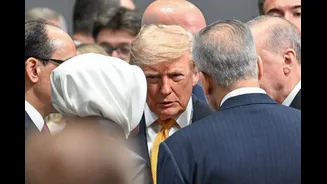
Speaking on Sunday, he said Saudi Crown Prince Mohammed bin Salman, along with US partners such as Qatar and the United Arab Emirates, had urged him not to proceed with the strikes.
“We were all set to go,” Trump said. “The reason they asked is [that] they think there’s a deal.”
However, Iran’s semi-official Mehr news agency denied that Tehran had requested a pause, describing Trump’s claim as “nothing but a new lie”.
How The Hormuz Talks Changed The Equation
The Strait of Hormuz has become central to attempts to prevent further escalation. Around 20% of the world’s crude oil and liquefied natural gas normally passes through the waterway, making any prolonged disruption a major risk to global energy supplies.
According to The Wall Street Journal, Qatari mediators presented Iran with a fresh proposal on Saturday to reopen the strait. Iranian diplomats responded positively, raising hopes among mediators that a compromise could be possible.
An Iranian diplomat also confirmed to the newspaper that Tehran had shown openness to a proposal, although it remained unclear whether it would ultimately accept the terms.
The proposed arrangement would reportedly create new traffic patterns for ships moving through the strait, which is bordered by Iran on the northern side and Oman on the southern side.
A major sticking point, however, remains unresolved. Iran had insisted that it control at least part of both shipping lanes and had also sought the ability to collect fees or tolls from vessels using the waterway. Washington has strongly opposed that demand.
Iranian Foreign Minister Abbas Araghchi said on Sunday that negotiations with Oman over the strait were “on track for finalisation”, according to Iranian media.
Regional officials cited by WSJ also said Iranian diplomats had presented new ideas linking the reopening of the strait to sanctions relief for Iranian oil.
Trump later connected progress on the waterway with the possibility of wider talks. “There’s a deal on Hormuz, and there will be a deal on the nuclear,” he said.
Saudi Crown Prince’s Call
Saudi Crown Prince Mohammed bin Salman spoke to Trump just hours before the US president announced the pause early on Sunday, according to Saudi state media.
WSJ, citing Saudi officials, reported that the crown prince urged dialogue to reduce regional escalation and also sought clarity over Washington’s broader strategy and the planned strikes.
The Saudi government said that such efforts could “pave the way for diplomatic solutions that yield positive results, preserving the region’s security and stability while preventing a slide into a broader conflict with repercussions for regional and international security and stability”.
The intervention reflected wider unease among Gulf governments over the course of the conflict.
People familiar with the matter told WSJ that Gulf countries had grown frustrated with what they saw as the absence of a clear US strategy as the war dragged on and their territories faced repeated Iranian attacks.
Gulf allies had also asked Washington in recent weeks for more air-defence interceptors and continued assurances that the US military would protect them if the fighting continued, the newspaper reported, citing officials.
Why Gulf States Fear Further Escalation
For Saudi Arabia and Qatar, the argument for restraint is largely driven by the risk of direct retaliation.
“They basically prefer stability over everything else,” Danny Citrinowicz, a former Israeli military intelligence official and senior researcher at the Institute for National Security Studies in Tel Aviv, told WSJ.
“Everyone knows what will happen if [Iranian] infrastructure will be attacked—they will attack infrastructure in the Gulf states,” he said. “They created the understanding especially around the Gulf states that there is a huge price to pay if something like that could happen.”
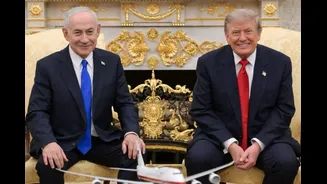
Citrinowicz said that while Israel had held greater influence over Trump when the war began on February 28 despite warnings from Gulf countries, “the situation has now flipped”. Gulf states were now holding more sway over the US president, while Israeli Prime Minister Benjamin Netanyahu’s influence was eroding, he said.
Why Monday’s Talks Matter
The latest diplomatic push remains fragile.
On Saturday, Araghchi told counterparts in Saudi Arabia, Turkey, Pakistan and other countries that Iran would respond forcefully if attacked by the US or Israel.
An Iranian diplomat cited by WSJ also said the IRGC was considering pre-emptive strikes if diplomacy failed, even if the US did not attack first.
Trump, meanwhile, has kept military action on the table. “We’ll just see how it is. We’re ready to go anytime we want… I’m not looking to kill people,” he said on Sunday.
For now, Gulf pressure and progress over Hormuz have delayed another US attack. Whether that pause develops into a broader agreement will depend on Monday’s talks, the unresolved terms for reopening the strait and whether Tehran and Washington can move beyond another temporary de-escalation.