







This news made us read it twice. A serious conflict is going on among chimpanzees in Uganda’s Kibale National Park, and it has left scientists both surprised and concerned. A group of chimps that once lived
together has now split into two sides, and the situation has turned violent over the past few years.
Researchers who have been observing them say the fighting became clear around 2018. Since then, at least 28 chimpanzees, including babies, have died. Some others are missing and are believed to have been killed.
Why Did These Once-United Chimps Turn Against Each Other?
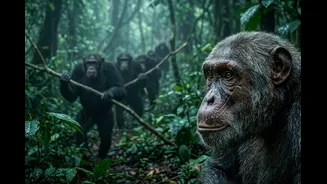
As reported by National Geographic, one side, called the “Western” group, has been carrying out planned attacks. They move quietly in lines and look for chimpanzees from the “Central” group, often near shared boundaries. The Central group, which once had more members, is now getting smaller, while the Western group is slowly taking over more space.
What stands out in this case is that these chimpanzees were not always enemies. Not long ago, they were all part of one large group of nearly 200 chimps. They lived together, shared food, and spent time grooming each other. Over time, that bond started to weaken. Scientists say there was no single moment that caused the split. Instead, things changed slowly.
What Led To The Deadly Split Among These Chimpanzees?
One incident that shocked researchers happened in 2019. A male chimpanzee named Basie was attacked and killed by chimps he had known for years. He was surrounded, injured badly, and later died. Even after the attack, one of his close companions stayed with him, tried to help him move, and did not leave his side as he was dying.
Researchers believe this conflict began due to changes within the group and problems in their surroundings. Around 2014, several older chimpanzees died. These were important members who helped keep the group united. Their loss made the group less stable. Around the same time, a new alpha male took over, which may have caused further tension.
The situation became worse after disease outbreaks in 2014 and 2017, which killed many chimpanzees. Before the violence began, scientists had already noticed that the chimps were not interacting like before. They spent less time grooming or eating together. Slowly, smaller groups formed, and they began to stay away from each other.
As this distance grew, the connection between them weakened. Once they no longer felt like one group, fights reportedly started becoming more common. By the time the split was complete, the conflict had already taken shape, turning former companions into rivals.
This is only the second time such a conflict has been recorded among chimpanzees. The first case was seen in Tanzania in the 1970s. These incidents show that even animals known for living in groups can turn against each other when their social structure breaks down.