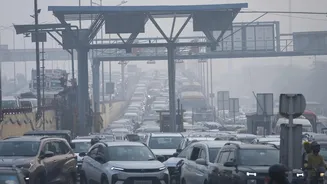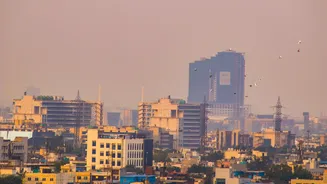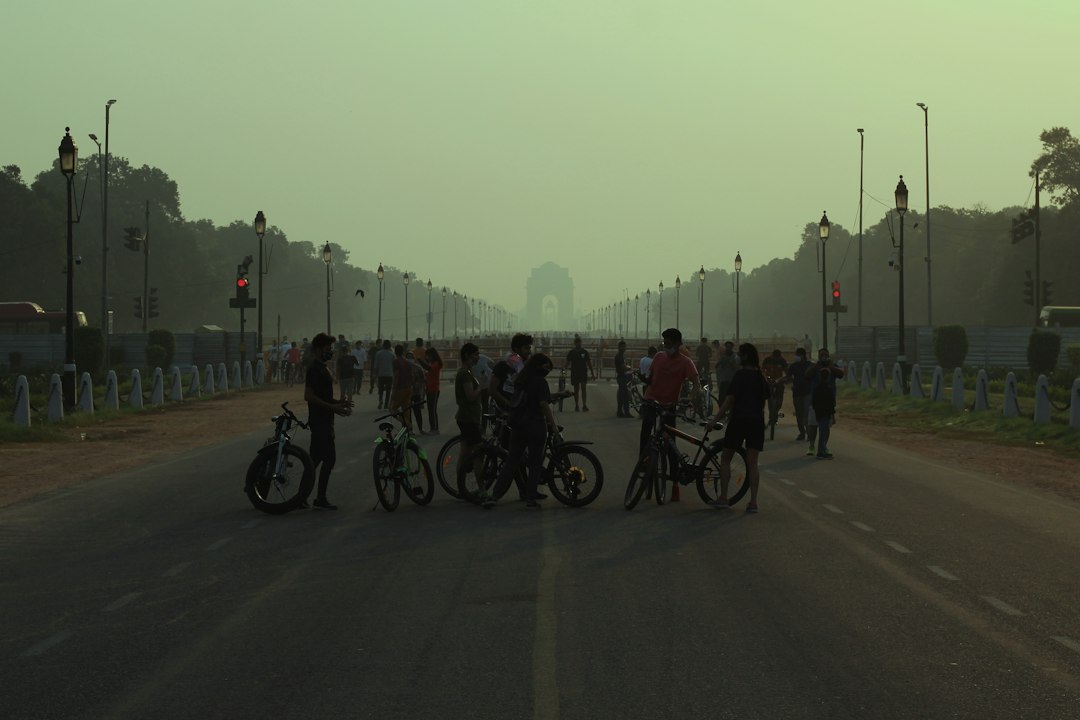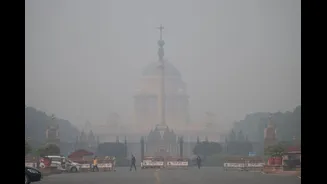






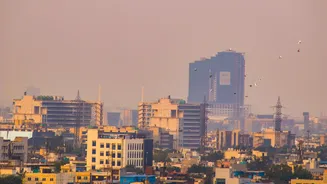


Stage-III restrictions under the Graded Response Action Plan (GRAP) were revoked in Delhi and the National Capital Region (NCR) on Tuesday after a significant improvement in the capital’s air quality over
the past three days.
However, restrictions under GRAP Stages I and II will continue to remain in force across the NCR.
Of the 58 air quality monitoring stations in Delhi, 24 recorded ‘moderate’ air quality and 31 reported ‘poor’ air quality. The Siri Fort monitoring station was the only one to record ‘very poor’ air quality, with an AQI of 303 in the last 24 hours.
Stage-III restrictions were imposed ahead of Diwali on November 6, when Delhi’s average Air Quality Index (AQI) touched 382.
According to the Central Pollution Control Board (CPCB), an AQI between zero and 50 is classified as ‘good’, 51 and 100 as ‘satisfactory’, 101 and 200 as ‘moderate’, 201 and 300 as ‘poor’, 301 and 400 as ‘very poor’, and 401 and 500 as ‘severe’.
Delhi’s overall air quality remained in the ‘very poor’ category from November 11 to 14. It began improving on November 15, when the average AQI dropped to 290, and improved further to 275 on November 16.
How Delhi’s Air Quality Improved
Dr Manoj Kumar, an air quality and energy analyst at the Centre for Research on Energy and Clean Air (CREA), attributed the decline in Delhi’s AQI to two key factors.
The first was favourable meteorological conditions. “Northwesterly winds of up to 15 km/h and a mixing depth of around 1,500 metres would have helped disperse pollutants,” he said.
The second factor was a change in the transport of pollution from neighbouring regions, which may have contributed to the improvement in the capital’s air quality.