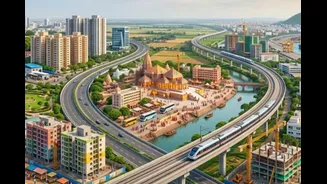










Buying a home in metro cities is increasingly slipping out of reach for many. In major urban centres like Delhi, Mumbai, and Bengaluru, soaring property prices have made real estate unaffordable for a large
section of the middle class. As a result, both investors and retirees are shifting their focus towards smaller, fast-developing cities that promise better value and quality of life.
The charm of metro living is gradually fading, especially for retirees. Rising living costs, worsening traffic congestion, and increasing pollution levels have made daily life more stressful than comfortable.
Earlier, big cities were seen as ideal destinations for career growth and financial stability. Today, however, many are choosing to leave these urban hubs after retirement in search of calmer, more affordable surroundings.
Smaller Cities Emerge As Dual Opportunity Zones
Cities like Indore, Chandigarh, Dehradun, Mysore, Bhubaneswar and Varanasi are witnessing a surge in interest, not just from homebuyers, but also from retirees. These cities offer a slower pace of life, cleaner environments, and significantly lower living costs.
At the same time, they are becoming attractive real estate investment destinations due to rapid growth and rising demand.
Why Investors Are Moving Beyond Metros
The shift towards Tier 2 cities is driven by multiple factors beyond affordability.
| Rank | City | State | Why Will There Be Development? | Investment Potential | What Is Special |
|---|---|---|---|---|---|
| 1 | Indore | Madhya Pradesh | Clean city, manufacturing and IT growth | Real estate, logistics | Affordable and fast-growing |
| 2 | Surat | Gujarat | Diamond and textile hub | Real estate, industry | Strong job market |
| 3 | Lucknow | Uttar Pradesh | Capital city, infrastructure growth | Residential, commercial | Fast-growing market |
| 4 | Jaipur | Rajasthan | Tourism and IT sector | Real estate, retail | Rising NRI investment |
| 5 | Coimbatore | Tamil Nadu | Industry and education hub | Industrial, residential | Startup growth |
| 6 | Nagpur | Maharashtra | Logistics hub | Warehousing, aviation | Strategic location |
| 7 | Bhubaneswar | Odisha | Smart city, IT hub | Residential, IT parks | Rapid development |
| 8 | Kochi | Kerala | Port city, tourism | Real estate, commercial | High quality of life |
Rapid infrastructure expansion, better connectivity, and increasing job opportunities are transforming these cities into economic hubs.
Key Tier 2 cities gaining attention include:
- Indore: Known for cleanliness, growing IT sector, and affordability
- Surat: A major hub for diamonds and textiles with strong employment prospects
- Lucknow: Fast infrastructure growth and expanding real estate market
- Jaipur: Tourism-driven economy with rising NRI investments
- Coimbatore: Industrial and educational hub with startup growth
- Nagpur: Emerging logistics centre with strategic location
- Bhubaneswar: Smart city with growing IT ecosystem
- Kochi: Port city offering high quality of life and tourism appeal
Property prices in these cities remain relatively moderate, while demand continues to rise—creating strong potential for future returns.
Tier 3 Cities: The Next Growth Frontier
Even smaller Tier 3 cities are beginning to attract attention due to low entry costs and high growth potential.
| City | State | Why Will There Be Development? | Investment Potential | Future Growth Outlook |
|---|---|---|---|---|
| Panchkula / Mohali | Haryana / Punjab | Near Chandigarh, IT and pharma | Premium housing | Very fast growth |
| Raipur / Bilaspur | Chhattisgarh | Industry and minerals | Residential, industry | Strong growth |
| Visakhapatnam | Andhra Pradesh | Port, defence, tourism | Industry, real estate | Strong long-term prospects |
| Ayodhya / Vrindavan | Uttar Pradesh | Religious tourism | Hotel, residential | Potential for sharp rise |
| Udaipur | Rajasthan | Tourism and lifestyle | Luxury property | Steady, inelastic demand |
Let’s take a look at a few prominent Tier-3 cities included in the list:
- Panchkula / Mohali: Benefiting from proximity to Chandigarh and growth in IT and pharma
- Raipur / Bilaspur: Industrial expansion and mineral-based economy
- Visakhapatnam: Port city with defence and tourism potential
- Ayodhya / Vrindavan: Rising religious tourism boosting housing demand
- Udaipur: Tourism and luxury living driving steady demand
These cities offer relatively low property prices but are expected to witness rapid appreciation due to infrastructure upgrades and tourism growth.
Affordability And Infrastructure Drive Demand
One of the biggest advantages of smaller cities is affordability. While a 3BHK flat in metro cities often costs over Rs 1 crore, similar properties in Tier 2 and Tier 3 cities are available between Rs 30 lakh and Rs 1.5 crore.
Improved infrastructure, such as new expressways, airports, and smart city initiatives, has significantly enhanced connectivity. For instance, travel between Delhi and cities like Dehradun or Chandigarh has become faster and more convenient.
Real estate data suggests that housing demand in these cities has increased by nearly 20-25% in recent years, with prices expected to rise by 25-100% in the coming years.
Why Smaller Cities Appeal To Retirees
For retirees, the benefits go beyond affordability. Lower pollution levels contribute to better health, while quieter surroundings and open spaces encourage a more relaxed lifestyle.
Daily expenses, including housing, utilities, and essentials, are considerably lower, allowing retirees to manage their savings more effectively.
Additionally, stronger community networks in smaller cities help reduce isolation and improve overall well-being.
Despite the advantages, some concerns persist. Access to advanced healthcare facilities and specialised medical services can be limited in certain areas. However, ongoing improvements in infrastructure and better connectivity to larger cities are gradually bridging this gap.
A Shift Towards Balanced Living
The idea of an ‘ideal city’ is changing. Increasingly, people are prioritising comfort, affordability, and quality of life over the fast-paced, high-cost lifestyle of metros.
Whether for investment or retirement, smaller cities are emerging as strong alternatives, offering not just financial value, but also a more balanced and fulfilling way of life.