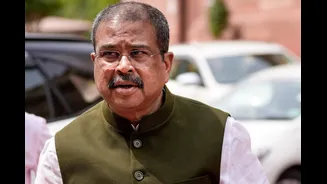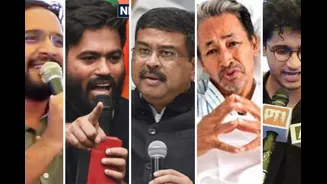



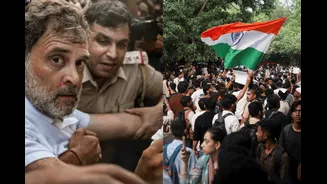
Union Education Minister Dharmendra Pradhan resigned on Saturday, bowing to mounting public and political pressure. His exitfollowed weeks of relentless nationwide agitations spearheaded by the Cockroach
Janta Party (CJP), a 26-day hunger strike by activist Sonam Wangchuk, and an intensive CBI probe into the NEET-UG paper leak. The timeline tracing this crisis from the exam floor to theMinister’s ultimate exit .
PHASE 1: THE EXAMINATION AND THE PAPER LEAK
May 3, 2026: The National Testing Agency (NTA) administers the NEET-UG 2026 examination to nearly 22 lakh medical candidates across 5,432 test centres.
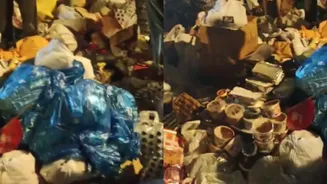
May 6–8: Reports surface of a widespread question paper leak distributed via encrypted chat networks. A “guess paper” that perfectly matched the actual test triggers nationwide alarm.
May 12, 2026: The NTA officially cancels the NEET-UG examination. The Union Government hands the criminal investigation over to the Central Bureau of Investigation (CBI).
May 15, 2026: Education Minister Dharmendra Pradhan formally acknowledges the breach during a media briefing. Referring to trusted educators linked to the leak, he notes, “Rakshak hi bhakshak ban gaye” (Protectors became predators). India’s chief justice, Surya Kant, says that some unemployed young Indians were like “cockroaches” who complain about the system on social media.
DEMOCRACY WINS! 🇮🇳🇮🇳🇮🇳 pic.twitter.com/HpCaqBkPxc
— Cockroach is Back (@Cockroachisback) July 25, 2026
May 16, 2026: In response, Abhijeet Dipke, a 30-year-old graduate of Boston University, starts the ‘Cockroach Janata Party’ as a joke.
May 21, 2026: Within days, some of the CJP’s accounts get more followers on social media than India’s biggest political parties.
June 2, 2026: Protests over exam leaks continue into early June in several cities including Mumbai.
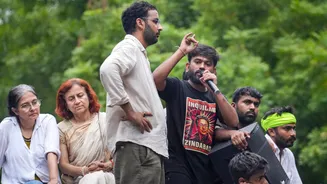
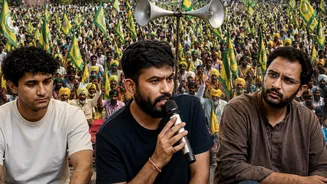
June 6, 2026: Dipke returns to India from the United States to lead the CJP.’s first street protest, demanding the resignation of the education minister, Dharmendra Pradhan. Hundreds gather for the peaceful demonstration.
June 11, 2026: The CJP releases a five-point “manifesto,” including compensation for students who were affected by the cancelled exam and other changes to the testing system.
From Student Leader To Ouster Over Students’ Protest: Highs & Lows of Dharmendra Pradhan’s Career
PHASE 2: PROTESTS ESCALATE & SONAM WANGCHUK’S HUNGER STRIKE
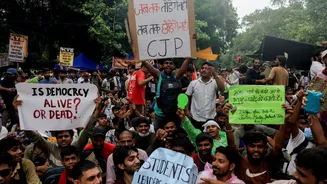
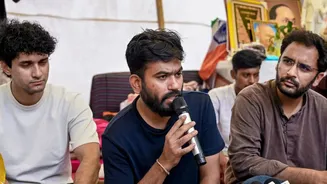
June 20, 2026: First day of sit-in. CJP supporters begin a sit-in at Jantar Mantar, a designated protest site near Parliament in New Delhi, after the government fails to act on the group’s demands. Protesters have remained at the site around the clock ever since.
June 21, 2026: The NTA conducts a nation-wide NEET re-examination under heavily enhanced security protocols.
June 25–28, 2026: Discontent deepens as Gen-Z students across India unite under a satirical online-turned-offline movement called the Cockroach Janta Party (CJP). The CJP sets up a permanent protest base at Delhi’s Jantar Mantar, making Minister Pradhan’s immediate resignation their primary demand.
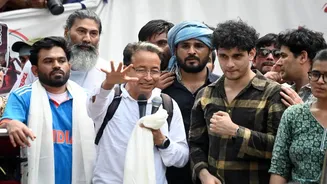
June 28, 2026: Famed climate activist and education reformer Sonam Wangchuk launches an indefinite hunger strike at Jantar Mantar in solidarity with the CJP and the country’s youth.
IT’S A VICTORY OF DEMOCRACY
direct democracy… straight from the streets.
It’s a victory of peace, patience & persévérance.
Congratulations CJP, Gen Z of the nation and thank you all citizens for shedding fear and the fear of fear and rising up from every corner of the nation.… pic.twitter.com/rSLOfvba2R— Sonam Wangchuk (@Wangchuk66) July 25, 2026
July 9, 2026: Wangchuk calls for a peaceful march to Parliament on July 20, when it would be back in session.
July 16, 2026: The NTA releases the re-examination results. Simultaneously, the Delhi High Court intervenes to ensure Wangchuk receives around-the-clock medical attention as his health visibly declines.
July 18, 2026: Delhi Police forcibly shift a deteriorating Wangchuk from Jantar Mantar to Safdarjung Hospital. The move further fuels anger among the thousands of student demonstrators.
Pune Cockroaches have swarmed the streets in protest! pic.twitter.com/KUbw34Ci1q
— Cockroach is Back (@Cockroachisback) July 24, 2026
PHASE 3: THE PARLIAMENT MARCH AND GOVERNMENT CONCESSIONS
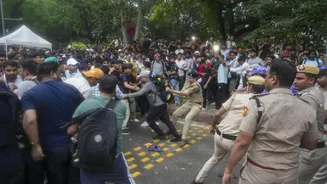
July 20, 2026: The CJP leads a massive, high-tension ‘Sansad Chalo’ (March to Parliament). Thousands of young people march and face a heavy police response. Smaller protests took place in Mumbai and Bengaluru. The demonstration results in clashes, leaving several student protesters and police personnel injured.
July 22, 2026: A defining scene of the protests is caught on video in Mumbai: a young woman blocking a police van, demanding the release of protesters inside.
Everyone who has been detained yesterday and facing legal charges, please reach out to us through the form.
We will provide the necessary legal help.
Form Link- https://t.co/i57Vb4bFg9 https://t.co/bwmdrQb5yo
— Cockroach is Back (@Cockroachisback) July 21, 2026
July 23, 2026: The CJP says protests had spread to at least 30 cities in India as it called for nationwide demonstrations. Seeking to contain the fallout, Prime Minister Narendra Modi releases a public address, announcing a tough new cabinet bill to introduce stricter anti-paper-leak laws and fast-track courts to try offenders.
July 24, 2026: After 26 days of fasting, Sonam Wangchuk officially ends his hunger strike from his hospital bed. He breaks his fast in the presence of Union Ministers J.P. Nadda and Jitendra Singh after receiving a formal, written assurance from the Centre guaranteeing:
- A parliamentary debate on systemic exam accountability.
- Financial compensation for families of students who tragically died by suicide during the crisis.
- Total legal immunity (no cases registered) for peaceful student protesters.
- The CJP celebrates the end of Mr. Wangchuk’s fast but said protests would continue.
- PM Modi releases another video, thanking students for their suggestions.
— Dharmendra Pradhan (@dpradhanbjp) July 25, 2026
PHASE 4: THE FINAL DEADLOCK AND PRADHAN’S RESIGNATION
July 25, 2026 (Morning): Despite Wangchuk ending his fast, the CJP maintains that its primary demand—the resignation of Dharmendra Pradhan—is non-negotiable. They threaten to paralyse upcoming dialogue unless accountability is claimed at the ministerial level.
July 25, 2026 (02:30 pm): Bowing to the relentless political and youth pressure, Dharmendra Pradhan officially resigns as Union Education Minister. In a lengthy public post on X, Pradhan writes that he has sent his resignation to the Prime Minister to protect the future of the nation’s youth and ensure the ongoing agitations are not manipulated by malicious elements.