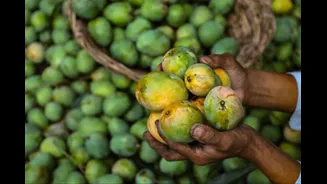








Nepal has temporarily banned the import of mangoes from India after quarantine inspections reportedly detected pesticide residues exceeding permissible safety limits in several consignments.
This comes
after a similar move by Japan, which recently suspended imports of Indian mangoes over quarantine-related compliance issues.
According to Nepali authorities, the decision was taken as part of stricter monitoring of imported fruits and tighter enforcement of food safety standards.
Officials said the restriction is aimed at ensuring compliance with Maximum Residue Limit (MRL) norms and protecting consumers from potentially unsafe produce.
Before the restriction was imposed, around 15.8 metric tonnes of mangoes worth nearly Rs 1 million had already entered Nepal through official checkpoints.
Authorities have maintained that the measure is regulatory in nature and not intended to affect broader bilateral trade relations.
Last month, Japan suspended imports of fresh Indian mangoes after its quarantine officials found deficiencies in pest-control and disinfection procedures at approved treatment facilities in India during inspections conducted earlier this year.
The Japanese action was linked to phytosanitary compliance and quarantine procedures rather than pesticide residue concerns.
According to reports, Japan’s suspension affected premium Indian varieties, including Alphonso, Kesar, Langra and Banganapalli mangoes and marked the first such restriction in nearly two decades.
Japanese authorities cited shortcomings in treatment protocols designed to prevent the spread of pests such as fruit flies.
TRADERS IN NEPAL FEAR SUPPLY DISRUPTIONS
While Nepali officials have defended the import restriction on safety grounds, traders say the sudden move has created uncertainty in local fruit markets.
According to a report by The Rising Nepal, markets in Janakpurdham are now largely stocked with locally produced mangoes.
Traders, however, argue that domestic production alone may not be sufficient to meet demand throughout the year.
Bhuvaneshwar Purbe, general secretary of the Fruit and Vegetable Traders’ Association in Janakpurdham, told the publication that mango demand remains exceptionally high during the summer season.
He noted that although more than 50 tonnes of mangoes arrive daily from districts such as Saptari, Siraha, Mahottari, Dhanusha and Sarlahi, local production lasts only around two months and cannot fully replace imports from India.
Purbe suggested that the government should strengthen quarantine and quality-testing systems rather than impose a blanket restriction.
According to him, imported fruits that successfully pass safety checks should be allowed into the market.
Meanwhile, fruit traders have warned that a prolonged ban could lead to shortages and higher prices for consumers.
Some are attempting to identify alternative sources of supply, but they say replacing Indian imports immediately will be difficult.
According to The Rising Nepal, consumers have already begun noticing higher prices.
Bananas, which traders say are also affected by supply disruptions, had touched nearly Rs 300 per dozen around a month ago and continue to be sold at around Rs 200 per dozen.
Traders fear that if restrictions continue for an extended period, shortages of mangoes, bananas and other fruits could spread beyond Janakpurdham and affect several districts across Madhes Province.