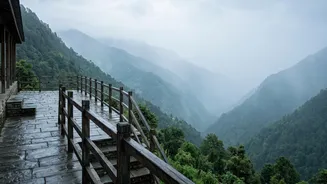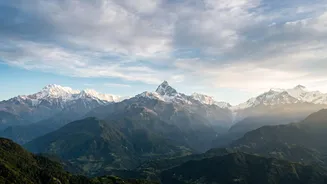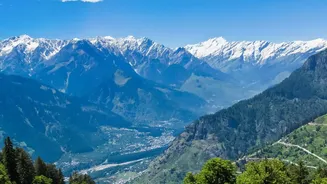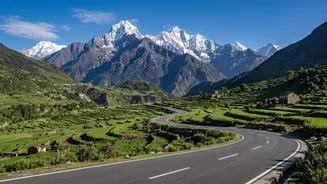




“Our mountain trails and trekking routes are still waiting for you,” Nepal’s Tourism Minister Khadak Raj Paudel says in the clip, posted to Facebook under the hashtag #NepalCalling. “Your coming to Nepal this
time does not mean only a holiday. It’s a big support to the country fighting this catastrophic tragedy of flash floods.”
It is an unusual thing to hear from a government still counting its dead. The death toll in Nepal has climbed to 1,114, according to a Wednesday update from the country’s National Disaster Risk Reduction and Management Authority (NDRRMA), with roughly 4,500 people still unaccounted for across Nepal and the Tibet Autonomous Region of China, where the disaster also struck. Nearly 12,000 people have been rescued so far, and search teams (Nepali, Indian, Chinese, South Korean) are still working through hydropower tunnels in Rasuwa and Nuwakot, where hundreds of workers were trapped when the water hit.
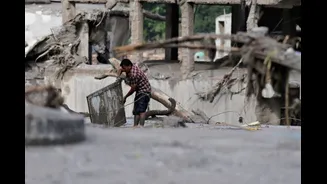
The floods were triggered by a glacial collapse that sent a wall of ice, mud, rock and river surging down the Bhote Koshi and Trishuli valleys on 26 August, flattening villages, hydropower stations and bridges in its path. The footage that has circulated since, houses folding into brown water, cars pinned against what’s left of a riverbank, is not footage that makes anyone reach for a trekking itinerary. But that is the problem Nepal is now trying to solve.
Why Is Nepal Calling You Back?
Nepal’s tourism sector doesn’t have much slack to absorb a bad season. It is one of Asia’s poorest economies, already contending with higher fuel costs from the Iran war and a slowing growth outlook, and the timing could hardly be worse. This is the first year of 36-year-old Prime Minister Balendra Shah’s government, and it now has to account for money that it didn’t budget for.
Nepal’s foreign ministry has been blunt about the scale of what’s ahead. “The scale and extent of the damage caused by this disaster are becoming increasingly clear as access has improved and more details are now available,” the ministry said in a statement, adding that the country “anticipates requiring substantial international support during the rehabilitation and reconstruction phase.”
Tourism, here, means foreign exchange, whether it comes through hotel jobs, portering wages, homestay income in villages that have no other reliable earner. The minister’s appeal is basically asking you to contribute to rebuilding the nation.
Can You Travel To Nepal Right Now?
Nepal’s tourism authorities aren’t asking travellers to walk into the disaster zone. On their website, they have given a clear map of what’s closed and what isn’t.
The affected river corridor runs through Rasuwa, Nuwakot, Dhading and Gorkha districts, where flooding has taken out sections of road: the Trishuli–Mailung–Syafrubesi stretch and part of the main highway in Rasuwa, the Tokha–Chhahare road in Nuwakot along with a fully obstructed Pasang Lhamu Highway at Simtar, and landslide-blocked stretches of the Prithvi Highway in Dhading. The BP Highway has also been restricted as a precaution. Outside that corridor, according to Nepal’s tourism board, tourist sites and activities are running as normal.
Monsoon season in Nepal typically runs into mid-September, so road and weather conditions in and around the affected districts remain genuinely unstable. But the country wants you to not assume the entire nation as a no-go zone.
Practically, if your trip doesn’t route through Rasuwa, Nuwakot, Dhading or Gorkha, you are very likely travelling into a country that is open, and actively wants you there.
For some, this could read like ‘dark tourism’, but the message is largely simple: Nepal’s tourism economy and its disaster economy are, right now, the same economy. Every trekking permit, hotel booking and Kathmandu meal bought this month is money moving into a country that is simultaneously grieving and rebuilding.
As per the facts on the ground, at least, a handful of districts are shut, the rest of Nepal is open, and its tourism minister has staked his own credibility on a very public bet that you’ll still come.