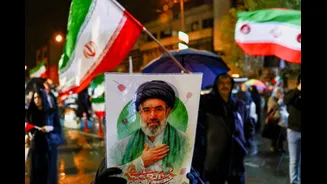




Iran War Ceasefire: The fragile ceasefire between Iran and the United States is once again under strain after President Donald Trump on Sunday warned that the “clock is ticking” on renewed military action,
before saying a day later that planned attacks had been paused amid “serious negotiations”.
Despite the temporary pause, Iran has indicated that it is preparing for another possible wave of attacks. Tehran has also signalled that any fresh strikes could trigger retaliation that would affect neighbouring Gulf nations and disrupt the global economy.
Security experts say Iran’s military thinking has changed since the first phase of the conflict earlier this year.
What is Iran thinking?
According to a New York Times report, Hamidreza Azizi, an expert on Iranian security affairs at the German Institute for International and Security Affairs said Iran initially expected a long conflict lasting nearly three months during the first round of fighting this year.
Because of those expectations, Tehran carefully managed its missile use to preserve enough weapons for sustained strikes against Israel and regional targets over several weeks. However, Iranian leaders now reportedly believe that any future war would be shorter but far more intense.
Azizi said Iranian officials expect coordinated and heavy attacks on the country’s energy infrastructure if fighting resumes. Public comments from experts linked to Iran’s government and security establishment suggest that Tehran believes future attacks would aim to quickly weaken Iran’s economic and military capabilities.
As a result, Iran may now choose a more aggressive military response from the beginning of any new confrontation.
What can Iran do if attacked again?
Iran could respond with heavy missile strikes on Israel and U.S. targets, attack Gulf oil facilities, and disrupt key shipping routes like the Strait of Hormuz or Bab-al-Mandeb. Let’s take a look at Iran’s war retaliation options:
Gulf energy sites can be the main targets
Experts believe one of Iran’s strongest options would be attacks on Gulf energy infrastructure. Azizi said Iran could launch tens or even hundreds of missiles every day in an effort to directly confront its enemies and force them to reconsider their military strategy.
Such attacks could place major Gulf oil producers under severe pressure. Oil fields, refineries and ports across the Gulf region are considered highly vulnerable and strategically important.
If heavily damaged, these facilities could disrupt global oil markets and increase pressure on President Trump through rising economic instability.
Countries such as the United Arab Emirates, Kuwait and Saudi Arabia could also find themselves drawn deeper into a wider regional conflict, something many Gulf leaders have tried to avoid.
Iranian officials and commentators aligned with the government have sharply increased hostile rhetoric towards the United Arab Emirates in recent weeks.
Tehran believes the UAE has supported attacks on Iran by allowing the United States to use military installations on Emirati territory. Iranian anger has also grown following reports that both the UAE and Saudi Arabia secretly participated in attacks on Iran during the recent U.S.-Israeli military campaign.
UAE can be brought to knees
In a podcast interview last month, Mehdi Kharatian, an expert believed to be close to Iran’s security forces, warned that Iran could force the Emirates “back to the era of riding camels” if attacked again. He also claimed Iran could occupy Abu Dhabi if necessary.
While such statements may appear extreme, experts, quoted by NYT, say they still reflect serious thinking inside Iran’s security structure.
Ali Alfoneh, a senior fellow at the Arab Gulf States Institute, said the comments reveal important views circulating within the leadership of Iran’s Islamic Revolutionary Guards Corps. Alfoneh also rejected reports suggesting Saudi Arabia and Iran were considering a nonaggression pact, describing such claims as unrealistic.
He argued that Iran’s ability to threaten major oil-producing nations remains one of the few effective tools restraining American military action.
Key shipping, oil routes can be targets
Iran may also attempt to increase pressure through important international maritime routes.
One possible target is the Bab-al-Mandeb Strait, the narrow waterway linking the Red Sea and the Gulf of Aden. Around one-tenth of global trade passes through the route. The area lies close to territory controlled by Yemen’s Houthi militia, which is backed by Iran.
During the earlier phase of fighting, Iran used its position near the Strait of Hormuz to gain significant leverage over global trade and energy markets.
Azizi said Iran may now seek to force the United States to focus on two separate maritime fronts instead of only one. According to Kharatian, Iran could respond to attacks on its economic infrastructure by restricting shipping through the Bab-al-Mandeb Strait.
Any disruption there could place additional strain on international trade and increase pressure on global markets already worried about instability in the Gulf region.
Can reach out to Houthis
The effectiveness of such a strategy may depend partly on the response of the Houthis in Yemen. The group has publicly promised to defend Iran if a wider regional war breaks out. However, during the previous round of fighting, the Houthis reacted cautiously and avoided major escalation.
Experts said the militia was likely calculating how much of its shrinking military stockpile it could afford to use.
That caution may continue if fighting resumes, even as Iran seeks stronger regional support in any future confrontation with the United States and Israel.
Trump delays Iran strike after request from Qatar, Saudi Arabia, UAE
Trump on Monday said he has postponed a planned military strike on Iran after requests from key Gulf leaders, citing ongoing negotiations that could lead to an agreement aimed at preventing Tehran from acquiring nuclear weapons.
In a post on Truth Social, Trump claimed the Emir of Qatar Sheikh Tamim bin Hamad Al Thani, Saudi Crown Prince Mohammed bin Salman, and UAE President Sheikh Mohamed bin Zayed Al Nahyan urged him to hold off on a military attack against Iran that was allegedly scheduled for the following day.