



US President Donald Trump’s announcement of a 10-day ceasefire between Israel and Lebanon on Thursday did not emerge from a long, structured negotiation process. Instead, it was the result of a compressed,
high-pressure diplomatic push led directly from the White House, one that combined personal intervention, strategic timing, and a broader geopolitical calculation tied to Iran.
The ceasefire was publicly declared by Trump even as Israeli decision-making was still underway, underscoring how aggressively Washington drove the process.
Posting on Truth Social, Trump struck an optimistic tone and urged both sides to seize the opportunity for de-escalation. “I just had excellent conversations with… these two leaders have agreed… to begin a 10-day ceasefire,” Trump wrote. “It has been my Honor to solve 9 Wars across the World, and this will be my 10th, so let’s, GET IT DONE!” he added.
How Did Trump Push The Ceasefire Through?
The sequence of events points to a top-down intervention led personally by Trump.
A day earlier, US Secretary of State Marco Rubio had hosted a rare meeting between Israeli and Lebanese diplomats where a ceasefire was discussed, but no decision was reached. A White House official said Lebanese representatives acknowledged in the meeting that Hezbollah was a “mutual problem” for both sides — a rare point of convergence.
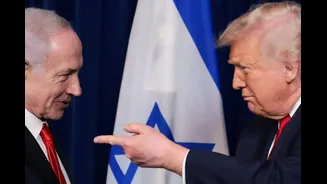
After days of stalled diplomacy, Trump stepped in directly. He called Israeli Prime Minister Benjamin Netanyahu and asked him to agree to a ceasefire. Netanyahu agreed, albeit with conditions, according to US officials cited by Axios.
Almost immediately after, Rubio reached out to Lebanese President Joseph Aoun to secure Lebanon’s commitment. This was followed by Trump himself speaking to Aoun — his first call with the Lebanese leader since taking office — where he assured him that “there will be a ceasefire,” according to sources familiar with the conversation cited by The Jerusalem Post.
Trump then called Netanyahu again before going public with the announcement.
The speed of events was striking. Israeli ministers learned of Trump’s announcement during a live security cabinet call, before any formal approval had been reached, Axios reported. A senior Israeli official told the outlet: Trump “pushed this ceasefire through.”
Why Was Lebanon Hesitant Initially?
Lebanon was not immediately on board with Trump’s approach, especially his push for a direct call between Aoun and Netanyahu.
Aoun made it clear that such engagement would only happen after meaningful progress on the ground. Without a ceasefire or active negotiations, he refused to speak with the Israeli leader, signalling that symbolic diplomacy without substance would not be entertained.
This resistance became a turning point. It forced the US to shift from pushing talks to first delivering a ceasefire, effectively accelerating Washington’s pressure on Israel.
Was The Iran Factor Driving The Urgency?
While the US and Israel have officially maintained that the Lebanon ceasefire is separate from the Iran track, developments suggest otherwise.
Iran had made it clear that progress in its talks with Washington would be difficult without a ceasefire in Lebanon. Senior Iranian officials conveyed that continued Israeli strikes againstHezbollah — which Tehran backs — were incompatible with broader de-escalation.
This created urgency for the Trump administration, which is simultaneously pursuing a larger peace framework with Iran. A former US official told Axios that the White House’s push over the last 48 hours was directly influenced by the need to keep Iran negotiations on track.
Even though Trump and Netanyahu publicly insisted the two fronts are not linked, the overlap is hard to ignore. As one Israeli source told The Jerusalem Post, Iran has effectively managed to tie the Lebanon situation to its own negotiations with the US.
Trump had also indicated he was trying to create “a little breathing room” between Israel and Lebanon.
What Are The Terms Of The Ceasefire?
The 10-day ceasefire is framed as an initial “gesture of goodwill” by Israel to enable negotiations toward a broader peace agreement.
Under the proposed framework:
- Israel is expected to halt offensive military operations in Lebanon, while retaining the right to carry out military action in self-defence against imminent threats.
- Lebanon has committed to taking steps to prevent Hezbollah and other armed groups from launching attacks on Israel.
- The US will facilitate direct negotiations between the two sides, including talks on border demarcation — a long-standing dispute.
The ceasefire is designed as a starting point rather than a final settlement. It can be extended by mutual agreement if progress is demonstrated in negotiations.
However, there are key complications.
Israel has made it clear it will not withdraw from the buffer zone it controls in southern Lebanon. Meanwhile, Lebanon has not formally endorsed all elements of the broader US-drafted understanding, particularly provisions that could imply recognition of Israel, Axios reported.
This leaves the agreement operational but politically fragile.
Can A 10-Day Truce Hold?
On the ground, the conflict has already inflicted deep damage.
More than 2,100 people have reportedly been killed in Lebanon, and over 1.2 million displaced, as fighting between Israel and Hezbollah intensified following the broader regional war.
Israeli forces continue to control large parts of southern Lebanon, while Hezbollah remains active despite significant losses.
Lebanese officials have cautioned that the conflict cannot simply be switched on and off. “You cannot flick [the war] on and off with the push of a button,” Lebanese cabinet minister Kamal Shehadi told CBC News, underlining the challenges ahead.
Reining in Hezbollah — a powerful Iran-backed militia with deep political roots — remains a long-term challenge that the Lebanese state has historically struggled to manage.
Even within Lebanon, there is scepticism about how quickly stability can be restored, though the ceasefire is seen as a necessary first step.
What Happens Next?
As the ceasefire came into effect, Trump on Friday continued to publicly push for calm, urging Hezbollah to “act nicely” and support ongoing peace efforts. “I hope Hezbollah acts nicely and well during this important period of time. It will be a GREAT moment for them if they do. No more killing. Must finally have PEACE!” he said, framing the truce as a critical window for a broader resolution.
Trump has indicated that he wants to bring Netanyahu and Aoun to the White House for what he described as the first meaningful talks between the two countries in decades.
However, that remains uncertain. Lebanese officials have signalled that such a meeting is unlikely while Israeli forces remain inside Lebanese territory.
The immediate focus will be on whether the ceasefire holds, and whether it can evolve into sustained negotiations.
For Trump, the stakes go beyond Lebanon. The ceasefire is part of a larger diplomatic gamble: stabilising one front to unlock a broader deal with Iran.
Whether this fast-tracked, pressure-driven truce can translate into lasting peace — or becomes another short-lived pause in a volatile region — will become clear in the days ahead.