




Iran’s Islamic Revolutionary Guard Corps (IRGC) has claimed responsibility for a drone strike targeting the US Navy’s Fifth Fleet in Bahrain, saying the attack was carried out in retaliation for American
strikes on Iranian territory earlier on Wednesday.
The development marks a significant escalation in tensions between Tehran and Washington amid an already fragile ceasefire in the wider Middle East conflict.
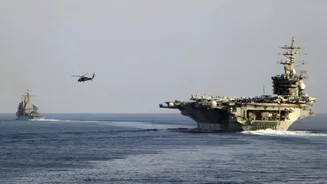
The IRGC said US forces had attacked multiple locations in southern Iran, including Jask, Sirik and Qeshm, before it launched what it described as a retaliatory operation against the US naval presence in Bahrain.
“In response to the enemy’s vicious move, the IRGC naval fighters launched a drone strike on the Bahraini 5th Navy at 2.30 am,” the Guards said in a statement carried by Iranian media.
The force also warned that “heavier responses” could follow if attacks against Iran continue.
US STRIKES FOLLOW DOWNING OF APACHE HELICOPTER
The latest confrontation comes after the United States launched strikes against Iran on Tuesday following the downing of a US Army Apache helicopter in the Strait of Hormuz.
According to Reuters, US President Donald Trump defended the military response, saying Washington needed to react forcefully to the incident.
“I believe the response should be very strong, very powerful, and that’s what this one is,” Trump told ABC News, according to Reuters.
Iranian media reported explosions near Qeshm Island, Sirik, Bandar Abbas and Jask following the US strikes.
Reuters reported that US Central Command said the operation was a “proportional response to unjustified Iranian aggression,” while Axios, citing a US official, reported that several Iranian air defence and radar systems around the Strait of Hormuz were targeted.
Later, Iranian Foreign Minister Abbas Araghchi warned that Tehran would not allow attacks to go unanswered.
Following the US operation, Araghchi said Iran’s armed forces would respond to any threat against the country.
In a post on X, he said Iran would “leave no attack or threat unanswered.”
He also warned foreign military forces operating near Iranian territory that they risked being caught in accidents or crossfire and suggested that the safest option would be for them to leave the region.
Iranian state media, meanwhile, cited military sources as saying no offensive Iranian air operations had taken place in the Strait of Hormuz in the previous 24 hours.
The same sources reportedly warned of a decisive response in the event of renewed hostility.
The Apache helicopter incident has added fresh uncertainty to efforts aimed at securing a broader peace agreement between Iran and the United States.
Reuters reported that the helicopter was brought down by what a US official described as a one-way Iranian attack drone.
Trump later told The Wall Street Journal that the incident “wasn’t a big deal” and stressed that the pilot was unharmed.
However, US Central Command said the two crew members were rescued after approximately two hours and were in stable condition.
The incident occurred despite repeated assertions by Trump that Washington and Tehran were nearing an agreement.
Analysts cited by Reuters suggested that the latest exchange of military action could further complicate negotiations and undermine the fragile ceasefire that has been in place since April.
REGIONAL TENSIONS REMAIN HIGH
The confrontation between Iran and the United States is unfolding alongside continuing violence elsewhere in the region.
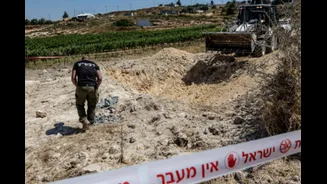
Israeli strikes on the Lebanese port city of Tyre killed multiple people, while fighting involving Iran-backed Hezbollah has continued despite ceasefire efforts.
Tehran has repeatedly argued that any settlement with Washington must include an end to hostilities in Lebanon.
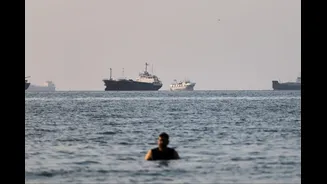
At the same time, disruption to shipping through the Strait of Hormuz remains a major concern.
The waterway is one of the world’s most important energy routes, and the ongoing conflict has affected maritime traffic and oil markets.