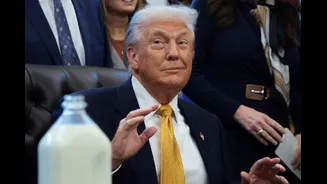

When Donald Trump told a cheering crowd that “another beautiful armada” was floating toward Iran, the remark landed with the kind of bravado that has become familiar—part spectacle, part warning, part negotiation
tactic wrapped in flourish.
But behind the theatrics of that phrase lies something far more serious: a mounting military build-up in the Middle East, an increasingly volatile confrontation with Tehran, and the return of a dangerous question the world has faced before.
Are we watching deterrence at work—or the opening act of yet another conflict that could spiral beyond anyone’s control?
TRUMP’S THEATRE OF PRESSURE
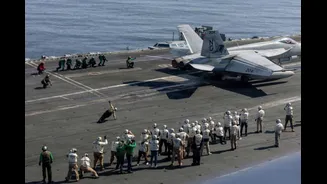
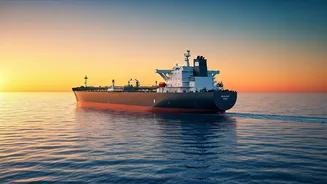
The United States has, in recent days, deployed the aircraft carrier USS Abraham Lincoln, guided-missile destroyers, fighter aircraft, and missile-defence systems closer to Iranian waters. Washington frames the move as defensive, an effort to protect US forces and signal resolve amid Iran’s brutal internal crackdown and fears of nuclear escalation.
Trump, however, has cast it in a different register: as leverage.
Trump says “I hope they make a deal”, suggesting that Tehran has reached out repeatedly. That dual message—force paired with diplomacy, escalation paired with invitation—captures the essence of this moment: power projection as persuasion, brinkmanship as policy.
IRAN’S RED LINES AND RISING FURY
Iran, unsurprisingly, has responded in kind.
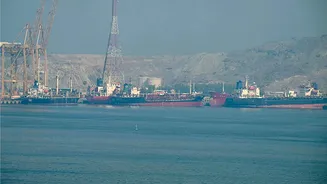
Senior Iranian officials have warned that even a “limited” strike would be treated as an “all-out war.” Tehran has placed its forces on high alert, issued threats to Gulf neighbours, and reminded the world that the Strait of Hormuz—a narrow maritime choke point through which a fifth of global oil passes—is never far from the battlefield in any US-Iran confrontation.
THE GULF’S QUIET PANIC
The rhetoric is sharp. The deployments are real. And the stakes are enormous.
This is not merely a bilateral dispute between Washington and Tehran. It is a regional pressure cooker, with every major actor watching for sparks.
Israel, which views Iran as an existential adversary, is preparing for possible retaliation and proxy escalation. Gulf states, despite longstanding partnerships with Washington, have signaled deep unease—reportedly refusing to allow their airspace or territory to be used for strikes, fearing Iranian reprisals and domestic instability. Saudi Arabia and the UAE, once more openly aligned with US pressure campaigns, now appear caught between alliance and survival instinct.
The shift is telling.
The Middle East has lived through the aftermath of miscalculation too many times: wars launched with limited aims that expanded into decades of fallout, regimes weakened only to unleash chaos, military victories purchased at immense civilian and geopolitical cost.
Trump’s “armada” comment may sound like showmanship, but naval armadas are not metaphors. They are instruments of war.
Globally, the response has been wary. China has urged restraint. Russia has condemned threats of force. European leaders are tightening sanctions over Iran’s protest crackdown but remain reluctant to endorse military action that could detonate the region.
THE STRAIT WHERE THE WORLD HOLDS ITS BREATH
Markets, too, are listening. Oil prices have already jumped, reflecting investor anxiety that even minor clashes could disrupt shipping lanes or ignite strikes on energy infrastructure. In a fragile global economy, the Persian Gulf remains the place where geopolitics meets gasoline prices—where distant tensions arrive quickly at local pumps.
The deeper issue, however, is not simply what Trump is saying, but what the build-up represents.
The United States is once again relying on military concentration as diplomacy. Iran is once again relying on defiance and asymmetric threat as deterrence. The region is once again forced into a familiar posture: brace, mediate, survive.
And history offers an uncomfortable lesson. Crises like these rarely unfold according to script. Carrier strike groups do not sail into contested waters without consequence. Leaders do not trade ultimatums without raising the risk of misinterpretation. And once forces are positioned, the margin for error shrinks dangerously.
Trump insists he wants a deal, not war. Iran insists it will not bend under threats. Both statements may be true. But between them lies a narrow corridor where accidents, misjudgments, or domestic political pressures can push confrontation into catastrophe.
WHAT HAPPENS IF THE ARMADA DOESN’T TURN BACK
For now, the “armada” is still moving. The rhetoric is still rising. The diplomacy is still uncertain.
What matters most is that this moment is not just about Iran, or Trump, or a single deployment.
It is about whether the world’s most combustible region is drifting once more toward a familiar precipice—carried forward not only by strategy, but by pride, politics, and the perilous temptation to test resolve at sea.
Because armadas, however “beautiful” they may sound in a rally line, have never been beautiful once the shooting starts.