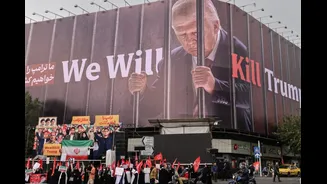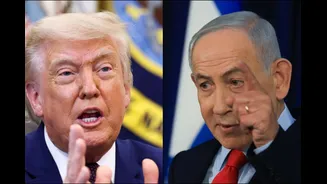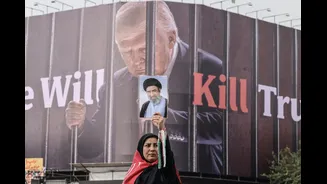





Iran unveiled a massive billboard in Tehran on Tuesday declaring “We will kill Trump”, escalating its public rhetoric against US President Donald Trump as the war with the United States and Israel continues
to cast a shadow over the region.
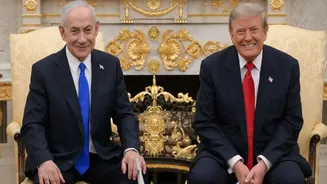
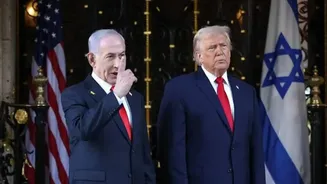
The billboard, towering over the busy Enghelab Square in the Iranian capital, depicted Trump behind bars with his head bowed. Another display nearby showed Trump alongside US Vice President JD Vance, special envoy Steve Witkoff and Israeli Prime Minister Benjamin Netanyahu, all with bloodied faces and ragged suits, against the backdrop of worn-out American and Israeli flags.
Dozens of people gathered in the square, waving red flags and carrying banners that read “There will be blood”. The crowd also called for revenge over the killing of Iran’s Supreme Leader Ayatollah Ali Khamenei in US-Israeli strikes on February 28, an attack that triggered the Middle East war.
Billboards and public displays mocking Trump, threatening revenge and proclaiming victory over the United States have become a recurring feature of Tehran’s public spaces during the conflict.
The latest displays come as diplomatic efforts have intensified in recent days to bring Tehran and Washington to the negotiating table and prevent a resumption of fighting. The conflict has spread across the region and driven up prices globally.
Trump, who faces crucial US midterm elections on Tuesday amid voter discontent partly fuelled by the Iran war, has said a deal with Tehran “could happen”.
Anti-Trump displays across Tehran
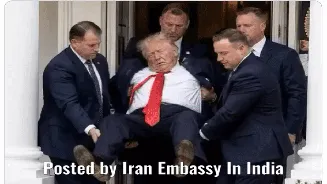
At Tajrish Square in northern Tehran, an open-air exhibition featured paintings of Trump, including one depicting him lying bloodied on the ground with a foot pressing down on his head. Another showed a bomb obscuring his face.
A life-sized replica of a jail cell also remained on display nearby, with an actor impersonating Trump spending the day inside. A screen beside the installation showed images of damage caused by US strikes on Iran.
Tehran has accused Trump of deliberately targeting civilian sites during the war, including a school and a wedding ceremony, killing dozens of people, among them women and children.
State-sponsored billboards and murals have been a fixture of Iran’s public spaces since the 1979 Islamic Revolution. They have been used to honour allies, celebrate military figures and convey political messages to adversaries, particularly the United States and Israel.