
Chief Justice of India Justice Surya Kant on Friday made a strong pitch for mediation as a people-centric, humane and effective dispute resolution mechanism, asserting that it aligns with India’s civilisational
ethos and has the potential to transform the justice delivery system if backed by widespread awareness and adequate capacity building.
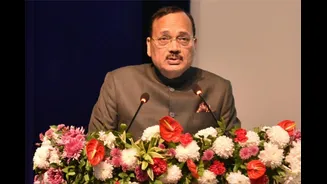
Speaking at the National Conference on ‘Mediation: How Far Significant in the Present-Day Context’, organised by the Bar Council of India (BCI) and the India International University of Legal Education and Research (IIULER) in Goa, the CJI emphasised that mediation is not a compulsory process but a voluntary one rooted in consent and mutual understanding.
“Mediation is not mandated by law. It is a voluntary process. People participate willingly, understanding its benefits,” Justice Kant said, adding that the success of mediation depends largely on education and awareness.
“Therefore, the effectiveness of mediation largely depends on awareness and education about its advantages. Our goal is to train as many competent and skilled mediators as possible across the country.”
Calling mediation central to his vision for the future of dispute resolution, the Chief Justice said, “It’s no secret that the subject we will be exploring today is the cornerstone for my vision for our future.”
He noted that traditional litigation often becomes adversarial.
“Parties go to court primarily to settle scores by causing damage to the other side,” he observed, contrasting this with mediation, which focuses on reconciliation and mutual respect.
“Mediation is a genesis of our soil,” Justice Kant said, underlining that the concept is deeply embedded in India’s cultural and social practices.
Through mediation, he said, “both parties can resolve disputes with mutual respect, understanding, and empathy, honouring each other’s perspectives.”
At the same time, the CJI clarified that mediation does not dilute the judiciary’s role.
“There is no mechanical listing of cases for mediation; we do not shy away from deciding cases on merits,” he said, stressing that courts continue to adjudicate disputes where mediation is unsuitable.
Highlighting the scale of the challenge ahead, Justice Kant said that for mediation to succeed across all levels in the country, India would require a massive pool of trained professionals.
“In this country, for mediation to be successful on all levels, we need over 50,000 mediators,” he said at the conference, while also reiterating the need for structured training and institutional support.
Earlier in the day, the Chief Justice led a ‘Mediation Awareness Walk’ in Panaji, organised by the BCI, BCI Trust and IIULER, and also planted a sapling at the Kala Academy as part of the event.
Speaking separately to ANI on the sidelines of the walkathon, Justice Kant highlighted mediation’s role in reducing pendency and litigation costs.
“The mediation is a quick mode of disposal and very cost-effective,” he said.
“In commercial litigation, matrimonial litigation, motor accident claim cases, and 138 cheque bounce cases, mediation is proving to be a very successful instrument of disposal.”
He also spoke about institutional efforts at the apex court to promote mediation.
“We have a very dedicated mediation centre. There are the MCPC (Mediation and Conciliation Project Committee), the National Legal Services Authority, and the Supreme Court Legal Services Committee. These are three platforms through which we are promoting and initiating mediation for resolving the disputes,” the CJI said.
Addressing reporters later, Justice Kant said mediation is increasingly being accepted as a “successful, cost-effective and win-win settlement” mechanism.
“No mediator will impose anything on any party. It is only what they desire or what they want,” he said, adding that mediation works both at the pre-litigation stage and after cases are filed.
He also referred to the Supreme Court’s ‘Mediation for Nation’ initiative, saying it aims to sensitise not just litigants but also the Bar and the Bench to adopt mediation as a first step in appropriate cases.
ALSO READ | ‘Confident That Experts Will Find Solution’: CJI Surya Kant On Delhi’s Air Pollution