







Tea has long been associated with comfort and is considered one of the most popular beverages to kickstart the morning. For some, it is a comforting drink, for others, a ritual embedded in everyday life
across cultures. Most people pay attention to the flavour, colour, or brewing time; now, emerging scientific evidence is beginning to shift that perspective.
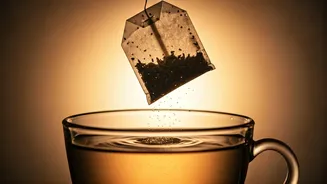
A recent scientific review published in Food Chemistry has brought renewed attention to an unexpected concern: the presence of microplastics in teabags. That soothing cup of tea may hide billions of microplastic particles that could be steeping alongside the brew, raising questions about this everyday drink.
What The Studies Say
Drawing from 19 separate studies, the updated review published in February 2025 suggests that under certain conditions, a single cup of tea, particularly when brewed using certain types of teabags, could contain billions of microscopic plastic particles.
The findings are not based on a single experiment, but rather a synthesis of existing research conducted across different laboratories. The data from these studies reveal a layered understanding of how these particles may enter a drink consumed daily by billions worldwide.
What Exactly Are These Particles?
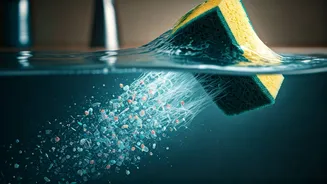
Scientists call these particles microplastics and nanoplastics, often grouped as MNPs. These particles vary significantly in size, and microplastics can range from one micrometre to five millimetres, while nanoplastics are even smaller, less than about one micrometre.
To put this into perspective, a human hair is typically tens of millimetres wide; many of these particles are therefore invisible to the naked eye, making their detection and measurement particularly challenging.
Their tiny size is also what makes the issue more complicated. These particles can originate from multiple sources, and once present, they are difficult to isolate and study without contamination.
How Do Plastics End Up In Tea?
According to the review, plastic particles can enter tea in several ways, depending on the type of tea and how it is prepared.
For bubble tea, the contamination can occur through its multiple components, such as cups, lids, additives, and straws. Bottled tea can acquire particles during production, including plastic bottles and caps, which introduce even more opportunities for plastic exposure.
However, when it comes to hot brewed tea, teabags appear to be the most significant contributor.
When Teabags Are Under Scrutiny
Teabags may look simple and easy to carry, but their composition is not always straightforward. Many modern teabags are made using a combination of materials. Some pyramid-shaped sachets are made from plastic mesh.
Others blend natural fibres like cellulose with synthetic materials. Even traditional-looking paper bags may contain polypropylene, a type of plastic used as a heat-sealing agent to keep the bag intact in hot water.
Perhaps more interestingly, even teabags marketed as ‘biodegradable’ or ‘compostable’ are not always entirely plastic-free. In some studies, researchers dissolved the plant-based components of such bags and still detected residual plastic materials.
This means that the visual appearance or marketing label of a teabag may not fully reflect its chemical composition.
The Scale Of The Numbers
One of the most striking aspects of the research is the sheer number of particles reported. In one study included in the review, a single plastic tea bag released approximately 14.7 billion micro- and nanoplastic particles when steeped under laboratory conditions.
Another study estimated around 1.3 billion particles per bag. Even teabags made with bioplastics such as polylactic acid (PLA) were found to release measurable quantities, often fewer than plastic mesh bags, but still not zero.
These figures can vary widely depending on how the experiments are conducted. Factors such as brewing temperature, steeping time, and the type of filter used during analysis can all influence the results.
Why Measuring Microplastics Is So Difficult
Scientists must not only capture the particles but also confirm that they are indeed plastic and identify their chemical composition. Detecting these microplastics is far from straightforward.
Different analytical tools have different strengths. Some are better suited for larger particles, while others detect smaller ones. Another major challenge is contamination.
Plastic fibres from clothing, airborne dust, laboratory equipment, and even water used in experiments can all interfere with results. This makes it difficult to determine exactly how many particles originate from the tea itself versus external sources.
More Than Just Particles
The review also highlights another dimension of the issue, chemicals associated with plastics. Since plastics are rarely pure materials, they often contain additives that enhance durability, flexibility, and colour.
During manufacturing, small residues may also remain embedded within the material. Several studies found that tea infusions could contain trace amounts of plastic-related chemicals, including plasticisers and compounds similar to bisphenols.
These substances may leach into the liquid during brewing, either from intact teabag materials or from particles that break off. However, the exact pathways through which these chemicals enter tea, and their potential impact, are still under investigation.
What Does This Mean For Health?
The Food Chemistry review does not claim that drinking tea containing microplastics directly harms human health. It also does not include clinical trials involving human participants.
That said, it does reference only laboratory studies that explore possible biological effects. In one experiment, tiny aquatic organisms known as Daphnia were exposed to liquid containing leachates from certain teabags.
Researchers observed that the particles accumulated within the organisms, and at higher concentrations, changes in body structure and swimming behaviour were reported.
Another study examined how human intestinal cells interacted with particles from bioplastic teabags. The findings suggested that cells could take up or interact with these particles, although short-term exposure did not result in significant cell death or visible structural damage.
These studies provide clues, but they are not definitive answers. Scientists stress that more research is needed, particularly long-term studies, to fully understand any potential risks.
Should Tea Drinkers Be Worried?
The evidence does not suggest abandoning tea altogether. Instead, it points to the importance of awareness and context. Yes, it is possible that a cup of tea, especially one brewed with certain types of teabags, may contain microplastics. But the scale, source, and significance of those particles can vary widely depending on multiple factors.
Understanding these nuances is crucial. The type of teabag, brewing method, packaging, and even laboratory techniques used to measure them shape the final picture.
Tea remains one of the most widely consumed beverages in the world. What is changing is not the drink itself, but our understanding of the materials and processes surrounding it.
As research continues, one thing becomes clear: even the simplest daily rituals can carry hidden complexities, often at a scale too small to see, yet significant enough to study.