




History shows that disruptive changes in the trajectory of nations and organisations usually follow a major crisis. Looking back, the 1991 economic reforms were an outcome of the Balance of Payments calamity
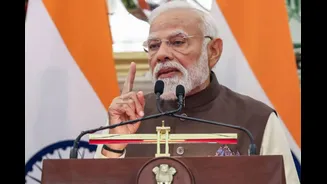
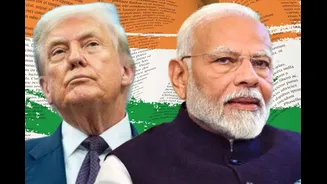
that led to the Reserve Bank of India pledging its gold reserves with foreign banks. The liberalisation that followed was undertaken under duress as part of commitments to international financial institutions. Some believe the choice of a career economist as Finance Minister was made at the instance of the World Bank. As per folklore, Manmohan Singh got the job after I.G. Patel, who was the first choice, declined. Call it the stars or destiny — the rest, as they say, is history. A proverbial hornet’s nest was stirred over the weekend by a statement from the United States Secretary of Commerce in the Trump administration, Howard Lutnick. In the course of a podcast interview, Lutnick commented that the trade treaty between the United States (US) and India was ready to be inked but fell through as Prime Minister Narendra Modi refused to call US President Donald Trump. This set the cat among the pigeons, with critics of PM Modi predictably accusing him of poor political judgement for missing the moment. The reality, however, is far more complex. A trade treaty is not about agreeing on a single flat rate of tariff. It has several layers and fine print. One has to dot the i’s and cross the t’s before putting pen to paper. Thus, some analysts and commentators who were quick to say that PM Modi should have moved faster revised their positions on second thoughts, advocating instead that the challenge be converted into an opportunity by fast-tracking the next wave of economic reforms. These, however, are pious prescriptions. The same people offering well-meaning advice would be the first to jump off the bandwagon and join the obstructionists if any change in the status quo were proposed — as seen during the passage of the Land Act, the Farm Laws, the Goods and Services Tax, and even the vaccination drive during the Covid pandemic. There are, however, other middle-of-the-road opinion leaders voicing the urgency of taking the 1991 reforms to their logical conclusion. The gist of their argument is that poverty cannot be eradicated by redistribution of the pie alone. It requires increasing the size of the pie, which in turn requires unleashing the animal spirits of entrepreneurship. Fear of concentration of wealth in the hands of a few risk-takers should not hold back the overall prosperity of the nation. In such arguments, China is often quoted as an example of fast-tracked growth. Yet all this will remain wishful thinking unless we confront the political realities of our country. The French President Charles de Gaulle famously mused, “How can you govern a country which has 246 varieties of cheese?” Later, this was found to be a significant underestimate, with closer to 1,000 types of cheese existing in France. In India, an analogy can be drawn with the shades of opinion on any matter — which, if counted, may perhaps exceed the population itself, as many people change their views depending on the time of day and the audience they address. Unlike the US President or the Chinese Premier, the Indian Prime Minister’s writ does not run uniformly across the country or institutions. There are hurdles and minefields to be negotiated at every step — not to mention pushback from professional andolan jeevis nurtured by regime-change sponsors. A question may be asked as to how P.V. Narasimha Rao and Manmohan Singh achieved what they did. Part of the answer has already been stated in the premise of this article — namely, that they were blessed by an unprecedented crisis when the threat to survival united voices across the political spectrum around a common minimum programme. Besides, truth be told, at that juncture no one would have liked to be in the hot seat, writing what could have been their own political obituaries. However, there was another underlying force that helped Rao and Singh navigate the perfect storm. It was the Indian “deep state”, or bureaucracy, rallying behind them, sensing that a titanic disaster would take them down with the rest if left unchecked. In a different sense, PM Modi was able to mobilise the same machinery during Covid — with results that stunned the world, even if sections of the Western media were loath to admit it. It also saw bipartisan alignment — barring a few compulsive critics — driven by a sheer humanitarian crisis. But such a situation cannot be simulated merely on the basis of threats of tariffs. Yet, this is one of the best times for PM Modi to usher in radical change. At present, there is a maximum number of states under the “double-engine sarkar”. Opposition-ruled states — barring a couple that may play spoilsport — would fall in line with a little nudge and some concessions. Though assembly elections are due in a few states in the coming months — with Bihar in the pocket and Andhra Pradesh steadily aligned — the results are unlikely to alter the Bharatiya Janata Party’s overall political balance sheet. What is therefore required is getting the regional leadership firmly on board — with a Yogi Adityanath–like missionary zeal — through a stern diktat to deliver or vacate, without getting distracted by internal politics. Narendra Modi’s fiat still runs supreme within the party, as recent decisions such as the appointment of a new Working President have demonstrated conclusively. This would mean shaking the system out of complacency and eschewing rent-seeking practices that may have seeped into the lower echelons of the party hierarchy and governments — especially in the states — over time, thereby diluting the original credo of “Na khaoonga, na khaney doonga”. At the same time, the bureaucracy must be empowered and mandated to prove its fabled mettle and set an example before the world. For this, the nationalistic spirit must be invoked once again, without window-dressing the geopolitical and economic threats the country faces. No one is better placed to do this than the present Prime Minister. Sandip Ghose is a writer and public commentator. His X handle is @SandipGhose. Views expressed in the above piece are personal and solely those of the author. They do not necessarily reflect News18’s views.