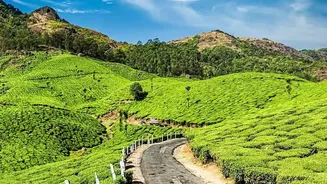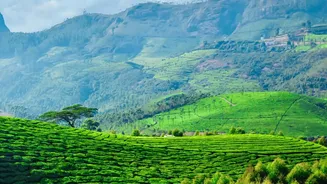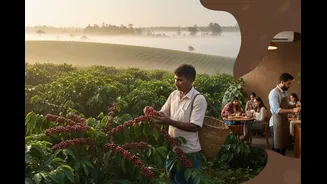






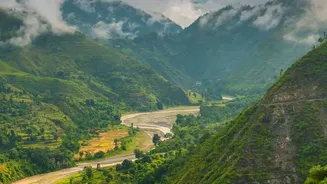
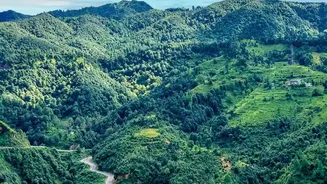

International Coffee Day 2026: From the misty coffee plantations of Coorg and Chikkamagaluru to bustling speciality cafés in Mumbai, Bengaluru and Delhi, coffee has become much more than a beverage in India.
It is an agricultural commodity, an important export, a source of livelihoods and an increasingly prominent part of the country’s urban food and lifestyle culture.
As the world observes International Coffee Day on October 1, India’s coffee story offers a journey spanning centuries, from the traditional coffee-growing regions of the Western Ghats to a rapidly evolving café culture.
The occasion also comes at an important time for the global coffee sector. The International Coffee Organization (ICO) has launched its 2026 global campaign, “Coffee is Part of the Solution,” highlighting the role coffee can play in livelihoods, communities and sustainable development. The ICO says coffee provides income for around 12.5 million farming families worldwide.
For India, the story begins in Karnataka and stretches across Kerala, Tamil Nadu and newer growing regions, while the domestic market is increasingly embracing everything from traditional filter coffee to espresso, pour-over and speciality brews.
International Coffee Day 2026: What is the campaign message?
The ICO’s 2026 global campaign is titled “Coffee is Part of the Solution.” The campaign places coffee within wider conversations around sustainable development and the future of coffee-producing communities.
Rather than looking at coffee simply as a popular drink, the campaign draws attention to the wider coffee value chain, from farmers and workers to processors, exporters, cafés and consumers.
The message is particularly relevant to India, one of the world’s established coffee-producing countries. The country’s coffee sector supports large numbers of growers and workers, generates export earnings and has developed a distinct identity in international markets.
The campaign also follows growing global attention on climate resilience, sustainability and the economic future of coffee-growing communities.
International Coffee Day: History
International Coffee Day is observed every year on October 1.
The International Coffee Organization’s member countries agreed in March 2014 to organise a common International Coffee Day on October 1. The first official International Coffee Day was subsequently held on October 1, 2015, creating a coordinated global occasion to celebrate coffee and recognise the people working across the coffee sector.
The day is not merely about celebrating a popular beverage. The ICO describes it as an opportunity to highlight the diversity and quality of coffee while recognising the millions of farmers whose livelihoods depend on the crop.
Why is International Coffee Day significant?
Coffee is one of the world’s most widely traded agricultural commodities and supports a vast global value chain.
Behind every cup are farmers, plantation workers, processors, transporters, exporters, roasters, retailers and baristas. Changes in weather, production costs, international prices and consumer demand can therefore affect people at multiple stages of this chain.
The day provides an opportunity to understand that journey, from the coffee cherry grown on a plantation to the cup served at a neighbourhood café.
For India, International Coffee Day is also an opportunity to spotlight the country’s distinctive production system, its coffee-growing communities and the changing ways Indians consume coffee.
India’s coffee story began centuries ago
According to the Coffee Board of India, the story of Indian coffee is traditionally traced to Baba Budan, who is believed to have brought seven coffee seeds from Yemen and planted them in the hills of Karnataka around the 17th century. The Coffee Board describes the Baba Budan Giri region as the birthplace of coffee in India.
Coffee gradually developed from a garden curiosity into a commercial crop. Commercial plantations expanded during the 18th century, and India’s coffee industry subsequently developed into an important export-oriented sector.
Today, coffee is traditionally grown across the Western Ghats in Karnataka, Kerala and Tamil Nadu, while cultivation has also expanded into parts of Andhra Pradesh, Odisha and the northeastern states.
Coorg: One of the important names in India’s coffee map
When Indians think of coffee plantations, Coorg, or Kodagu, in Karnataka, is among the regions that immediately come to mind.
The Coffee Board lists Coorg as a major coffee-growing region, with both Arabica and Robusta cultivated there. The region’s coffee plantations also commonly feature intercrops such as pepper, cardamom, orange, banana and arecanut.
The latest Coffee Board statistics underline Kodagu’s importance. For the 2025-26 crop year, the final estimate puts Kodagu’s total coffee production at about 1,21,185 metric tonnes. The Board’s post-blossom estimate for 2026-27 is about 1,31,420 metric tonnes.
Coorg is therefore not simply a tourism destination associated with green hills and plantations; it is an important part of India’s coffee economy.
Chikkamagaluru and other coffee-growing regions
Karnataka remains the centre of India’s coffee industry.
The Coffee Board’s latest statistics show that Chikkamagaluru, Kodagu and Hassan are major coffee-producing districts in the state. The Board’s final estimate for Karnataka’s total coffee production in 2025-26 stands at around 2.57 lakh tonnes, with the state accounting for the largest share of India’s production.
Beyond Karnataka, Wayanad and other parts of Kerala, Tamil Nadu’s coffee-growing hills, and emerging areas in Andhra Pradesh, Odisha and the Northeast contribute to India’s coffee landscape.
This geographic diversity is one reason Indian coffee offers such a wide range of flavour profiles and growing conditions.
Arabica vs Robusta: What does India grow?
India primarily grows two commercial coffee varieties: Arabica and Robusta.
Arabica is generally associated with higher elevations and is known for its aromatic characteristics. Robusta is more suited to warmer and more humid conditions and is valued for its strength and blending qualities.
The Coffee Board says Indian Arabica is grown at higher elevations, while Robusta generally grows in warmer and more humid conditions.
India’s production is particularly significant for Robusta. The Coffee Board’s 2025-26 final estimate puts India’s total production at about 4.03 lakh tonnes, comprising approximately 1.18 lakh tonnes of Arabica and 2.85 lakh tonnes of Robusta in the Board’s post-blossom estimate for that crop year.
India’s coffee production reaches a record estimate
The Coffee Board’s post-blossom estimate for 2025-26 projected India’s coffee production at approximately 4.03 lakh tonnes, compared with a final estimate of 3.63 lakh tonnes for 2024-25. That represents an increase of roughly 11% in the estimates.
Karnataka accounted for the largest projected share, with the Board estimating production of about 2.80 lakh tonnes in the state for 2025-26. Kerala followed with approximately 85,150 tonnes, while Tamil Nadu’s estimate stood at around 20,315 tonnes.
The figures illustrate how central southern India remains to the country’s coffee economy.
India is also a major coffee exporter
Coffee is an important export commodity for India.
According to the Coffee Board’s 2024-25 annual report, India exported 3,88,925 metric tonnes of coffee, including re-exports, to 126 countries during the year. The total export value was approximately ₹15,422 crore, equivalent to around US$1.82 billion.
The largest destinations for Indian coffee exports during 2024-25 included Italy, Germany, Russia, Belgium and the United Arab Emirates, according to the Coffee Board.
India’s export basket includes green coffee as well as instant, roasted and other value-added coffee products.
This export-oriented character has been a defining feature of the Indian coffee industry. The Coffee Board says around 65% to 70% of the coffee produced in India is exported, although the exact share can vary by year.
From plantation crop to café culture
While coffee has long been deeply embedded in South Indian food culture, India’s urban coffee scene has changed considerably.
Traditional filter coffee remains an important part of the country’s coffee identity, particularly in southern India. At the same time, urban consumers have increasingly encountered espresso-based beverages, cold coffee, pour-over, French press, cold brew and other speciality preparations.
Cafés have also become spaces for socialising, working, studying and meeting friends.
This shift has helped turn coffee from a traditional household beverage into part of a broader lifestyle culture, particularly among younger urban consumers.
The result is a coffee landscape in which a traditional South Indian filter coffee and a carefully prepared speciality pour-over can exist side by side.
What makes Indian coffee distinctive?
One of India’s notable characteristics is its traditional shade-grown coffee system.
The Coffee Board says Indian coffee is grown under shade, with plantations featuring a mixed shade canopy. Shade trees can help protect soil, moderate temperature conditions and support biodiversity. Coffee plantations may also grow alongside crops such as pepper, cardamom, vanilla, orange and banana.
The combination of altitude, rainfall, soil, shade and intercrops contributes to the characteristics of coffees produced in different Indian regions.
The Coffee Board identifies several speciality coffees from India, including Mysore Nuggets Extra Bold, Monsooned Malabar AA and Robusta Kaapi Royale.
Why sustainability matters to coffee’s future
The 2026 ICO campaign’s focus on coffee as part of the solution comes at a time when sustainability and resilience have become important issues for the global coffee sector.
Coffee cultivation depends heavily on environmental conditions. Temperature, rainfall, pests, disease and extreme weather can all influence yields and quality.
For producers, sustainability is therefore not simply an environmental issue. It can also affect productivity, income, farm viability and the future of coffee-growing communities.
India’s shade-grown cultivation practices, research into coffee varieties and efforts to improve productivity are part of a larger conversation about making the coffee sector more resilient.
Coffee and the people behind every cup
International Coffee Day also puts the spotlight on people.
A cup of coffee served at a café may appear simple, but it represents a long chain of work, from planting and maintaining coffee plants to harvesting, processing, grading, transportation, roasting and brewing.
The ICO estimates that coffee provides income for around 12.5 million farming families worldwide.
In India, the sector also has a large network of small growers. The Coffee Board’s 2024-25 annual report recorded approximately 4.43 lakh coffee holdings, of which around 4.40 lakh were holdings below 10 hectares.
That makes the fortunes of small growers an important part of India’s coffee story.
International Coffee Day 2026: Why India’s coffee story matters
India’s coffee journey has moved far beyond its origins in the hills of Karnataka.
It now encompasses plantations in several states, a sizeable export industry, speciality coffees, traditional filter coffee and a rapidly changing café culture.
The numbers also show the scale of the sector. With India’s coffee production estimated at around 4.03 lakh tonnes for 2025-26 and exports worth more than ₹15,000 crore recorded in 2024-25, coffee is both a cultural product and an economically important agricultural commodity.
The day offers more than a reason to order another cup. It is an opportunity to look at the journey behind that cup, from the plantations of Coorg and Chikkamagaluru to India’s cafés and international markets.
And with the ICO’s 2026 campaign message, “Coffee is Part of the Solution,” the global conversation is increasingly about how coffee can contribute to resilient communities, sustainable production and a more viable future for the people who grow it.