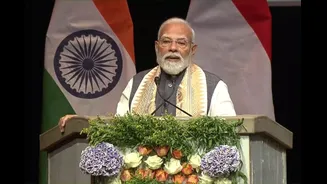

India is preparing for one of its busiest diplomatic phases of 2026, with Prime Minister Narendra Modi set to participate in three major multilateral engagements over the course of a month. Beginning with the Shanghai
Cooperation Organisation (SCO) Summit in Kyrgyzstan, followed by India hosting the BRICS Summit in New Delhi, and culminating with an address at the United Nations General Assembly (UNGA) in New York, the packed schedule reflects New Delhi’s efforts to strengthen its role across multiple global platforms.
The diplomatic calendar begins with the SCO Summit in Bishkek, Kyrgyzstan, on August 31 and September 1. The SCO comprises China, Russia, India, Pakistan, Kazakhstan, Kyrgyzstan, Tajikistan, Uzbekistan, Iran and Belarus. Originally established with a focus on regional security and counter-terrorism, the grouping has increasingly expanded its agenda to include connectivity, energy cooperation, trade and regional stability.
For India, the summit provides an opportunity to engage with major Eurasian powers while discussing issues such as terrorism, extremism, regional security and connectivity. The meeting also assumes significance as it brings together leaders from countries with which India has complex bilateral relationships, including China and Pakistan, alongside long-standing strategic partner Russia.
Less than two weeks later, attention will shift to New Delhi, where India will host the 18th BRICS Summit on September 12 and 13 as part of its 2026 presidency of the grouping. India has adopted the theme “Building for Resilience, Innovation, Cooperation and Sustainability” for its chairship.
BRICS has evolved considerably since its formation by Brazil, Russia, India, China and South Africa. Following its recent expansion, the grouping now includes additional members from West Asia and Africa, making it a larger platform representing a significant share of the world’s population, economic output and energy resources. During India’s presidency, discussions are expected to focus on strengthening cooperation among developing economies, resilient supply chains, digital innovation, sustainable development, climate action, reform of global governance institutions and the concerns of the Global South.
Hosting the summit also places India at the centre of high-level diplomatic engagement, with several heads of state and government expected to visit New Delhi for bilateral as well as multilateral meetings alongside the main summit.
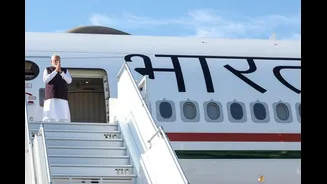
The final leg of the diplomatic calendar will take PM Modi to New York later in September, where he is scheduled to address the 80th Session of the United Nations General Assembly (UNGA). The annual UNGA session brings together world leaders to deliberate on pressing international issues, ranging from conflicts and humanitarian crises to climate change, sustainable development, global health and reform of multilateral institutions.
India has consistently used the UNGA platform to articulate its foreign policy priorities, advocate reforms of global governance bodies, including the UN Security Council, and highlight issues affecting developing countries. This year’s address is also expected to reinforce India’s campaign for a non-permanent seat on the UN Security Council for the 2028-29 term while reiterating its commitment to multilateral cooperation.
The three engagements illustrate India’s strategy of maintaining an active presence across different international groupings rather than relying on a single geopolitical bloc. The SCO provides a platform centred on Eurasian security and regional cooperation, BRICS focuses on economic collaboration among emerging economies and the Global South, while the UN General Assembly remains the world’s most representative multilateral forum.
The sequence of these summits also allows India to carry forward common priorities across different platforms. Counter-terrorism, resilient global supply chains, energy security, digital transformation, climate action, development financing and reforms of international institutions are expected to feature prominently throughout the month-long diplomatic engagement.
As global geopolitical competition intensifies and multilateral institutions continue to evolve, India’s participation in these three major forums underscores its effort to engage simultaneously with diverse partners, expand its diplomatic outreach and project its priorities on the global stage.