





A fresh directive from the Maharashtra transport department has stirred unease among autorickshaw and taxi drivers, as authorities prepare to roll out a statewide verification drive to assess Marathi language
proficiency.
According to a report by The Times of India, the exercise will begin on May 1 and cover 59 regional and sub-regional transport offices. Transport minister Pratap Sarnaik has made it clear that licensed drivers must be able to read and write Marathi, warning that failure to meet this criterion could result in cancellation of licences.
The announcement has triggered strong reactions from drivers’ unions, which argue that the move could jeopardise livelihoods. As per TOI, union representatives have said the requirement goes beyond the existing rule mandating only a “working knowledge of Marathi” at the time of obtaining a badge. They have also raised concerns about the possibility of corruption during the verification process, with one leader cautioning that such checks could lead to demands for bribes in exchange for clearance.
A union leader reportedly said that the provision under the Maharashtra Motor Vehicles Rules refers only to a “working knowledge” of the language, not formal proficiency in reading, writing or fluency. “If any action is taken and badges/licences are cancelled, we will challenge it in court,” he said.
Echoing similar concerns, DA Salian from the Mumbai Taxi Association told TOI that many drivers have been in the profession for years and it would be unfair to revoke licences on language grounds. “The minister cannot implement such a rule or campaign across the state for all drivers who are already in the profession and earning a livelihood; families depend on them,” he said.
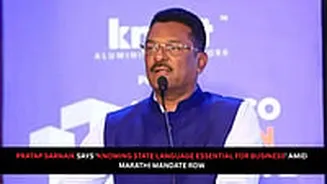
However, Sarnaik defended the move, saying that the rule is not new and that familiarity with the local language has always been part of the licensing framework. He added that the government has received multiple complaints from passengers in regions such as Mumbai Metropolitan Region, Chhatrapati Sambhajinagar and Nagpur, alleging that several drivers either cannot communicate in Marathi or avoid using it.
“It is the duty of every person to learn the language of the region in which they live for their livelihood,” the minister said, while stressing that people should respect the language of the state they work in alongside taking pride in their mother tongue.
He also cautioned transport officials against overlooking regulations, stating that strict action would be taken against those issuing licences improperly.
Union leaders, however, remain unconvinced. Mumbai Rickshawmen’s Union leader Thampy Kurien told TOI that drivers already undergo multiple checks, including submission of domicile documents, police verification and knowledge of routes and local geography. He maintained that “working knowledge means basic Marathi needed for the job”.
Drivers on the ground fear the financial fallout of the proposed crackdown. As reported by TOI, an autorickshaw driver from the eastern suburbs said his vehicle was purchased on loan and losing his badge would leave him without income even as EMI payments continue. Another driver from the western suburbs warned that the verification drive could become arbitrary, with enforcement squads deciding who qualifies as proficient in Marathi.