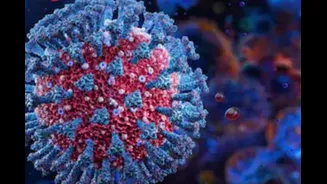









Just when the global conversation around COVID-19 seemed to settle, a new variant – BA.3.2, informally dubbed ‘Cicada’ has re-entered the spotlight. Identified across multiple regions, including the United
States and over 20 countries, the strain is drawing attention not for panic, but for what it represents: the virus’s continued evolution.
Why BA.3.2 Cicada Is Being Closely Watched
What sets BA.3.2 apart is its unusually high number of mutations – around 75. In virology, mutations are not uncommon, but such a volume raises important questions. Changes in the virus’s structure can influence how easily it spreads, how the body responds, and whether existing immunity offers sufficient protection.
Early scientific observations suggest that some of these mutations may allow partial immune escape. However, experts emphasise that laboratory findings don’t always translate directly into real-world impact, and more data is still being gathered.
Where Has BA.3.2 Cicada Variant Been Detected?
The BA.3.2 variant has been reported in several US states, including California, New York, and Tennessee, alongside detections in multiple countries. While this indicates geographic spread, it does not automatically mean the variant is more severe or dangerous than earlier strains. Other variants, such as XFG and NB.1.8.1, continue to account for a large share of infections, indicating that BA.3.2 is still part of a broader, evolving landscape.
BA.3.2 Cicada Symptoms: What To Look Out For
So far, BA.3.2 appears to present symptoms similar to recent variants. These include:
- Fever
- Dry cough
- Sore throat
- Fatigue
- Headache
- Body aches
- Runny or blocked nose
In some cases, individuals may also experience loss of taste or smell, or shortness of breath in more severe situations. Symptom intensity varies based on immunity levels, age, and underlying health conditions.
Do Vaccines Still Work?
One of the biggest concerns with any new variant is vaccine effectiveness. While BA.3.2 may show some ability to bypass parts of immune protection, vaccines are still expected to significantly reduce severe illness, hospitalisation, and complications. Booster doses remain especially important in maintaining strong immunity.
At present, there is no clear evidence that BA.3.2 causes more severe disease. However, its mutation profile makes it a variant worth monitoring. Simple precautions continue to be effective: stay updated on vaccinations, wear masks in crowded spaces, maintain hygiene, and test if symptoms arise.