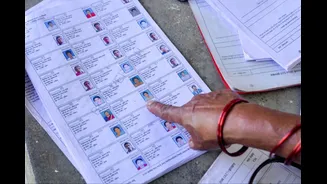









The Election Commission of India’s first reaction after the Supreme Court upheld its power to conduct the Special Intensive Revision (SIR) of electoral rolls came through the recirculation of an old video
carrying a message from the Chief Election Commissioner that “ECI was, is and will always be with the voters.”
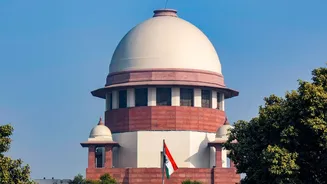
The move came shortly after the Supreme Court on Wednesday upheld the constitutional validity of the SIR exercise, ruling that the poll body acted within its statutory powers and that the exercise advances the goal of “free and fair elections”.
A bench headed by Chief Justice Surya Kant pronounced the verdict along with Justices Joymala Bagchi and Vipul M Pancholi.
The court dealt with a batch of petitions challenging the legality of the SIR process in Bihar and several other states.
The court, however, backed the Commission’s position and observed that the exercise was aimed at preserving the integrity and accuracy of electoral rolls rather than undermining electoral rights.
While pronouncing the judgment, the top court framed four key questions, including whether the Election Commission had the authority to conduct the SIR and whether the exercise violated provisions of the Representation of the People Act, 1950.
The court ultimately held that the Election Commission was empowered to undertake the exercise.
“It can’t be said ECI acted outside the statutory powers by exercising SIR. It can’t be said ultra vires because the exercise is different from what is ordinarily conducted,” the court said.
The bench further observed that the SIR process “breathes life into the Representation of the People Act” and bears a “direct nexus to the constitutional goal of free and fair elections”.
The Supreme Court said it was “unable to conclude that the impugned exercise is a process resorted to solely for administrative convenience”.
“On the contrary, we hold that the electoral SIR advances the constitutional imperative of free and fair elections,” the bench said.
COURT REJECTS CHALLENGE TO EC POWERS
The petitions against the SIR exercise had argued that the Election Commission lacked powers under Article 326 of the Constitution and the Representation of the People Act to conduct such a large-scale verification exercise.
The petitioners also alleged that the revision exercise resembled an “NRC-like process” and accused the Commission of venturing into citizenship verification, which they argued falls within the domain of the Union government.
The Election Commission had defended the exercise by maintaining that Aadhaar and voter identity cards cannot be treated as conclusive proof of citizenship.
The Supreme Court, while upholding the exercise, clarified that the Commission’s role remained limited to electoral purposes and did not amount to a final determination of citizenship.
“The Commission’s determination, being confined to electoral purposes, cannot assume finality on the question of citizenship,” the court observed.
The judges also said that where the Commission is not satisfied with the material produced by an individual, it may decline enrolment or initiate deletion proceedings strictly in accordance with the law.
At the same time, the court directed that such cases must be referred to the competent Union government authority for adjudication on citizenship issues.
The court further directed that individuals whose names are deleted must be referred to the competent authority within four weeks, and that the authority must decide their claims after giving notice and an opportunity to be heard before assembly or local body elections are held.
The Supreme Court had reserved its verdict on January 29 after hearing extensive arguments, including submissions by the NGO Association for Democratic Reforms.
The SIR process was first conducted in Bihar and has since been carried out in states including Kerala, Tamil Nadu, Puducherry and West Bengal, while continuing in others such as Uttar Pradesh, Gujarat and Rajasthan.