








Delhi’s notoriously toxic air may appear to be cleaner these days, but it could be hiding a bigger, quieter problem. According to a report in The Indian Express, while the national capital’s nitrogen dioxide
and carbon monoxide levels have gradually declined over the years, ozone — a less talked about pollutant — is becoming more prominent.
The worrying phenomenon is reportedly highlighted by a new public dashboard built on long-term data from the Central Pollution Control Board (CPCB). According to this dashboard, Delhi’s annual average ozone rose from 52 micrograms per cubic metre in 2021 to 66 in 2025. Even more telling is the jump in ozone-dominant days.
Delhi hasn’t completely moved past its particulate pollution problem either.
PM2.5 and PM10 levels still breach safe limits by a wide margin, especially in winter. What’s changing is the mix. Even as some pollutants show a gradual decline, ozone is emerging alongside them, adding another layer to an already complicated air quality puzzle.
Good Ozone vs Bad Ozone
Ozone often gets a positive association because of the protective ozone layer high up in the atmosphere. But what’s rising in Delhi is ground-level ozone. Closer to the surface, ozone is not emitted directly. It forms in the air when sunlight triggers chemical reactions between nitrogen oxides and volatile organic compounds.
The chemistry behind ozone makes it particularly sensitive to weather and sunlight.
That’s why the data shows a clear seasonal pattern. While particulate pollution spikes in the colder months, ozone levels tend to peak in summer, especially around May when strong sunlight speeds up these reactions.
Ironically, clearer skies and brighter days can coincide with higher ozone levels.
A Tale Of Two Seasons
Delhi’s pollution calendar is starting to look like a split story.
From October to February, stagnant air traps emissions, pushing PM2.5 and PM10 to their worst levels. Come monsoon, rainfall and winds help disperse these particles, offering temporary relief.
But summer tells a different story. With heat and sunlight in play, ozone begins to climb , even when particulate levels are relatively lower.
Beyond Delhi, A Wider Pattern
The trend isn’t limited to the national capital.
Cities across the NCR and nearby regions, including Meerut, Noida and Muzaffarnagar, have recorded noticeable increases in ozone levels over the past few years. Some places, like Bharatpur, have remained persistently high.
At the same time, the data isn’t uniform everywhere. Bulandshahr, for instance, has seen a sharp drop in ozone levels, showing that local factors still matter.
What It Means For Your Health
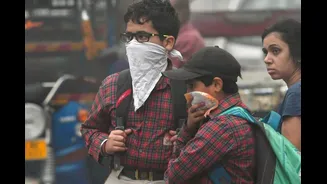
Ground-level ozone doesn’t have the same visibility as smog, but its impact is real.
It can irritate the respiratory system, worsen breathing issues and pose risks for those who spend long hours outdoors. Unlike particulate pollution, which often comes with visible haze, ozone can be harder to detect without monitoring.
Why This Problem Is Trickier
One reason ozone is harder to tackle is that it isn’t emitted directly.
Cutting it down isn’t just about controlling one source. It requires managing a combination of emissions — from vehicles, industry and other sources — along with the conditions that allow these reactions to happen.
That makes it a more complex problem than simply reducing particulate matter.
Cleaner Air, But Not Quite Clean
There has been some progress. Long-term data shows a decline in PM2.5 and PM10 levels compared to a decade ago, even if they remain well above safe limits.
But the rise in ozone complicates the picture.
Delhi’s air isn’t following a straight path from bad to better. It’s shifting, and in some ways, becoming harder to read at a glance.