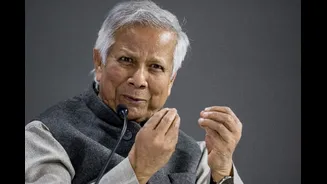










As Bangladesh is heading towards its first Parliamentary Elections since the unrest in 2024, Muhammad Yunus, Chief Adviser of the country’s interim government, has reaffirmed his government’s commitment
to hold the general elections and the referendum as scheduled on February 12.
The Chief Adviser made the remarks when two former senior United States diplomats – Albert Gombis and Morse Tan – called on him at the State Guest House Jamuna in Dhaka on Tuesday night, an official statement from the office of the Chief Adviser said.
During the meeting, Yunus highlighted that there had been a “flood of fake news” and an attempt to “deliberately spread confusion regarding the elections”. He stressed that his government remains committed to holding the polls on February 12 and handing over the power to a democratically elected government, once the results are declared.
Elections Will Be Held on February 12, Chief Adviser Tells US Diplomats
DHAKA, January 14: Chief Adviser Professor Muhammad Yunus on Tuesday reaffirmed his government’s commitment to hold the general elections and the referendum as scheduled on February 12.
The Chief Adviser… pic.twitter.com/WySGQzOPTp
— Chief Adviser of the Government of Bangladesh (@ChiefAdviserGoB) January 14, 2026
“No matter who says what, elections will be held on February 12—not a day before, not a day after,” the Chief Adviser said.
He also affirmed that the polls – the first since the 2024 unrest in the country – will be held in a “peaceful and festive atmosphere.”
Muhammad Yunus stated that the interim government would remain “completely neutral” during the elections, ensuring an “unbiased administration” and a “level playing field for all political parties”, the statement suggested.
Albert Gombis, a former Acting Under Secretary of State, and Morse Tan, a former Ambassador-at-Large, are on an official visit to Bangladesh ahead of its 13th Parliamentary Elections.
“During the hour-long meeting, Yunus and the US diplomats shed light on a wide range of topic involving the July unrest and its aftermath, the rise of young protesters, the July Charter and the referendum, fake news and misinformation targeting the vote, the Rohingya crisis, and the prospects for truth and reconciliation in a post-July Bangladesh”, said the official statement.
The Chief Adviser noted that the July Charter – set to be endorsed by the people – would usher in a new era of democratic governance and leave no room for future autocracy.
Yunus also claimed that the supporters of what he described as the “former autocratic regime” were engaged in spreading misinformation regarding the elections. “But people are alert. Increasingly, they can detect AI-generated misinformation videos,” he said.
‘Fake news one of the main enemies of democracy’
Former Under Secretary Gombis emphasised that fake news had emerged as “one of the main enemies” of democracy. He also called for a “greater need for efforts” to combat the same, the statement mentioned.
Fresh surge of violence in Bangladesh
This comes as Bangladesh has been witnessing a fresh surge of violence against the minorities, as the country heads towards its first parliamentary elections since the 2024 unrest that led to the exile of former Prime Minister Sheikh Hasina.
At least 116 members of minority communities have been killed in Bangladesh in just seven months, according to a new report by the Human Rights Congress for Bangladesh Minorities (HRCBM).
The report documents killings between June 6, 2025, and January 5, 2026, spread across all eight administrative divisions and at least 45 districts.
One case highlighted is the December 2025 lynching of Dipu Chandra Das, a Hindu factory worker, who was beaten to death following an allegation of blasphemy.