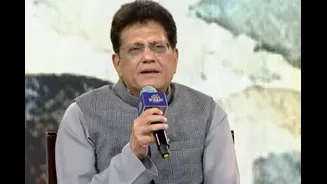




Commerce and Industry Minister Piyush Goyal has described the United States’ restrictions on H-1B visas as a potential boon for the Indian economy. He said tighter access to the US job market could encourage
skilled professionals to stay in India, strengthen the start-up ecosystem and accelerate the growth of global capability centres (GCCs).
In an interview with The Economic Times, Goyal said India could benefit from retaining talent that has traditionally moved to the US, as businesses increasingly recognise the advantages of building technology and research operations in the country.
“I personally believe that not getting more H-1B visas is absolutely good for the Indian economy,” Goyal told ET, arguing that India had lost some of its best talent to the US over the past 25-30 years.
He added that every H-1B visa not granted could represent a significant opportunity for India to retain talent, boost domestic consumption and create more value within its economy.
“Look at the entire ecosystem, and you will realise every H-1B visa not granted is a big win for India,” he added.
Why Piyush Goyal Sees H-1B Visa Restrictions As An Opportunity For India
Goyal’s argument rests on the potential economic benefits of retaining skilled Indian professionals who might otherwise move to the US for employment. According to the minister, India has developed a strong pool of professionals across technology, research, defence and other specialised fields. He said companies could access highly skilled talent in India at a fraction of the cost of hiring comparable professionals in some overseas markets.
“If you can get better, if not the best, in that profession in India, at maybe one-fifth or one-sixth that value,” Goyal said, explaining the economic advantage of employing skilled professionals domestically.
He argued that professionals working in India would pay taxes in the country, spend their earnings locally and support domestic businesses by consuming goods and services. Their presence could also strengthen India’s entrepreneurial ecosystem and encourage more startups to emerge.
The minister suggested that the benefits of retaining talent extend beyond individual companies, creating a wider economic multiplier effect through employment, consumption, tax revenues and business creation.
H-1B Restrictions Could Boost India’s Startup Ecosystem
Goyal also sees tighter H-1B visa access as an opportunity to accelerate India’s startup ecosystem, particularly in deep technology. He said India still has considerable ground to cover in deep tech, where the number of significant startups remains limited to a few thousand. Retaining more skilled professionals could help address this gap by making experienced talent available to domestic businesses and new ventures.
The minister also pointed to India’s growing role in global technology operations, with cities such as Bengaluru, Hyderabad, Pune, Gurugram, Noida and Mumbai attracting an increasing share of high-value work.
He argued that the Covid-19 pandemic accelerated changes in how companies operate, reducing the need for employees to be physically present in the US for many technology-related jobs. With a larger share of work being carried out from India, he expects restrictions on overseas work visas to provide an additional push to domestic startups and innovation.
Global Capability Centres In India Could Benefit
Goyal said American companies are looking at expanding their operations in India because of the country’s talent pool. Asked whether US companies were considering scaling up their Indian operations, he responded, “Not some, all of them, because this is where the talent is.”
The minister’s remarks come as India strengthens its position as a destination for global capability centres, which undertake activities ranging from software development and research to analytics, finance and other specialised business functions for multinational companies.
If visa restrictions make it more difficult or expensive to relocate employees to the US, companies could have greater incentives to expand teams and functions in India. However, the extent of this shift will depend on individual companies’ business requirements and immigration policies.
H-1B Visas And India-US Trade Deal Are Separate Issues
Goyal also sought to distinguish immigration policy from trade negotiations between India and the US. He said he had not raised H-1B visas or green cards in his discussions with the American government, arguing that immigration was not a free trade agreement issue and was not directly related to trade.
“What relates to trade is mobility,” he said, distinguishing the movement of people for trade-related purposes from broader immigration arrangements.
On the bilateral trade deal, Goyal said negotiations were continuing despite changes in circumstances since the two countries announced an understanding in February. He described the discussions as being on a “steady keel” and said both sides were working through the legal details.
His comments suggest that India intends to pursue its trade interests separately from disagreements over US immigration policy.
What This Means For Indian Professionals And Businesses
If US visa restrictions encourage companies to move more high-value work to India, the potential beneficiaries could include Indian IT services firms, technology startups, GCC operators and professionals working in specialised fields.
A larger domestic talent pool could also help businesses build research and development capabilities, develop products for global markets and retain more of the economic value generated by Indian professionals.
However, visa restrictions alone will not guarantee these outcomes. India will also need to create high-quality jobs, strengthen research infrastructure, improve access to capital and provide an environment in which skilled professionals and entrepreneurs can build globally competitive businesses.
Goyal’s broader message is that India should view the changing immigration landscape as an opportunity to deepen its domestic capabilities rather than merely as a setback for professionals seeking to work overseas.
As he told ET, India needs to look beyond its domestic market and encourage startups to compete internationally. The opportunity, in his view, is to ensure that more Indian talent builds businesses and creates economic value from within the country.