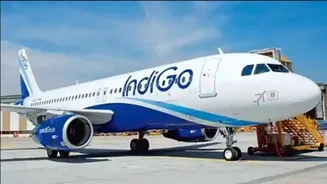

The Civil Aviation Ministry has asked for a 10% cut in planned IndiGo flights – double of what aviation regulator DGCA ordered on Monday — to help restore order at India’s biggest airline, which has cancelled
thousands of flights nationwide in recent days after failing to plan for tighter safety regulations.
On Tuesday, Civil Aviation Minister Ram Mohan Naidu posted a photo of IndiGo CEO Pieter Elbers sitting with folded hands in front of him. “The Ministry considers it necessary to curtail the overall IndiGo routes, which will help in stabilising the airline’s operations and lead to reduced cancellations. A curtailment of 10% has been ordered. While abiding by it, IndiGo will continue to cover all its destinations as before,” Naidu said on X.
So what does a 10% cut in flights mean for IndiGo and its distressed passengers? Will its competitors benefit from the order? And what impact will it have on your air ticket fares?
Why did the government take such a strong action against IndiGo?
The order is part of a suite of actions by authorities that followed IndiGo, which controls over 65% of the market share, cancelling more than 4,000 flights since December 2 that left tens of thousands of passengers stranded, upending their vacation plans, important meetings and weddings. The airline has allegedly been found wanting in planning appropriately for the new Flight Duty Time Limitation (FDTL) rules, which mandates longer rest periods for pilots and airline crew, thus making fewer staff available to operate flights. The new rules kicked in on November 1, but IndiGo reportedly did not update its rosters on time, leading to sudden and severe shortage of pilots, leading to massive flight cancellations.
What does the 10% curtailment of IndiGo flights mean?
The order means IndiGo must now cancel at least 10% of its scheduled flights. As part of the winter schedule for 2025-26, the airline has been operating over 2,200 flights per day, including around 2,150 domestic flights. After the 10% cut, IndiGo’s daily domestic flights will drop to less than 1,950, meaning around 200 to 220 fewer flights each day. The goal is to make sure IndiGo doesn’t commit to operate more flights than it can handle at present, and runs its remaining network smoothly with the resources it has.
The Directorate General of Civil Aviation (DGCA) had earlier ordered the carrier to cut 5% of its flights, which meant reducing daily flights by around 115, especially on high-demand routes. But within hours, the Ministry of Civil Aviation doubled this cut to 10% and told the DGCA to update its notice and issue a stricter one to IndiGo.
Why was the IndiGo CEO summoned?
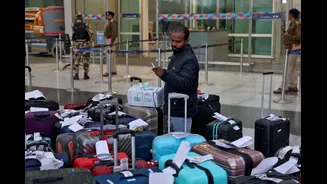
In his meeting with IndiGo CEO Peter Elbers, Civil Aviation Minister Ram Mohan Naidu is understood to have raised the severe agony and chaos suffered by passengers over the last week, citing the airline’s internal mismanagement, crew roster problems, and poor communication. As per reports, Elbers informed the minister that all affected passengers had been given refunds by December 6, following which the latter also urged the disbursement of remaining refunds as well as passengers’ lost baggage.
During the last week, many passengers faced severe inconvenience due to Indigo’s internal mismanagement of crew rosters, flight schedules and inadequate communication. While the enquiry and necessary actions are underway, another meeting with Indigo’s top management was held to… pic.twitter.com/yw9jt3dtLR
— Ram Mohan Naidu Kinjarapu (@RamMNK) December 9, 2025
Earlier in the day, Naidu in the Lok Sabha had said that no airline, however large, will be permitted to cause hardship to passengers through planning failures and non-compliance with regulations.
What does IndiGo have to say for itself?
The airline, on its part, said there is “steady improvement across the network”, adding that it reinstated flights to all 138 stations. It flew more than 1,800 flights on Tuesday, which will go up to nearly 1,900 on Wednesday, IndiGo said in a statement. That number is now likely to change with the government ordering a 10% cut in flights.
Prior to meeting the Civil Aviation Minister, Elbers, in a video message on X, said the airline is back on its feet, and operations are stable.
IndiGo Operations Normalised | A Message From Pieter Elbers, CEO, IndiGo pic.twitter.com/VVB2yTsIBy
— IndiGo (@IndiGo6E) December 9, 2025
“IndiGo is back on its feet, and our operations are stable. We’ve let you down when a major operational disruption happened, and we’re sorry for that,” he said. “Earlier, we had indicated to normalise between December 10-15. I can confirm now that today, as of December 9, our operations are fully stabilised, which means flights reflecting on our website are scheduled to operate with an adjusted network.”
What is the real reason for IndiGo flight cancellations and disruptions?
For decades, IndiGo relied on aggressive scheduling and max night-flight utilisation – a business model that collapsed when tighter safety regulations that increased the mandatory weekly rest period for pilots and sharply reduced permissible night-landings and any extended night-duty hours came into force.
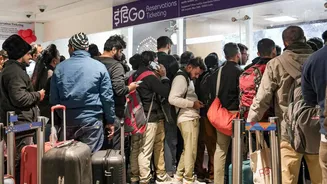
The result was catastrophic: on-time performance plunged, hundreds of flights were cancelled daily, and major airports saw chaos with stranded passengers, overloaded terminals and long queues.
IndiGo has said that increased congestion in the aviation system, the implementation of pilot rest rules from November 1, minor technical glitches and adverse weather were behind the disruptions. It operated over 2,200 flights daily before the travel chaos struck.
Why is the government calling it the ‘first strict punishment’?
The order to cut 10% flights is unprecedented since it’s the first such direct punishment from the government. Before this, the DGCA only gave instructions and warnings. With its latest order, the government has made it clear that any airline that fails to comply with stricter safety regulations to the inconvenience of passengers will face financial and operational losses. For a company like IndiGo with 65% market share, cutting over 200 flights daily is a big blow.
Will IndiGo rival benefit from this order?
Yes! The slots left vacant by the cut in IndiGo flights could be given to other airlines if they have the extra capacity to run additional flights. Airlines like Air India, Akasa and SpiceJet could benefit, though they too were forced to trim their own winter schedules.
Could things get worse for IndiGo?
The DGCA has issued showcause notices to IndiGo’s CEO and COO, and has set up a special investigation panel. If the airline is found to be guilty of serious lapses, it could mean heavy fines, more operational restrictions, or even loss of future slots.
What does this mean for passengers?
For passengers, it means fewer IndiGo flights for the next few days, but the flights that do run should be more stable and on time. As per the government, running fewer flights means IndiGo has the opportunity to restore service quality and avoid repeated cancellations.
Does it means air fares will go up?
A reduction of around 200 daily IndiGo flights will temporarily tighten capacity in the domestic market — especially on popular metro routes where the airline dominates. Usually, when supply shrinks but demand stays steady, air travel tends to get costlier. According to aviation experts, spot fares and last-minute ticket prices could see short-term spikes over the next week as passengers compete for fewer seats on busy routes like Delhi-Mumbai, Bengaluru-Mumbai, Chennai-Hyderabad and other high-traffic sectors.
However, a sustained jump in fares is unlikely unless other airlines are unable or unwilling to add capacity. If Air India, Akasa or SpiceJet step in to operate some of the vacated slots, the supply gap may shrink, tempering any significant price escalation. Much will also depend on how long IndiGo’s curtailed schedule remains in place. If the airline stabilises operations quickly and restores flights, fare movements could normalise just as swiftly.