









That Sunday biryani ritual. The quick masala dosa before work. The humble plate of idli that has kept Bengaluru fed and content for decades. None of it, if hotel associations are to be believed, is going
to cost what it costs today for very much longer.
Eateries across Bengaluru — from neighbourhood darshinis to mid-range restaurants — are bracing for a sharp spike in input costs, and they are warning that the burden will soon land squarely on your plate.
Karnataka State Hotels’ Association (KSHA) has cautioned that food prices across the city could rise by as much as 60% in phases over the coming months, as the state government weighs a hike in minimum wages and fuel prices continue their upward climb.
What Could Your Favourite Dish Cost?
The numbers are startling. KSHA president G K Shetty, in a statement reported by the Times of India, spelled out what the price revision could look like on the ground: a masala dosa that currently costs around Rs 80 could touch Rs 150; a vegetarian meal priced between Rs 150 and Rs 200 could climb to Rs 250-300; and a plate of biryani currently in the Rs 300-350 range could hit Rs 500.
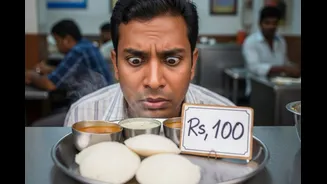
Even that most democratic of Bengaluru breakfasts — the idli — is not spared. A plate currently priced around Rs 50 at many eateries could cost Rs 80 or more after the wage revision comes into effect.
What Could Your Plate Cost Soon?
Projected price changes at Bengaluru eateries, per hotel associations
| Dish | Current Price | Projected Price |
|---|---|---|
| Masala Dosa | Rs 80 | Rs 150 |
| Idli (plate) | Rs 50 | Rs 80+ |
| Vegetarian Meals | Rs 150–200 | Rs 250–300 |
| Chicken Biryani | Rs 300–350 | Rs 500 |
Why Are Prices Going Up?
The pressure on hoteliers is coming from multiple directions at once. The most significant trigger is the pending revision of minimum wages.
According to TOI, the revised minimum wage for an unskilled worker in Bengaluru could exceed Rs 23,000 per month. But Shetty says that is only the beginning of what employers actually pay.
“In addition, we must pay for ESI and PF. If we include food, accommodation and uniform, the expenditure comes close to Rs 36,000 per employee,” Shetty was quoted. With most eateries running on thin margins and large headcounts, that is a cost burden that cannot be quietly absorbed.
Shetty also pointed out that Karnataka now has the highest wages in the hospitality sector compared to neighbouring Tamil Nadu and Andhra Pradesh — a competitive disadvantage that hoteliers say leaves them with little room to manoeuvre.
Fuel costs are adding further pressure. Prices of key commodities have already begun moving: Sona Masuri rice is now costlier by Rs 5 per kg and Jeera rice by Rs 10 per kg, hoteliers noted.
60,000 Hotels, One Very Big Problem
The scale of what is coming into focus is significant. Karnataka’s hotel and restaurant sector includes nearly 60,000 establishments, of which around 15,000 are KSHA members. These are not just fine-dining venues — they are the darshinis, the mess-style lunch spots, the takeaway counters that millions of Bengalureans rely on daily.
Shetty had previously urged the government to raise minimum wages in stages rather than in one go, precisely to avoid this kind of shock to the system. “We had been suggesting that the govt raise minimum wages in stages,” he told TOI. That phased approach, it appears, has not been adopted to the industry’s satisfaction.
“Any hotel that pays according to the govt’s directives and conducts business honestly must increase prices by 60% in stages over the next few months,” Shetty was quoted by TOI.
Are Layoffs On The Table?
Possibly. Hoteliers did not rule out the prospect of staff reductions as establishments struggle to manage rising wage bills. If restaurants choose to cut headcount rather than raise prices sharply, the consequences extend beyond the customer — into the livelihoods of the tens of thousands of workers the sector employs across Karnataka.
No Final Word Yet — But The Direction Is Clear
Bengaluru Hotels’ Association president P C Rao told TOI that final prices have not yet been decided. “We have not yet finalised the prices, but it is inevitable,” he said.
That word — inevitable — is doing a lot of work. It signals that the question facing Bengaluru’s food-loving population is not whether prices will rise, but by how much, and how fast.
For now, that Rs 80 masala dosa is still Rs 80. Enjoy it while it lasts.