





Paan has always been more than just a post-meal ritual. For generations, it has marked the end of a meal with a familiar mix of sweetness, freshness, and nostalgia. But today, that identity is expanding.
Across India, paan is being reimagined, not by replacing tradition, but by stretching its boundaries. What was once a predictable afterthought is now turning into a versatile, experience-led offering that moves between classic flavours and contemporary interpretations.
At its core, however, the original still holds strong. As P.N. Thakur, Founder & CEO, Mast Banarasi Paan, explains, “Paan has always held a unique place in India’s food culture, but today it is being enjoyed in newer and more versatile ways. While experimentation is growing, sweet paan continues to remain the most popular because of flavours like gulkand and dry fruits that bring a sense of nostalgia and comfort.”
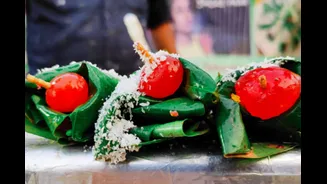
That nostalgia is now being layered with innovation. Savoury paans featuring herbs, spices, and seeds are steadily gaining traction, offering a completely different flavour profile. At the same time, smoky paans, with their theatrical presentation are drawing in younger consumers looking for something more experiential. “These modern adaptations have helped bring paan to new generations without compromising its authenticity,” Thakur adds.
For chefs, paan has also become a creative playground. Mahtab Ansari, Executive Chef, Sayaji Hotel Vadodara, sees it as “a canvas of culinary evolution, where tradition meets bold creativity.” He points to how paan today carries multiple flavour dimensions, from the sweetness of gulkand to savoury fillings and even smoky infusions, turning it into something far more layered than before.
That shift is also visible in where paan is being served. “Modern paan is no longer confined to the streets,” Ansari says. “It has found a place in gourmet kitchens, reimagined with finesse and innovation.” In many spaces, it now appears as a refined palate cleanser or even a plated dessert, elevated in both ingredient quality and presentation.
For Sunil Singh, Sous Chef, Courtyard by Marriott Pune Chakan, this evolution comes down to adaptability. “Paan has always been close to our culture, but today it feels more alive than ever,” he says. “We’re moving beyond just sweet gulkand to explore savoury notes, gentle smokiness, and even dessert-like flavours with chocolate or dried fruits.”
What emerges is not a reinvention, but a reinterpretation. From gulkand-rich classics to herb-forward savoury versions and dramatic smoky formats, paan today exists in multiple expressions at once.
And that’s what makes this shift interesting, it hasn’t abandoned tradition. It has simply made room for more.