






In a move following the conclusion of the “mother of all deals”, the Indian government has sought to assure domestic farmers that the dairy sector remains strictly off the table for international trade.
The development came after India and the European Union (EU) announced the successful finalisation of their long-awaited Free Trade Agreement (FTA).
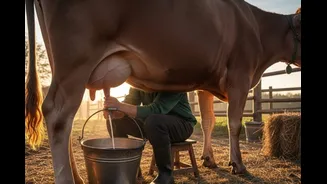
Top officials from the Ministry of Commerce and Industry have emphasised that the protection of the dairy industry is a non-negotiable red line for the BJP-led NDA government. This policy ensures that as long as the current dispensation is in power, no import duty concessions will be granted to the EU—or any other trading partner—for milk and milk products. This commitment is aimed at safeguarding the livelihoods of nearly 80 million small-scale farmers in India, which is currently the world’s largest milk producer, accounting for roughly 25 per cent of global output.
The India-EU FTA, concluded on January 27, is arguably the most ambitious trade pact in India’s history, set to provide duty-free access for 99.5 per cent of Indian exports to the European market. However, the deal was designed with “carve-outs” for highly sensitive domestic segments.
Beyond dairy, the government has excluded other critical agricultural products, including rice, wheat, pulses, tea, and coffee, from any tariff reductions.
Provisions for beef and poultry have also been completely omitted from the liberalisation schedule to prevent any disruption to local agrarian economies.
While the EU will enjoy lower duties on luxury items like wines, spirits, and high-end cars, the government has maintained that primary agricultural goods remain “policy-protected space.”
Commerce Minister Piyush Goyal has previously noted that the NDA government has signed eight FTAs since 2014, and in every single instance, the dairy sector has been preserved. The stance is rooted in the “Atmanirbhar Bharat” (self-reliant India) philosophy, where the government views local dairy production as a matter of food security rather than just commerce.
By excluding dairy from the EU pact, New Delhi has successfully navigated a two-decade-old deadlock. The EU had long sought access for its high-subsidised cheese and butter products, but India’s firm refusal forced a more “balanced and fair” final agreement. For Indian exporters, the deal is expected to unlock $75 billion in new growth, particularly in textiles and leather, without compromising the backbone of India’s rural economy.