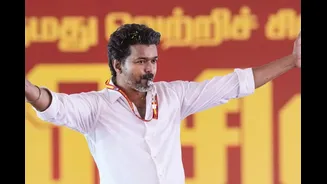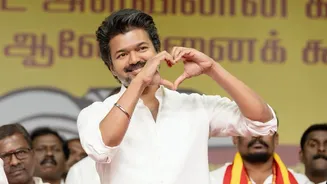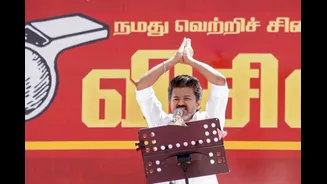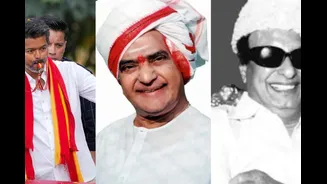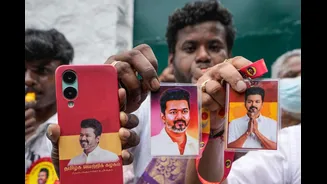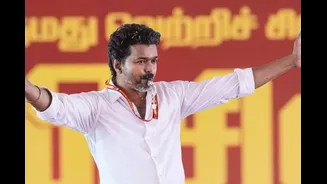





The 2026 Tamil Nadu Assembly elections will be recorded as the moment the state’s political landscape underwent a seismic shift. In a historic debut, actor-turned-politician Joseph Vijay and his party,
Tamilaga Vettri Kazhagam (TVK), dismantled the decades-long DMK-AIADMK duopoly. By emerging as the single largest party with 108 seats, Vijay did more than just win; he authored a new, disciplined playbook for political entry in India.
With no prior experience, he took the ultimate risk by launching the TVK in 2024. While traditional parties dismissed his prospects, he silenced his critics to become the new “Jana Nayagan” (People’s Leader) that Tamil Nadu had waited for decades. His decision to contest all 234 seats independently projected an image of confidence and integrity that resonated with a public weary of traditional political coalitions.
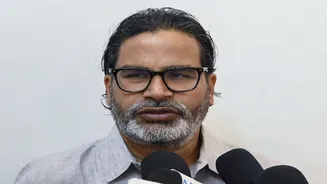
Supported briefly by poll strategist Prashant Kishor, Vijay’s campaign strategy for this election has become a masterclass in modern political manoeuvring.
Also Read | Vijay Could’ve Touched Magic Mark If TVK Hadn’t Lost These 10 Seats By Margins As Low As 285 Votes
The Architecture of Silence: No Press Interviews
Vijay’s most striking deviation from political tradition was his absolute refusal to engage with the media. This “controlled silence” ensured his message remained undiluted by reactionary soundbites or media spin.
Continuing a decade-long habit from his film career—sparked by past instances where he felt misquoted and unfairly labeled as “arrogant”—Vijay avoided all press conferences and Q&A sessions.
Targeted Public Appearances
While his rivals crisscrossed the state for months, Vijay adopted a “less is more” philosophy, addressing a limited number of high-production rallies. These events were meticulously crafted spectacles, designed to maintain an aura of exclusivity and gravitas while focusing his rhetorical fire sharply on the DMK’s governance failures.
In a sophisticated balancing act, Vijay defined the DMK as his primary “political enemy” and the BJP as his “ideological enemy.” Interestingly, he maintained a noticeably softer stance toward the AIADMK, a move that many analysts believe helped consolidate the anti-incumbency vote under the TVK banner.
Though critics initially dismissed the massive crowds as mere film fans who wouldn’t convert into voters, the May 4 results told a different story.
Social Media Restraint
Unlike leaders who flooded digital feeds, Vijay refrained from personal social media campaigning. His Instagram and X accounts featured only three political posts—one from an Erode rally in December 2025 and two others from earlier that year. Instead, he relied on party channels and a “digital infantry” of fans to carry his message.
The Whistle Symbol: Converting Fandom into Folklore
In January 2026, the Election Commission allotted the “Whistle” as the TVK’s official symbol, which Vijay quickly transformed into a cultural powerhouse. In a masterstroke of grassroots marketing, women supporters began drawing “whistle kolams” (traditional floor art) outside their homes, signaling a quiet but widespread shift in support.
Borrowing from his stadium fandom and the iconic Chennai Super Kings slogan, the “Whistle Podu” (Blow the Whistle) chant became a viral call for systemic change, turning every supporter into a walking advertisement for the party.
The VMI Infrastructure: Fans as Cadres
The TVK’s success was the culmination of years of quiet preparation through the Vijay Makkal Iyakkam (VMI), his fan welfare organisation. His fanbase, self-described as “Anils” (squirrels) in reference to humble but vital contributors, functioned as a disciplined political cadre. They managed door-to-door mobilisation with such efficiency that many voters chose the “Whistle” symbol and Vijay’s face over the specific local candidate.
Capitalising On “Youth & Women” Surge
The TVK manifesto targeted the specific vulnerabilities of established parties, driving a record 85% voter turnout that skewed heavily toward the youth. By taking a firm stand against the NEET exam and promising localised job creation, Vijay secured the Gen-Z and first-time voter demographic.
Axis My India chief Pradeep Gupta, who predicted TVK’s win, said that Vijay received more 50% votes of youth and women.
“The youth in the 18–39 age group make up 42% of Tamil Nadu’s population—that is where TVK secured more than 50% of the vote. Among women, TVK received over 38%, more than any other party,” he told India Today.