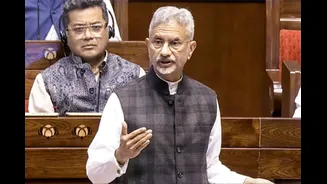







External Affairs Minister S Jaishankar on Monday told the Rajya Sabha that India continues to believe that “dialogue and diplomacy should be pursued” to de-escalate tensions in West Asia, even as the region
witnesses escalating hostilities and rising casualties.
Making a statement in the Upper House amid sloganeering by Opposition MPs, Jaishankar reiterated the government’s call for restraint and peaceful resolution of the crisis.
“Our government had issued a statement on February 20, expressing deep concerns and urging all sides to exercise restraint. We continue to believe that dialogue and diplomacy should be pursued to de-escalate the tensions,” Jaishankar said.
He emphasised that India’s position remains consistent, stressing that discussion and diplomatic engagement remain the most effective way to resolve conflicts.
“We believe, and we continue to believe that dialogue and diplomacy need to continue,” the External Affairs Minister said.
Jaishankar said the developments in West Asia were a matter of serious concern for India, pointing to the scale of the violence and casualties reported in the region.
“Developments in West Asia are a deep cause for concern for all of us,” he said, adding that there have been “numerous casualties, including leadership in Iran”.
The minister also underlined that the government is closely monitoring the evolving situation, with Prime Minister Narendra Modi personally tracking developments.
“Prime Minister Narendra Modi continues to closely monitor developments in West Asia,” Jaishankar told the Rajya Sabha.
Highlighting India’s direct stakes in the region, Jaishankar said the ongoing conflict has significant implications for the country’s strategic and economic interests.
“This ongoing conflict is a deep concern for India,” he said.
He also pointed to the region’s importance in meeting India’s energy needs.
“The region is very important for energy security, and a lot of our oil and gas comes from there,” the External Affairs Minister noted.
Apart from energy concerns, Jaishankar said the government is also focused on the safety and well-being of Indian nationals living in the region.
“We discuss the well-being of the Indian community in the region,” he said.
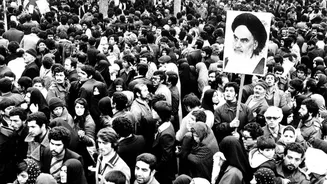
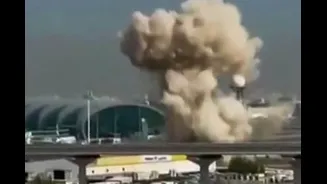
The minister’s statement comes amid sharply escalating tensions in West Asia following the killing of 86-year-old Ayatollah Ali Khamenei in joint military strikes by the United States and Israel on Iran on February 28.
The strikes also reportedly killed several senior leaders of the Islamic Republic.
In retaliation, Tehran launched counter-strikes targeting American military bases in several Arab countries and Israeli assets across the region.
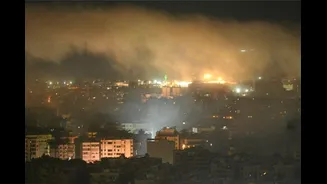
Israel, along with the United States, has continued its strikes on Tehran while widening the conflict to Lebanon, targeting Hezbollah and other Iranian-backed militant groups.
Earlier, the Ministry of External Affairs had said India was “deeply concerned at the recent developments in Iran and the Gulf region”.
In a statement, the MEA had said, “We urge all sides to exercise restraint, avoid escalation, and prioritise the safety of civilians. Dialogue and diplomacy should be pursued to de-escalate tensions and address underlying issues. Sovereignty and territorial integrity of all states must be respected.”
The ministry also said Indian missions in the region were in touch with Indian nationals and had issued advisories asking them to remain vigilant and follow local security guidance.